Tag: ICARDA
-
THE PEA OF THE CHAR
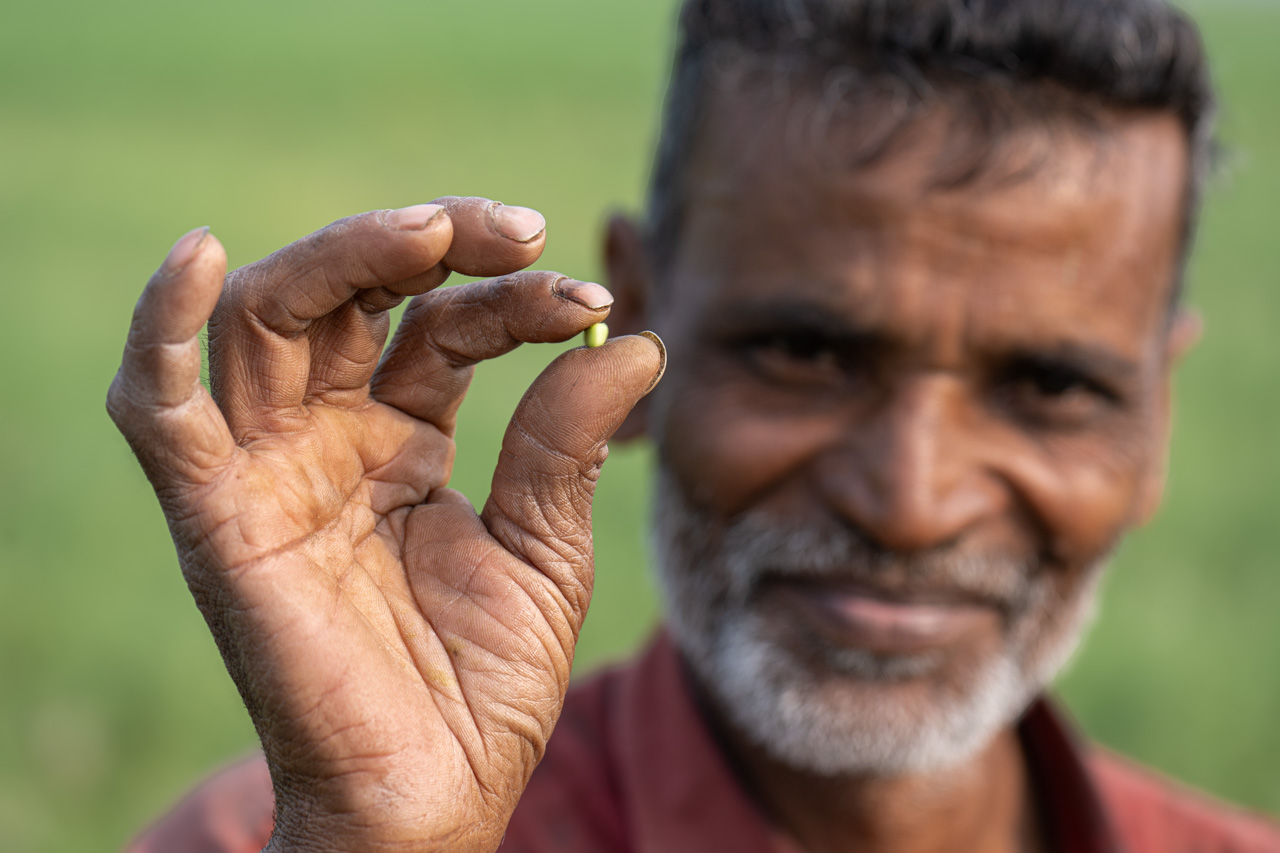
As I jumped off the horse cart and landed on the sandy soil of Charbongram, an island in the Brahmaputra River in Bangladesh, I kicked what appeared to be a weed. It was a scraggly, prostrate plant somehow surviving where no other plants could. ‘That’s grasspea,’ said ICARDA pulses breeder Shiv Agrawal proudly as if showing off his children. ‘The locals just broadcast the seed and come back 100 days or so later and harvest the pods. Absolutely no inputs.’ I looked around the char, a sand and silt island, and…
-
GRASSPEA IS A GRACIOUS GIFT OF GOD GLOBALLY (5G)
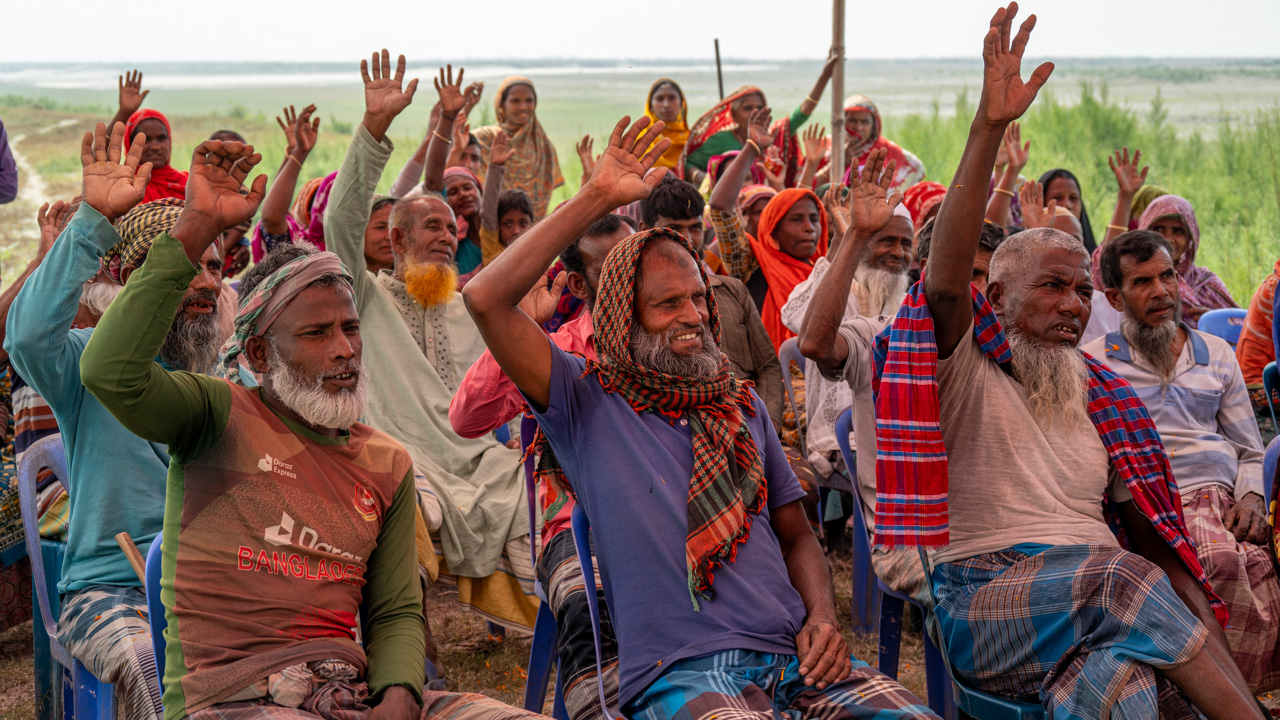
As I stood in the middle of a 28-acre community managed grasspea field in West Bengal, India, I asked how the villagers divided the tasks of managing the field. There were puzzled looks on the farmers’ faces. ‘There is no labour with grasspea … only sowing. God does the rest.’ Former ICARDA pulse breed Ashuthosh Sarker told me that the proper moniker for the hardy crop is ‘Grasspea is a Gracious Gift from God Globally’. It’s not a terribly demanding crop. It’s hardy enough to withstand pretty much anything Mother Nature…
-
SHUSHILA SPEAKS OUT
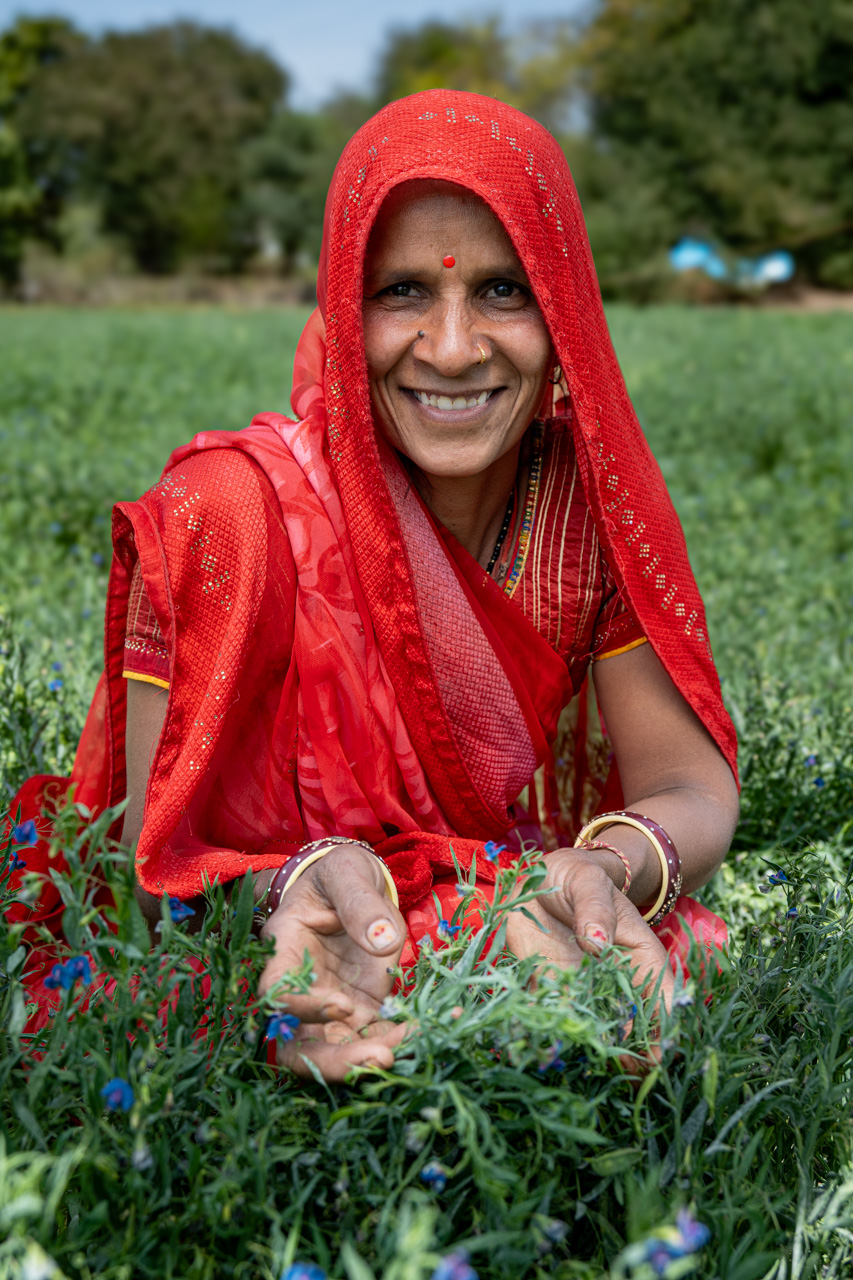
As our convoy of three cars arrived to Bamuliya, a village an hour out of Bhopal, we were met by a gaggle of men. They escorted us to a field neatly planted with grasspea. I asked which of the men was the farmer and then attached a microphone to his shirt. I forgot some equipment, so I hiked back to the car. As I passed the farmhouse a woman in a glowing red sari came out the door and looked to see where everyone had disappeared to. I greeted her with…
-
BACK AT ICARDA
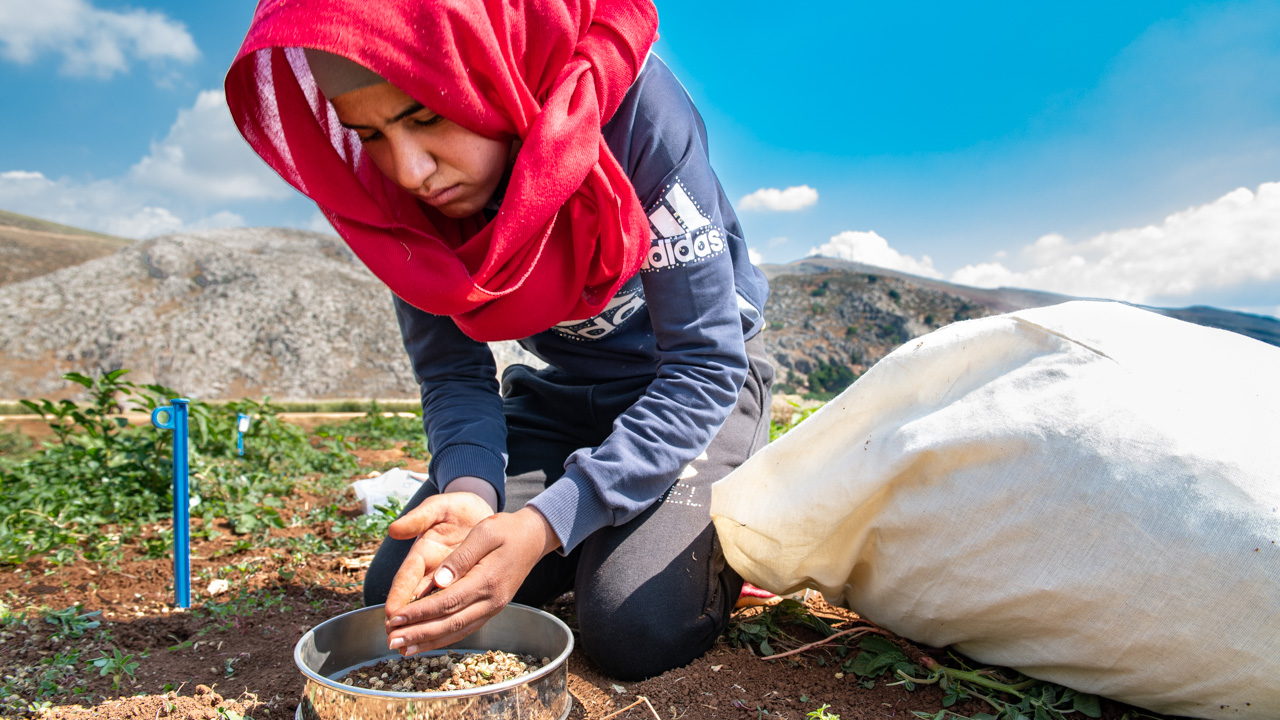
It’s taken me 25 years, but I’ve finally returned to the International Center for Agricultural Research in the Dry Areas, the organisation I once worked for. This time it wasn’t in Syria but the Beqaa Valley of Lebanon … but Syria was just a few kilometres away beyond the mountains in this photo. The location has changed but not the work. ICARDA is doing some amazing work in regenerating seeds from crops native to the Fertile Crescent. For me, it felt like old times when I lay down in the soil…
-
REPLENISHING THE SEED OF THE FERTILE CRESCENT
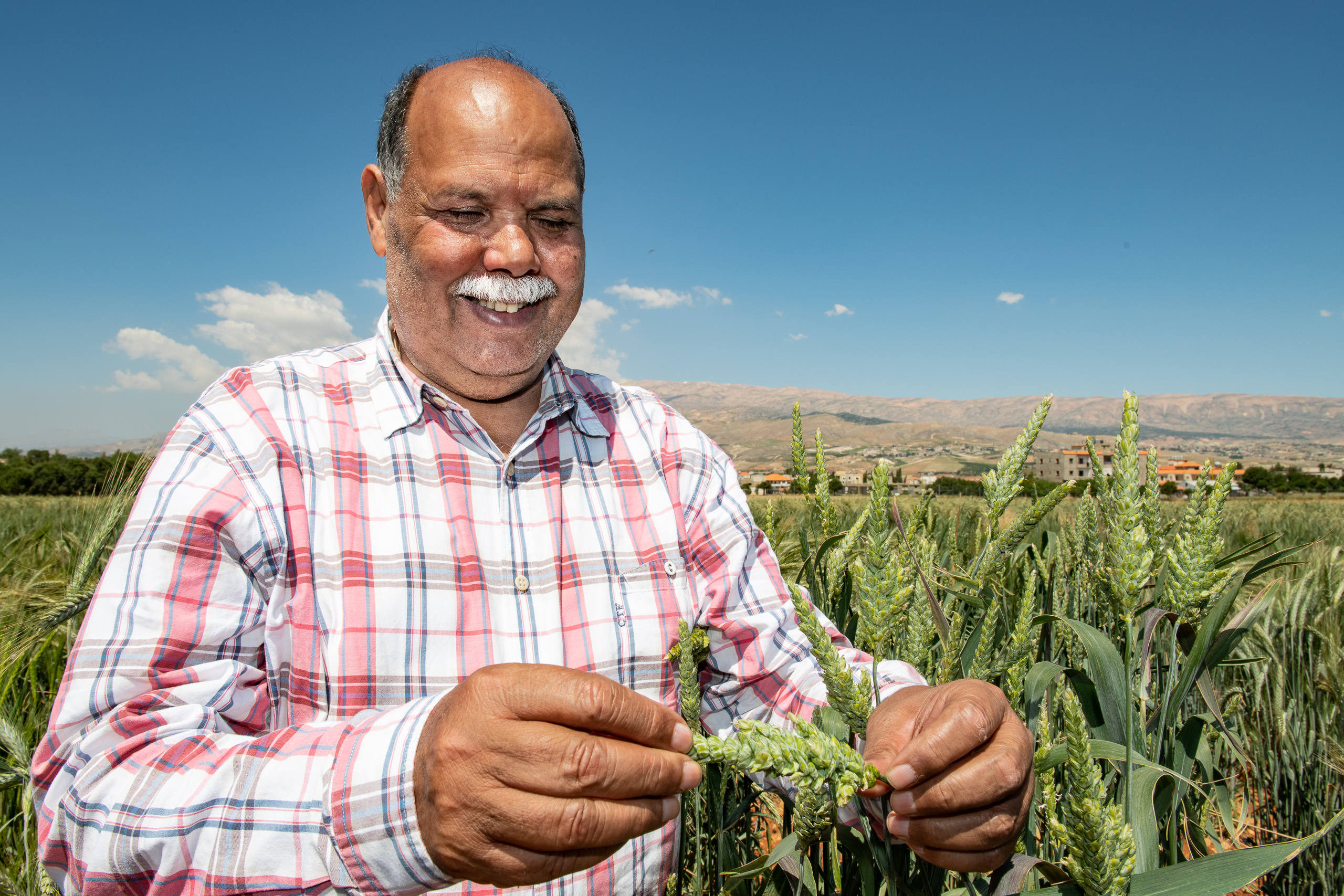
Ahmed Amri stood in the middle of a checkerboard-patterned field. “This field sums up the diversity of wheat in the Fertile Crescent,” said Ahmed. “All the plots are wild wheat, but each one is slightly different, and any one of these could possess a beneficial trait which could help crop breeders develop wheat varieties more resilient to climate change.” Ahmed, the head of the Genetic Resources Section of the International Center for Agricultural Research in the Dry Areas (ICARDA), was surveying seed regeneration plots in Lebanon’s Beqaa Valley, in the very…
-
FUN IN THE GENEBANK
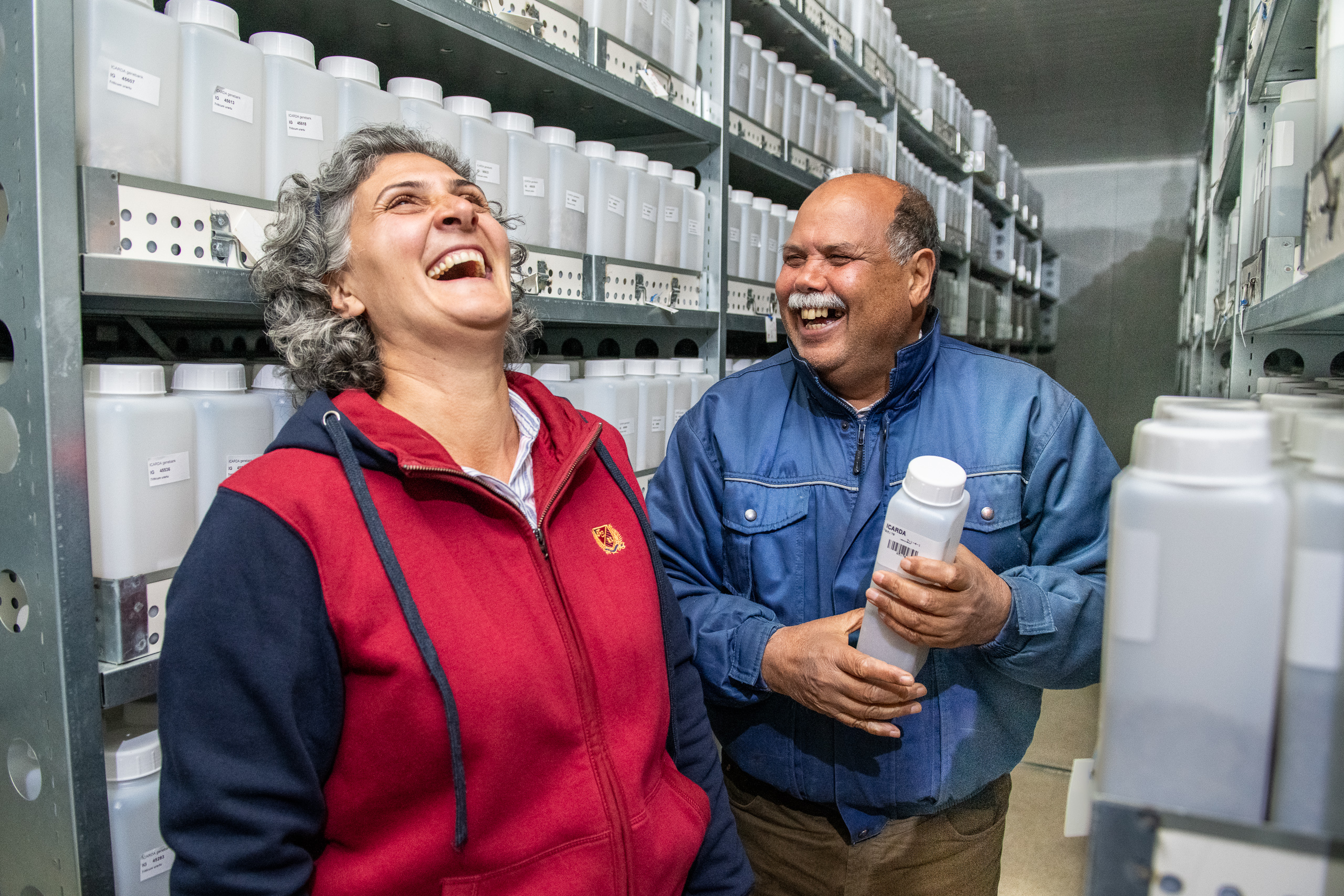
In the 48 hours I was at ICARDA’s Terbol station in Lebanon, I shot close to 1000 photos. This is my favourite and sums up the joy I felt in sharing time with ICARDA’s Genetic Resources team. As I started firing off shots of Ahmed Amri and Mariana Yazbek in the genebank’s active collection, I questioned why Ahmed was so serious. Earlier in the day he had told me ‘I am always smiling’. I must have caught him in a serious moment of reflection while studying the bar codes of the…
-
ON! ON! IN ALGARVE
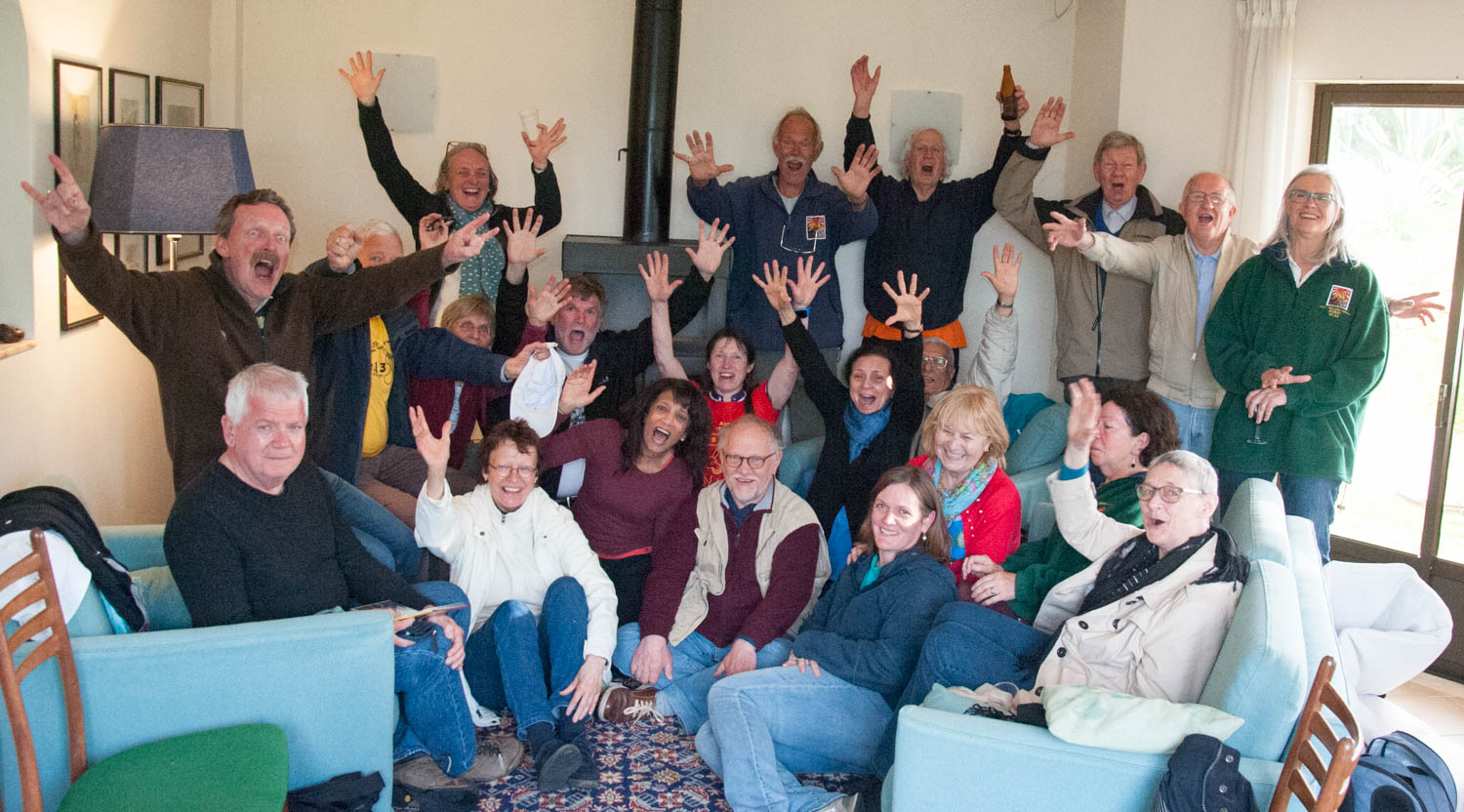
After a long hiatus, the Halab Hash House Harriers re-grouped and held a run on 8 April. Regrettably it was not in our home base of Aleppo, Syria. Instead, we ran in the Algarve region of southern Portugal. Long-time ICARDA staff member and current resident of Praia da Luz, Peter ‘Beep Beep’ Eichorn, asked his new family, the Algarve Hash House Harriers to adopt the H4 for the run. The combined group numbered almost 50 Harriers. Beep Beep and John ‘Strutting’ Peacock were the hares and set a course in the…
If you see this after your page is loaded completely, leafletJS files are missing.