
Tag: Agriculture
-
DORA AND THE FIERCE VOLUNTEER
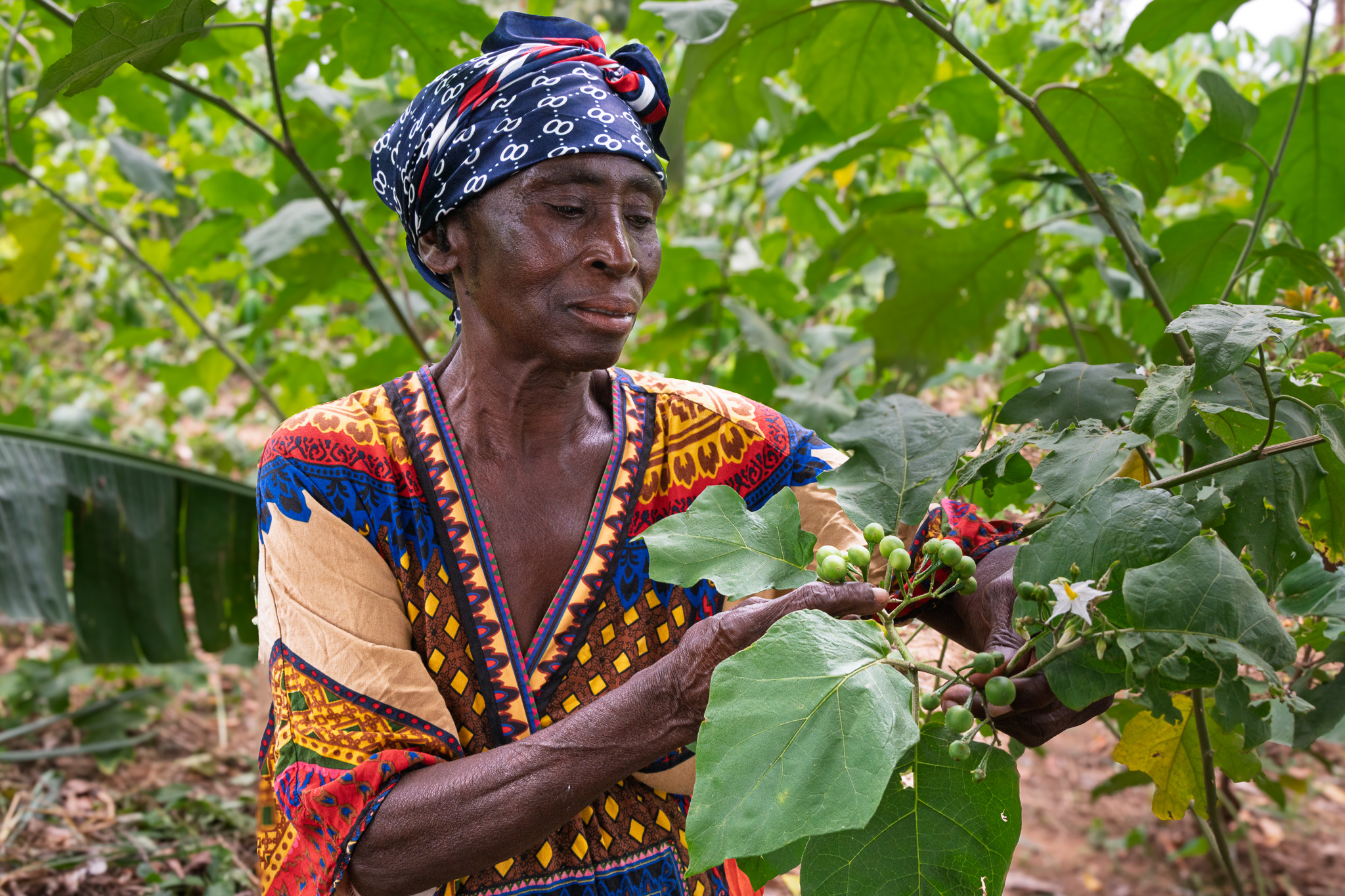
Some crops don’t wait to be planted. They arrive uninvited, establish themselves in the gaps between everything else and dare you to ignore them. They just show up – fierce, thorny and needing nothing from anyone. Smart farmers don’t ignore them. They understand, perhaps better than anyone, that you can reap where you did not sow – if you pay attention. They watch, they learn to work with the plant and not against it, and then they build something from the volunteers. Dora Ansong Yeboah is one of those farmers. The…
-
AMARANTH MAN
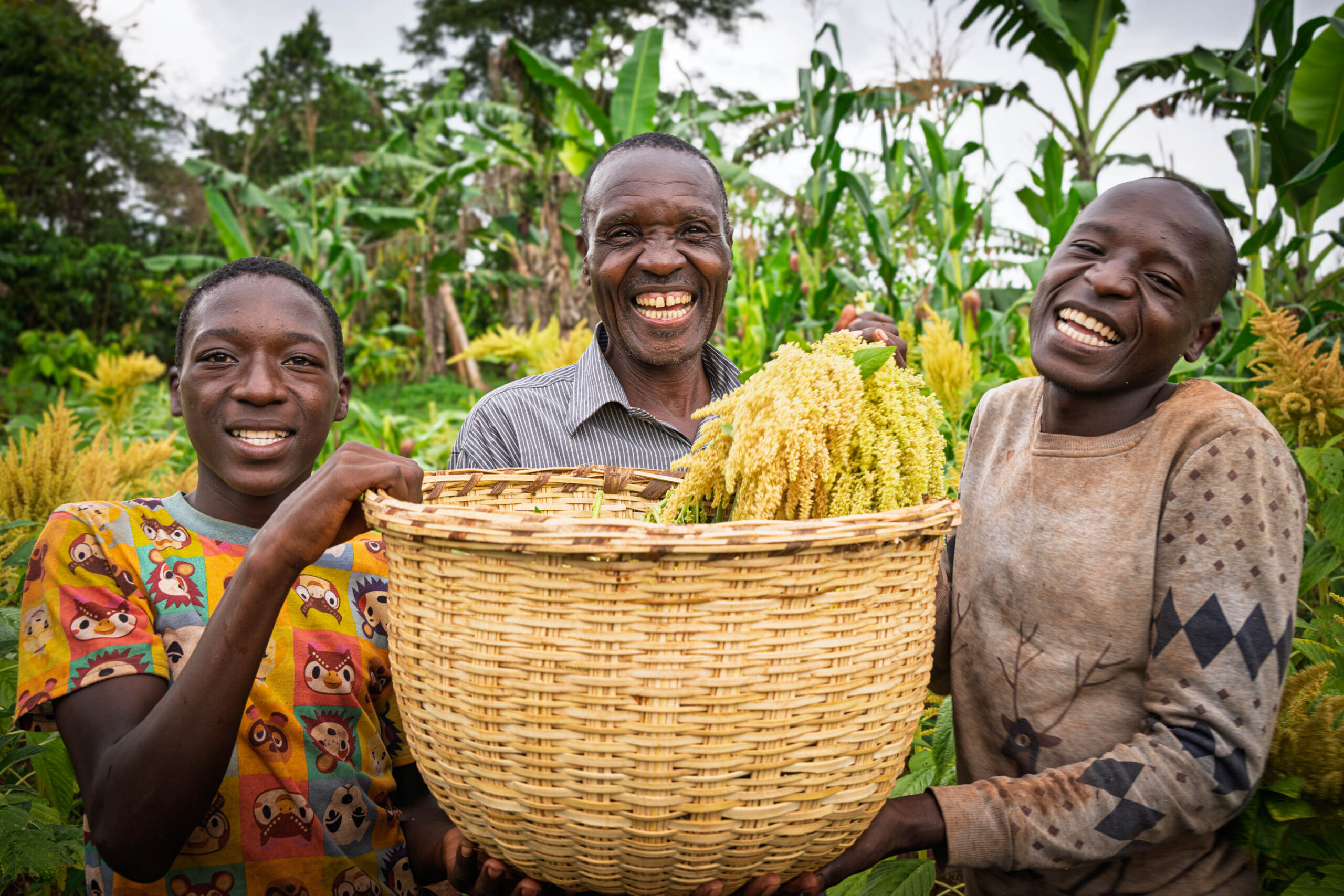
Down a muddy path in a smallholder farm near Kamuli in Uganda, past rows of cacao and towering maize, my colleague Scott Christiansen and I found Samuel Ngobi standing in a field that seemed to glow as storm clouds rolled in overhead. Samuel grows amaranth. And in these parts of Uganda it grows well. As the sky darkened and thunder rumbled in the distance, Samuel, along with his sons Steven and Emmanuel, moved quickly through the chest-high plants, harvesting armfuls of the brilliant yellow-green seed heads before the rains came. Back…
-
THE BAMBARA GROUNDNUTS OF UNYAMIKUMBI
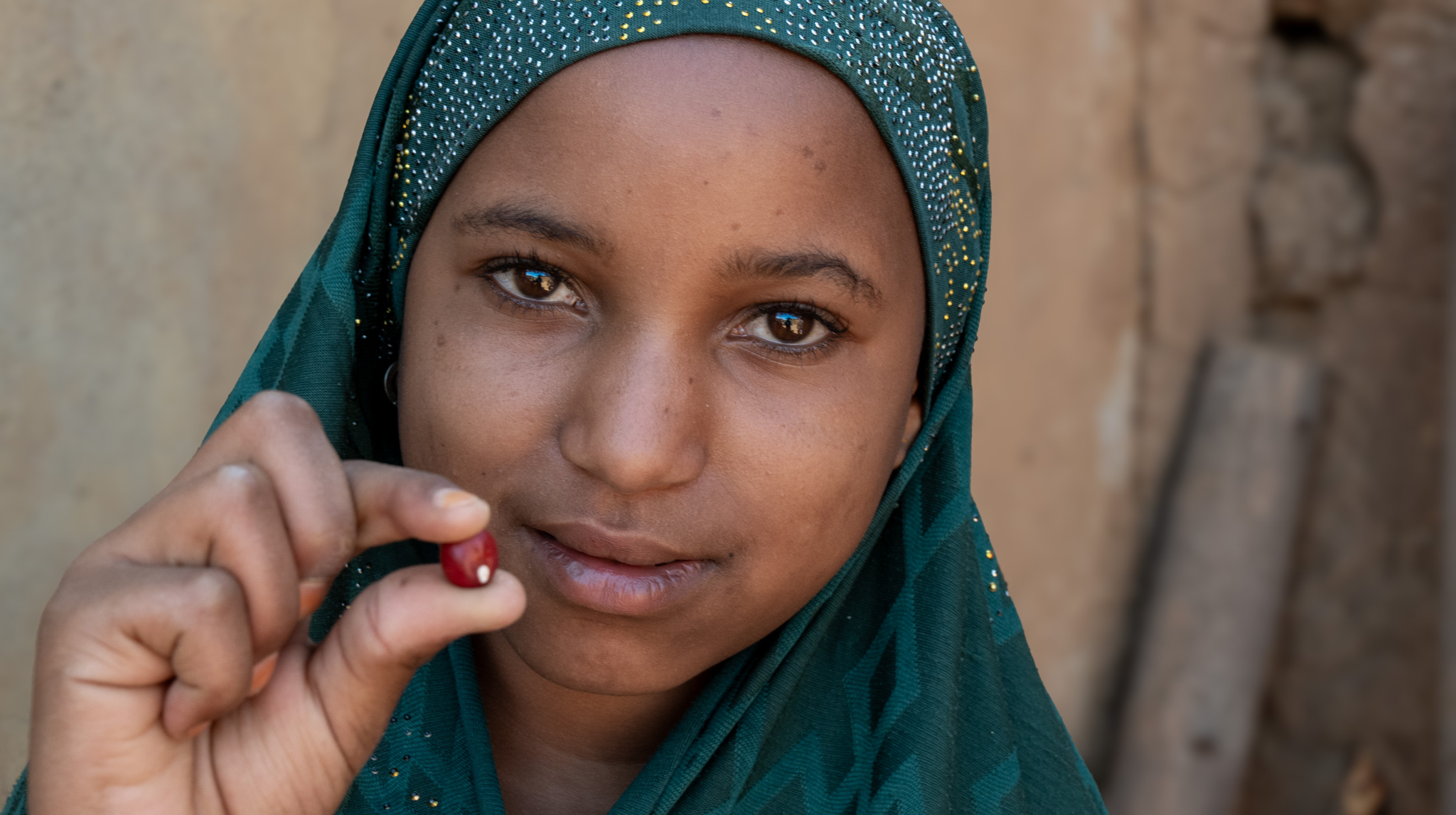
If you look at a dried Bambara groundnut in its shell you’d be forgiven if you thought it was a deformed peanut. They share a name. Peanuts are called ‘groundnuts’ in many places in the world. And they are both legumes. And both need to have hard shells removed prior to eating. But that’s pretty much where the similarities end. They’re distant botanical cousins but probably not close enough to be invited to family reunions. Bambara groundnuts (BGN) are sown in arid and semi-arid locations like the village of Unyamikumbi, in…
-
RECLAIMING FONIO
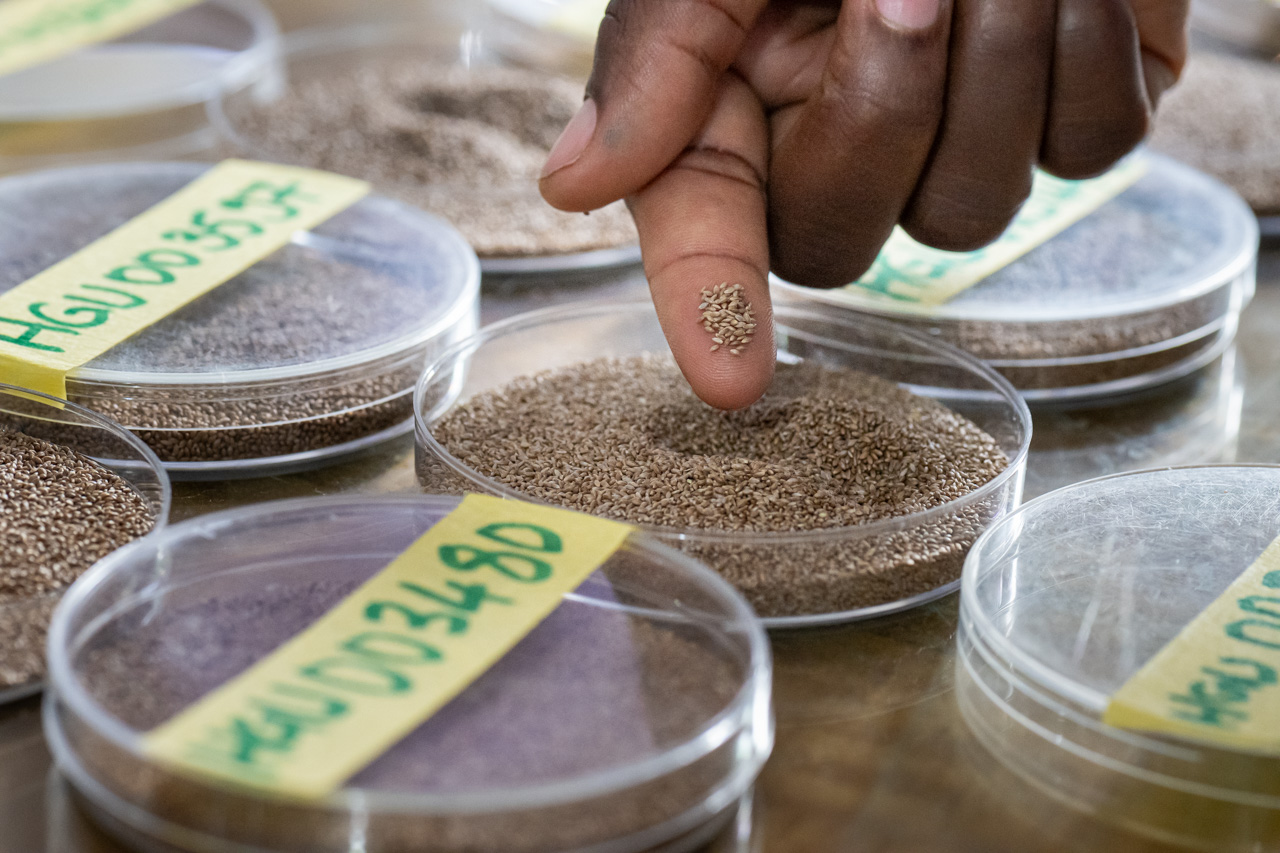
It’s one of the oldest cultivated crops in Africa but you’d be forgiven if you’d never heard of fonio. I had heard of fonio’s many qualities but had never seen nor eaten it. That’s changed now. I travelled to Benin with my colleague Scott Christiansen to learn more. Stakeholders in Benin led by the Crop Trust’s BOLDER project identified fonio as one of several priority opportunity crops. Those are crops which offer great potential in terms of food security but have been neglected by researchers and policymakers and underutilized. Fonio is…
-
ASK THE WOMEN
A long time ago a client asked me to document a forestry project in the rural town of Hojancha in northern Costa Rica. I took photos of proud men standing by amazing stands of introduced eucalypts, Gmelina and teak. The trees were grown for both timber and firewood. But I learned the women weren’t too crazy about eucalypts as firewood. They said they didn’t like the smell and it made their gallo pinto taste bad. No one bothered to ask the women about their preferences before the trees were planted. That…

-
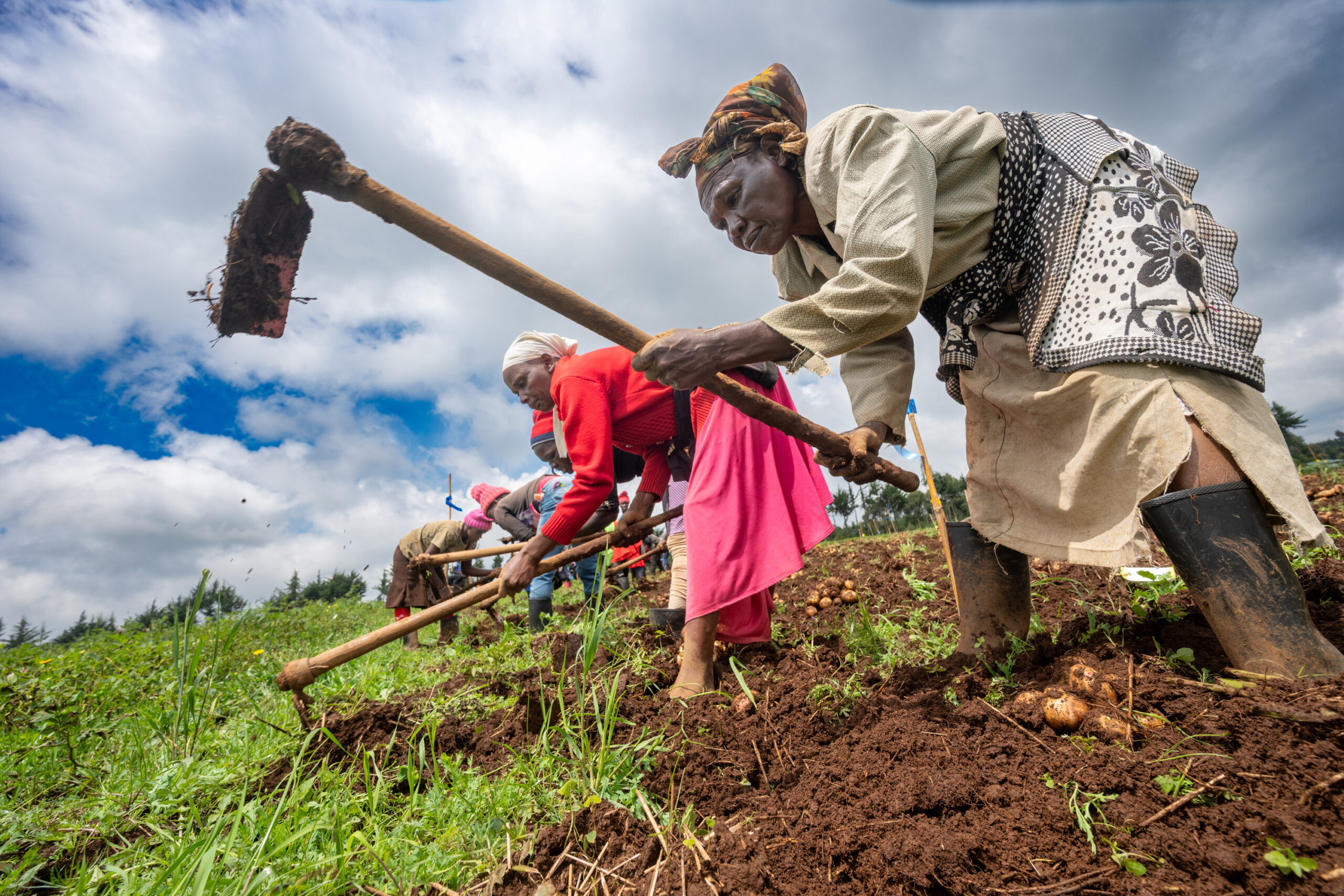
THEY’RE HARVESTING POTATOES IN KENYA
Potato harvesting in Kenya is being transformed through improved farming practices, including better seed selection, soil management, and access to agricultural support. These changes are helping smallholder farmers increase yields, strengthen food security, and build more resilient livelihoods in the face of climate and economic challenges across the region.
-
THE STIGMA OF GRASSPEA
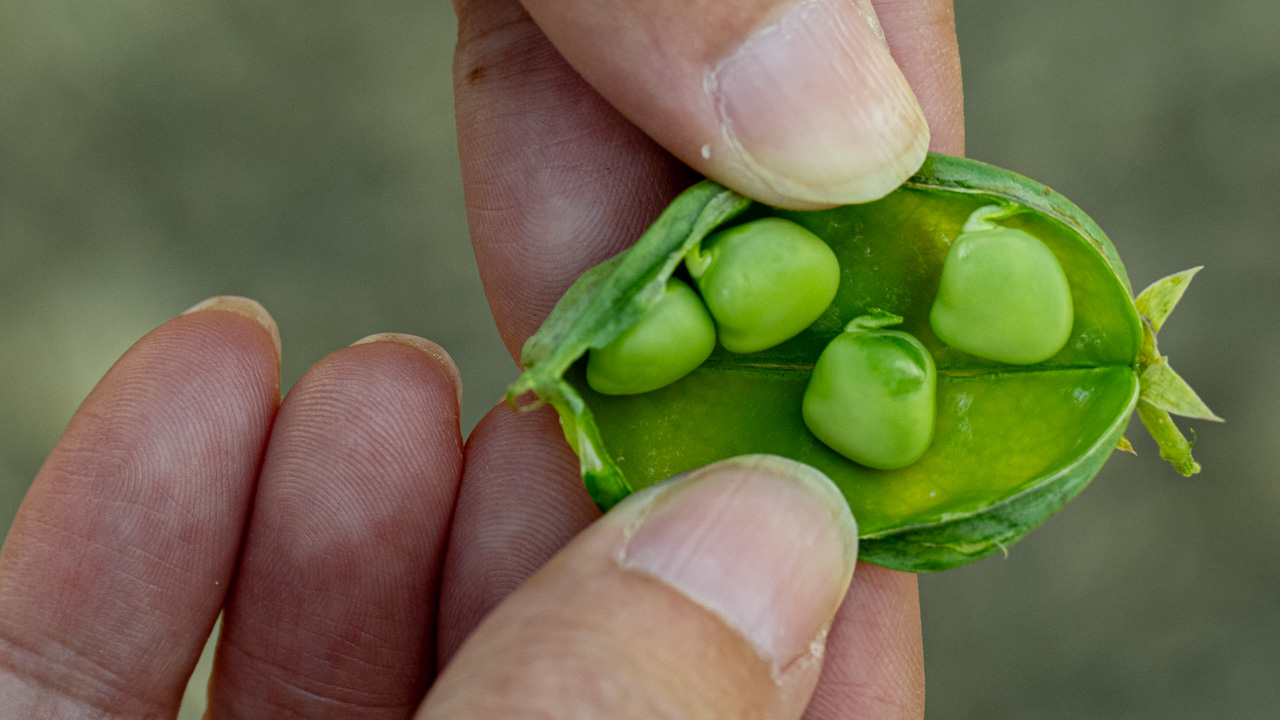
The ancient Greeks, notably Hippocrates, were pretty wary of grasspea (Lathyrus sativa). They figured if they ate too much they’d get some neurological disorders. The stigma of grasspea still persists today in many parts of the world.Last month I joined a team from the Crop Trust‘s BOLD Project to visit researchers and farmers in India and Bangladesh to learn more about grasspea. ICARDA’s Shiv Kumar Agrawal led us on a journey to Bhopal, New Delhi, Kolkata, Gazipur, Ishurdi and Rangpur. And I had two takeaways from that journey. First … wow!…
-
THE PEA OF THE CHAR
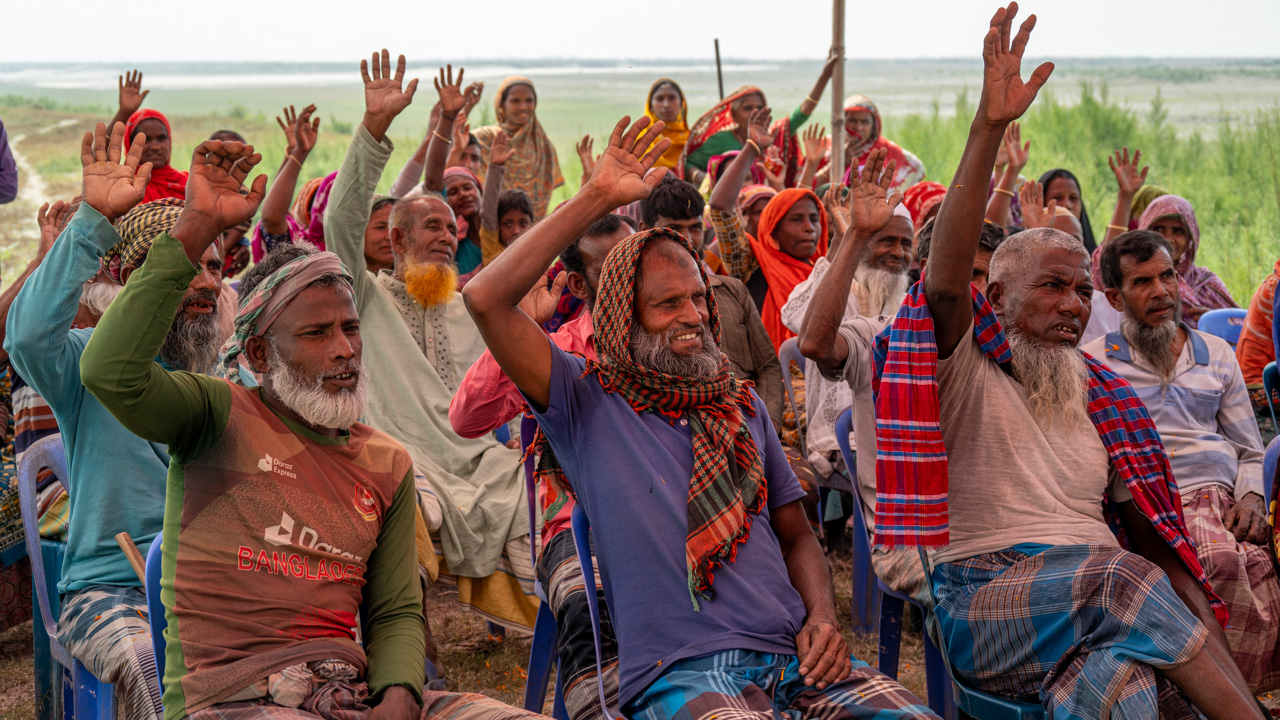
As I jumped off the horse cart and landed on the sandy soil of Charbongram, an island in the Brahmaputra River in Bangladesh, I kicked what appeared to be a weed. It was a scraggly, prostrate plant somehow surviving where no other plants could. ‘That’s grasspea,’ said ICARDA pulses breeder Shiv Agrawal proudly as if showing off his children. ‘The locals just broadcast the seed and come back 100 days or so later and harvest the pods. Absolutely no inputs.’ I looked around the char, a sand and silt island, and…
-
GRASSPEA IS A GRACIOUS GIFT OF GOD GLOBALLY (5G)
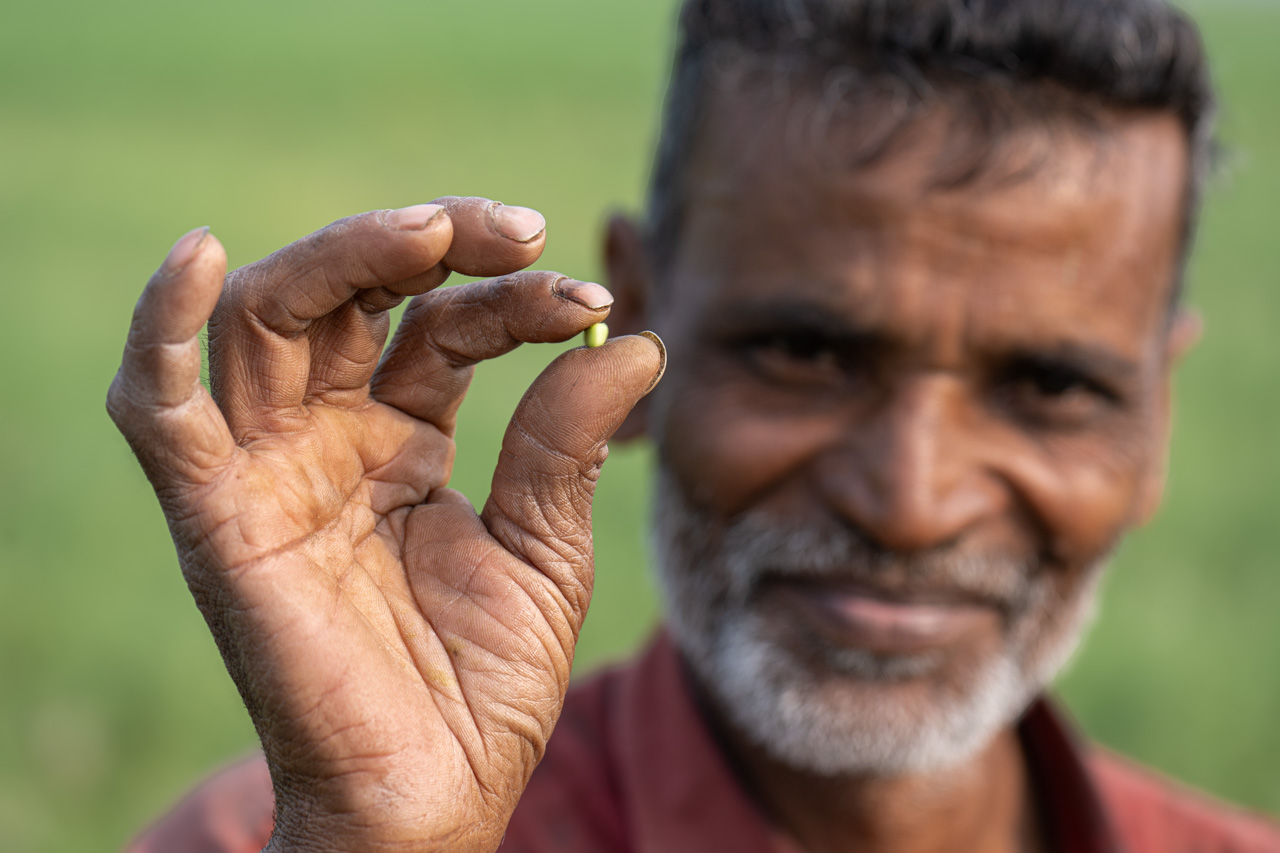
As I stood in the middle of a 28-acre community managed grasspea field in West Bengal, India, I asked how the villagers divided the tasks of managing the field. There were puzzled looks on the farmers’ faces. ‘There is no labour with grasspea … only sowing. God does the rest.’ Former ICARDA pulse breed Ashuthosh Sarker told me that the proper moniker for the hardy crop is ‘Grasspea is a Gracious Gift from God Globally’. It’s not a terribly demanding crop. It’s hardy enough to withstand pretty much anything Mother Nature…
If you see this after your page is loaded completely, leafletJS files are missing.