
Category: BOLDER
-
21 June 2026
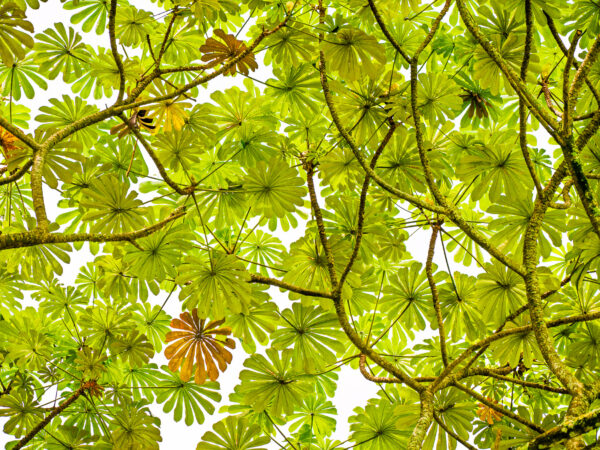
TARZAN NEVER MADE IT TO THIS JUNGLE. BUT I DID.
My earliest perception of a jungle came from the old… -
8 June 2026
-
31 May 2026
-
28 May 2026
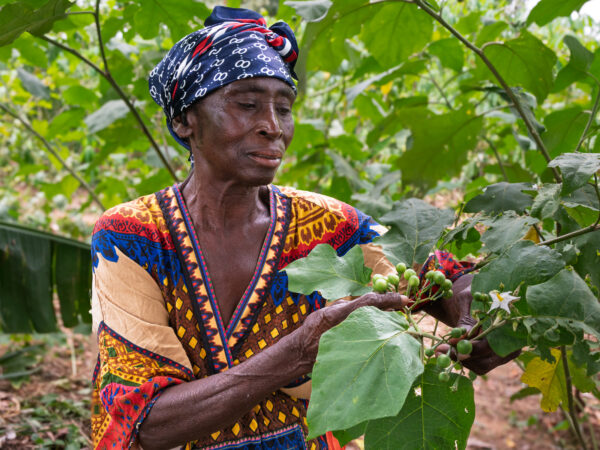
DORA AND THE FIERCE VOLUNTEER
Some crops don’t wait to be planted. They arrive uninvited,… -
23 May 2026
-
19 May 2026
-
15 May 2026
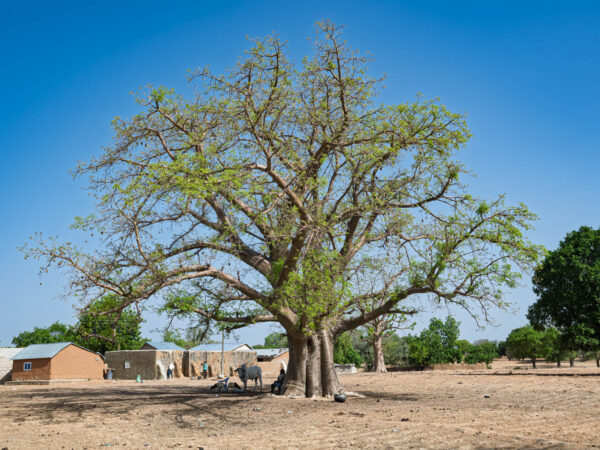
DANCIN’ UNDER THE BAOBAB TREE
The baobab tree has a most significant importance to the… -
14 May 2026
-
11 May 2026
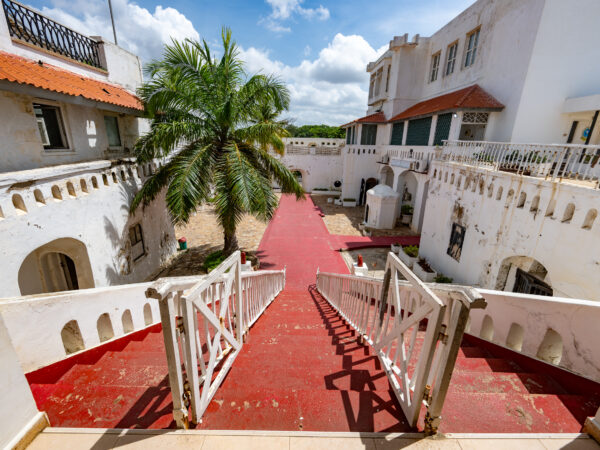
THE DOOR OF NO RETURN
Today my colleague, Scott Christiansen, and I stood inside Osu…
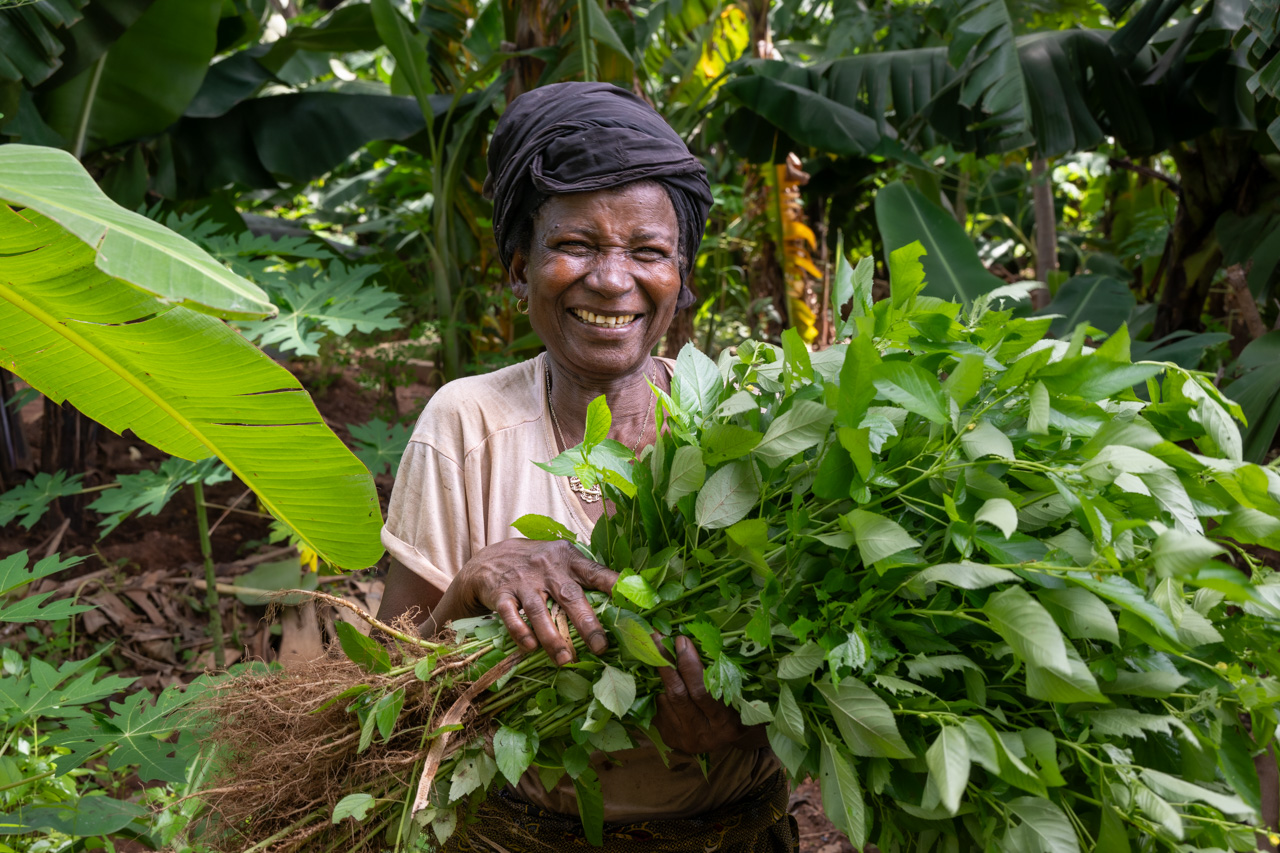
Some of Africa’s most promising crops are ones most of the world has never heard of. Fonio. Bambara groundnut. Jute mallow. Turkey berry. They’re nutritious, they put up with drought and poor soils, but researchers, policymakers and markets have overlooked them.
The Crop Trust’s BOLDER project (Building Opportunities for Lesser-known Diversity in Edible Resources) set out to change that. Working with partners in Benin, Tanzania, Uganda and Ghana, BOLDER helps each country choose its priority opportunity crops and work out what it will take to get them from the field into more mouths.
Between October 2025 and May 2026, Scott Christiansen and I travelled to the four countries to document the value chains of those crops. We followed them from seed to bowl and heard the stories of the people along the way: farmers, researchers, processors, market vendors and the cooks who turned them into some of the finest meals I’ve eaten.
Scott and I go back to 1990. We were neighbours in Aleppo, Syria, while we worked at ICARDA, and we’ve been mates ever since. Across four countries we laughed a lot, ate too many things we couldn’t name, and now and then danced when we probably shouldn’t have.
-
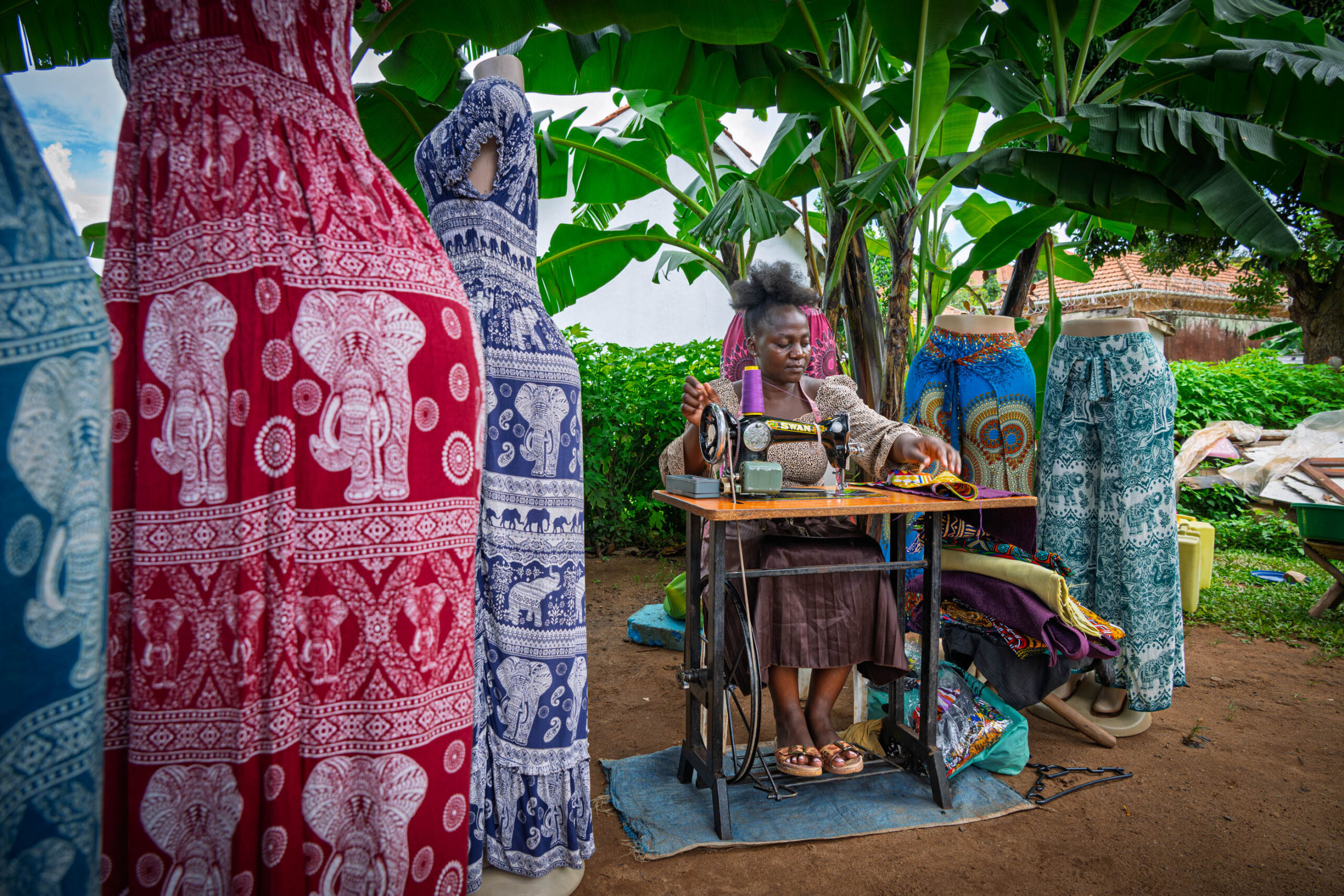
THE SWAN AND THE SEAMSTRESS
A Swan is a life-time investment. In fact, it’s a multi-generational investment. It’s a rip off of the classic treadle-powered Singer sewing machine of the late 19th century. As soon as the Singer lost its patent, the Swan company in China started mass-producing them and selling throughout sub-Saharan Africa. Every bit like the Singer but without the hefty brand-name price. Without a motor and with an abundance of spare parts in Africa, a Swan will outlast its owner. For Benitah Prossy the Swan is her livelihood. The seamstress from Entebbe, Uganda…
-
THE SAFARI LESS TAKEN
My neighbour from Aleppo, Syria and mate for 35 years, Scott Christiansen, and I were in Tanzania last month for a consultancy. It was a Sunday, and we had Bambara groundnut and sweetpotato leaves growing out of our ears. So we decided to get out of Dodge. When in Tanzania the thing to do is to go on a safari. But the Swahili word ‘safari’ simply means going on a journey. Scott and I decided to take a safari in Tanzania … but just not the type you’re thinking of. I’m…

-
SWEETPOTATOES A LA SINGIDA
When I heard that my colleague Scott Christiansen and I were assigned to look at the value chain of sweetpotatoes in Tanzania I assumed we’d be looking at the same orange, white, or purple tubers that make their way into our meals in a hundred different forms. But in Tanzania, especially in the Singida region, the story doesn’t start or end underground. People eat the leaves. These aren’t the same varieties grown for tubers. These are specially bred for foliage—nutrient-rich, fast-growing, and central to household cooking. I saw the sweetpotato story…
-
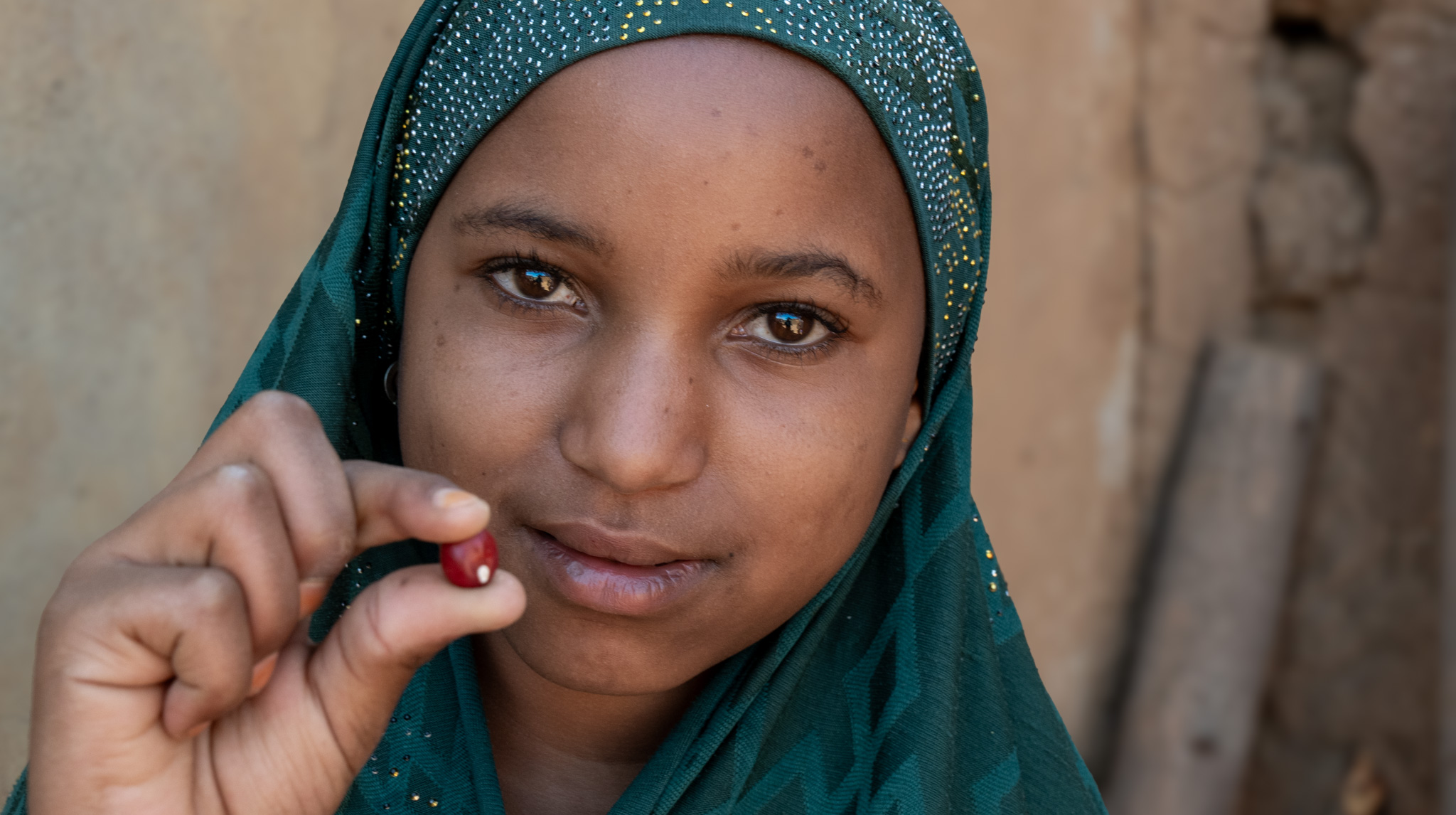
THE BAMBARA GROUNDNUTS OF UNYAMIKUMBI
If you look at a dried Bambara groundnut in its shell you’d be forgiven if you thought it was a deformed peanut. They share a name. Peanuts are called ‘groundnuts’ in many places in the world. And they are both legumes. And both need to have hard shells removed prior to eating. But that’s pretty much where the similarities end. They’re distant botanical cousins but probably not close enough to be invited to family reunions. Bambara groundnuts (BGN) are sown in arid and semi-arid locations like the village of Unyamikumbi, in…
-
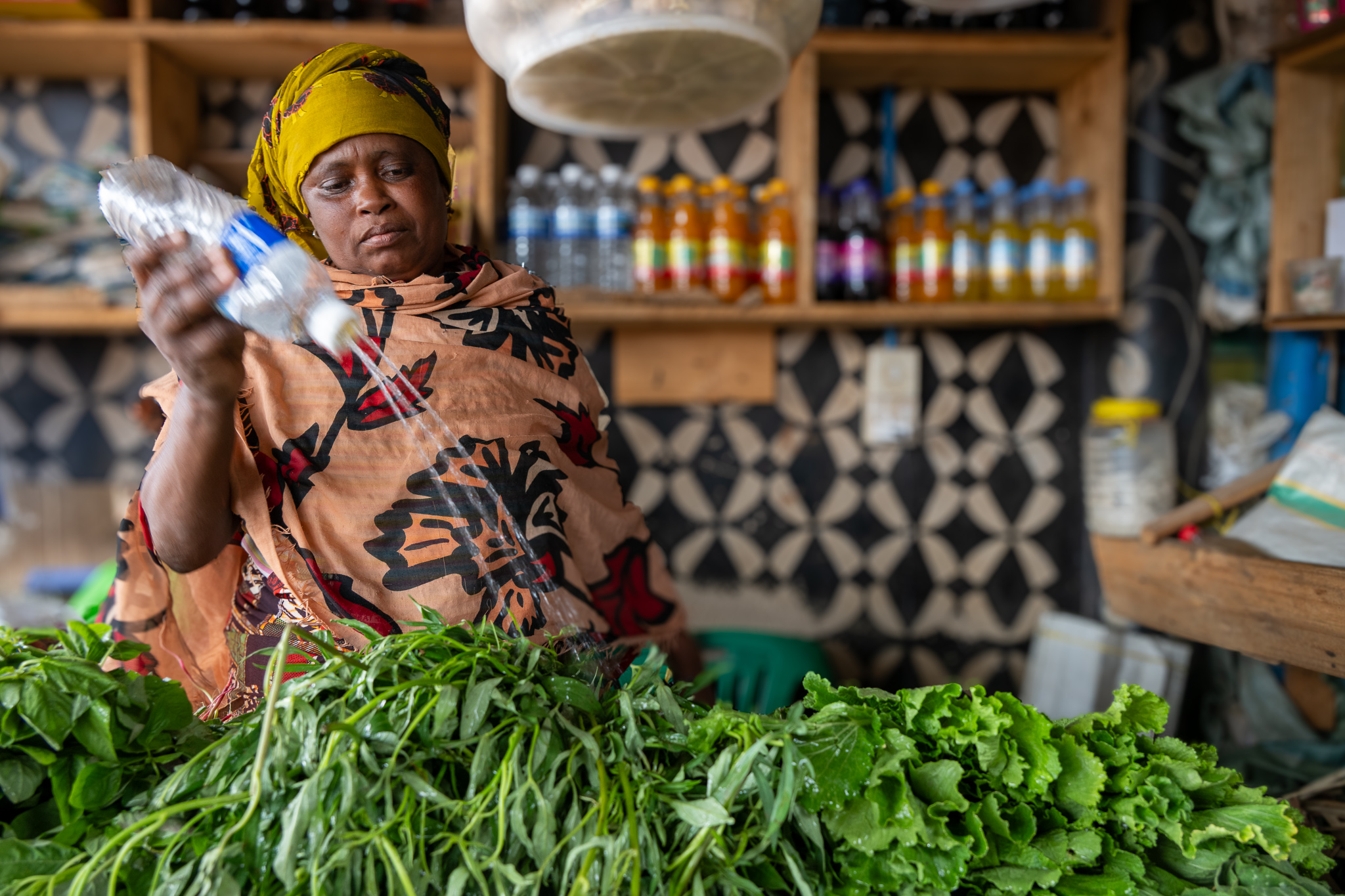
THE SINGIDA MORNING MARKET
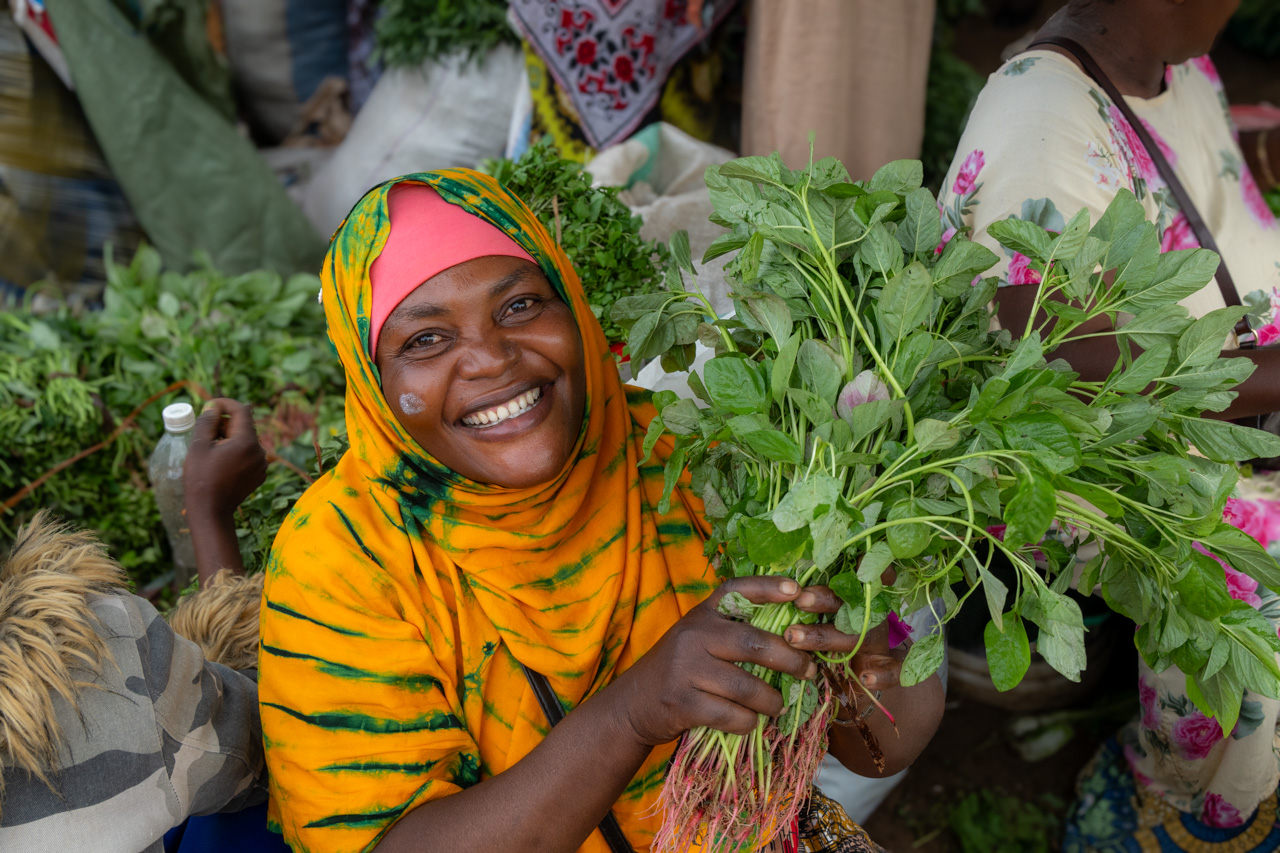
Sweetpotato leaves wilt quickly. They’re harvested in the early morning and usually consumed by nighttime. We wanted to see them nice and fresh so we ventured to the Singida market as the sun rose. We found leafy green vendors, Domina, Rahel and Mwasiti, setting up shop. They pulled out African nightshade, amaranth, mustard greens and sweetpotato leaves. Business was pretty slow at that hour of the day so the three women and I had fun as I got them to pose for photos with their leafy greens. I didn’t have to…
-
NJUGU
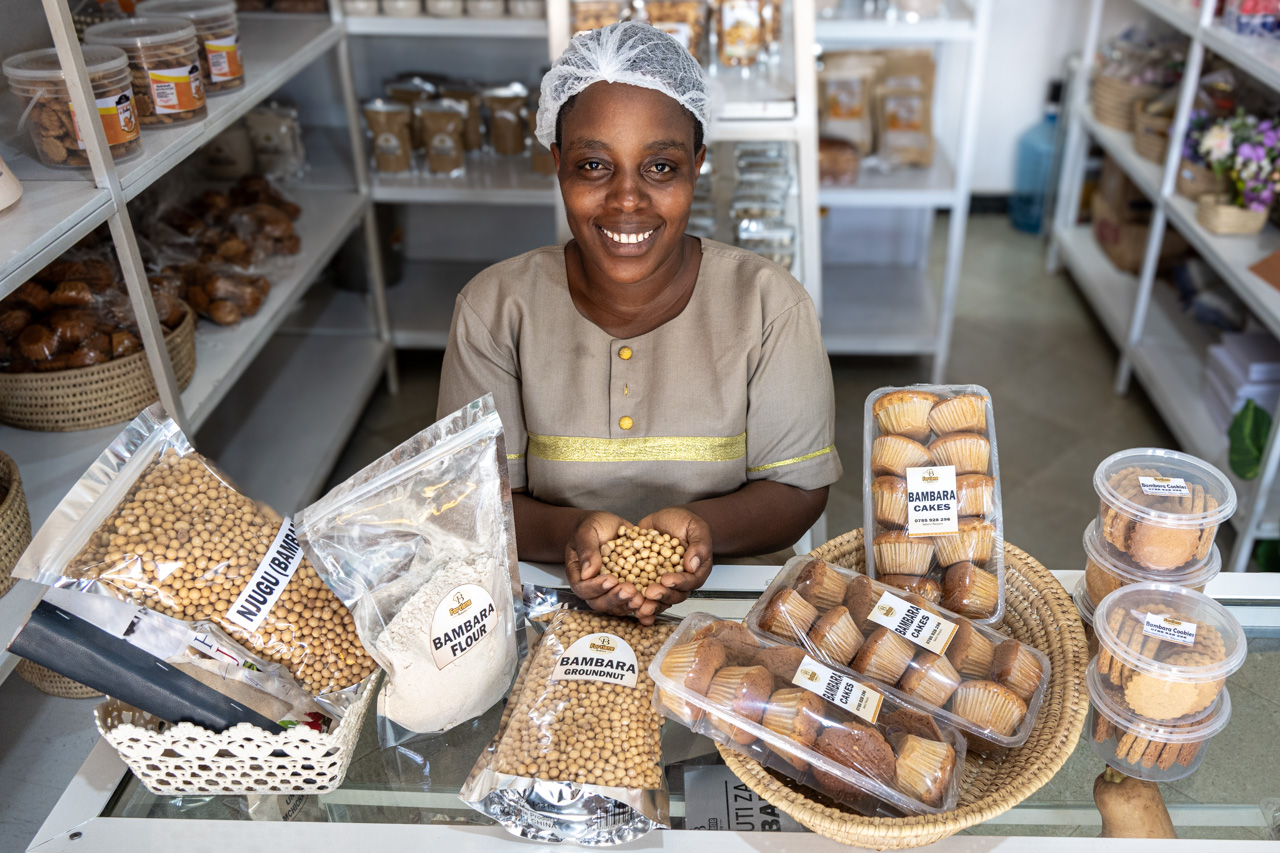
Esther Yoham Majija wanted to make her bakery, the Fortlene Bakery, a step apart from other bakeries in her town of Babati, Tanzania. She wanted to use traditional African vegetables in her baked products. The mother of three visited a booth of the World Vegetable Center at a trade fair and learned of different ingredients and recipes she could use to improve the nutrition of her products. We had heard that one of those ingredients she is using in the Bambara groundnut (njugu in Swahili) so we paid her a visit…
-
FOLLOW THE BAMBARA
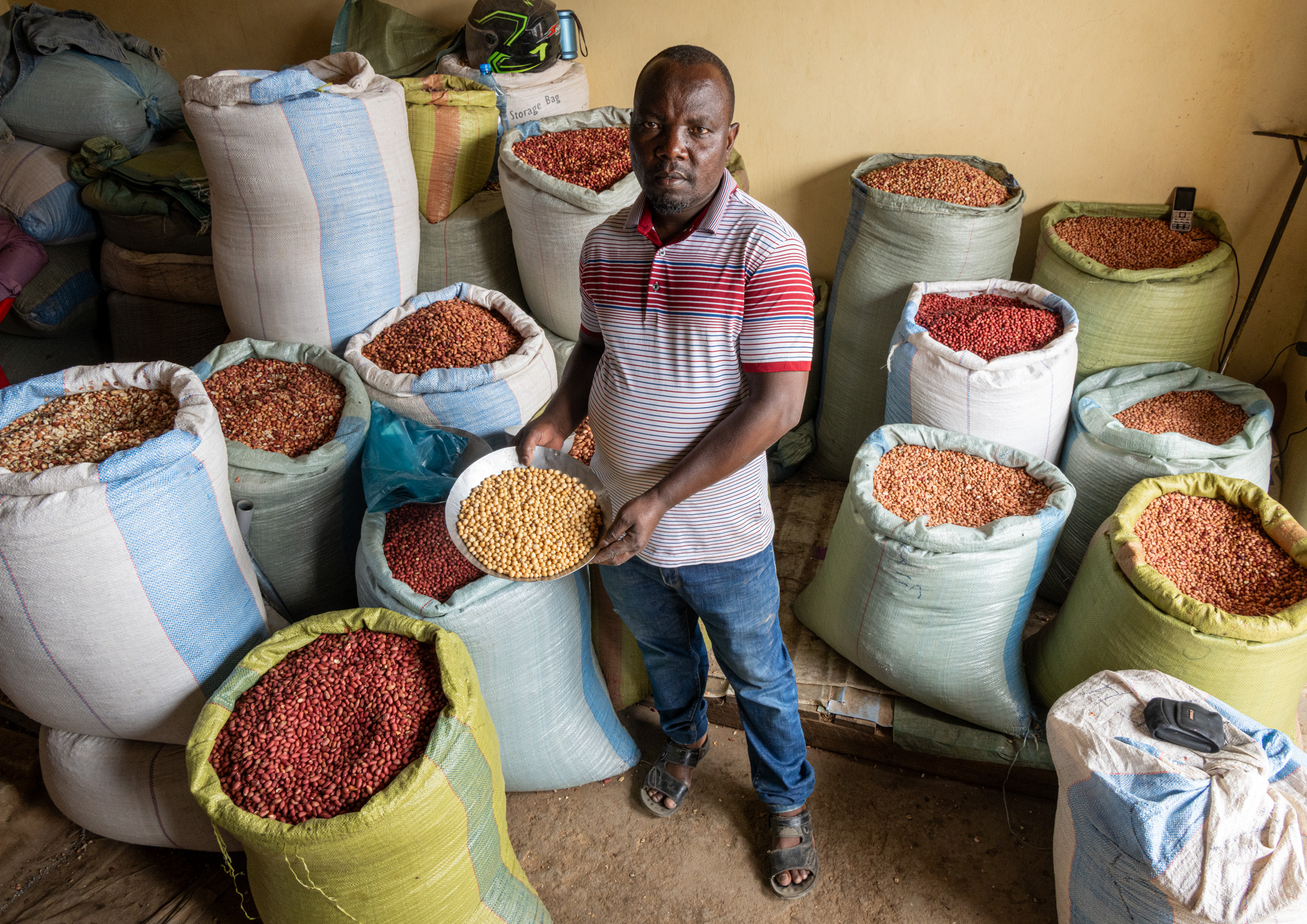
From Singida’s grain sacks to Mama Lulu’s baskets, we follow the Bambara groundnut to market. That morning in Unyamikumbi, Scott and I had watched women shell, winnow and stew Bambara groundnuts. In the afternoon, we wanted to see where the nuts go once they leave the village. So we followed them to market in Singida. Our guide was Henry Mvungi, a World Vegetable Center researcher and PhD candidate. Henry and his team have been mapping the Bambara value chain around Singida – interviewing farmers, traders and hundreds of consumers to find…
-
RECLAIMING FONIO
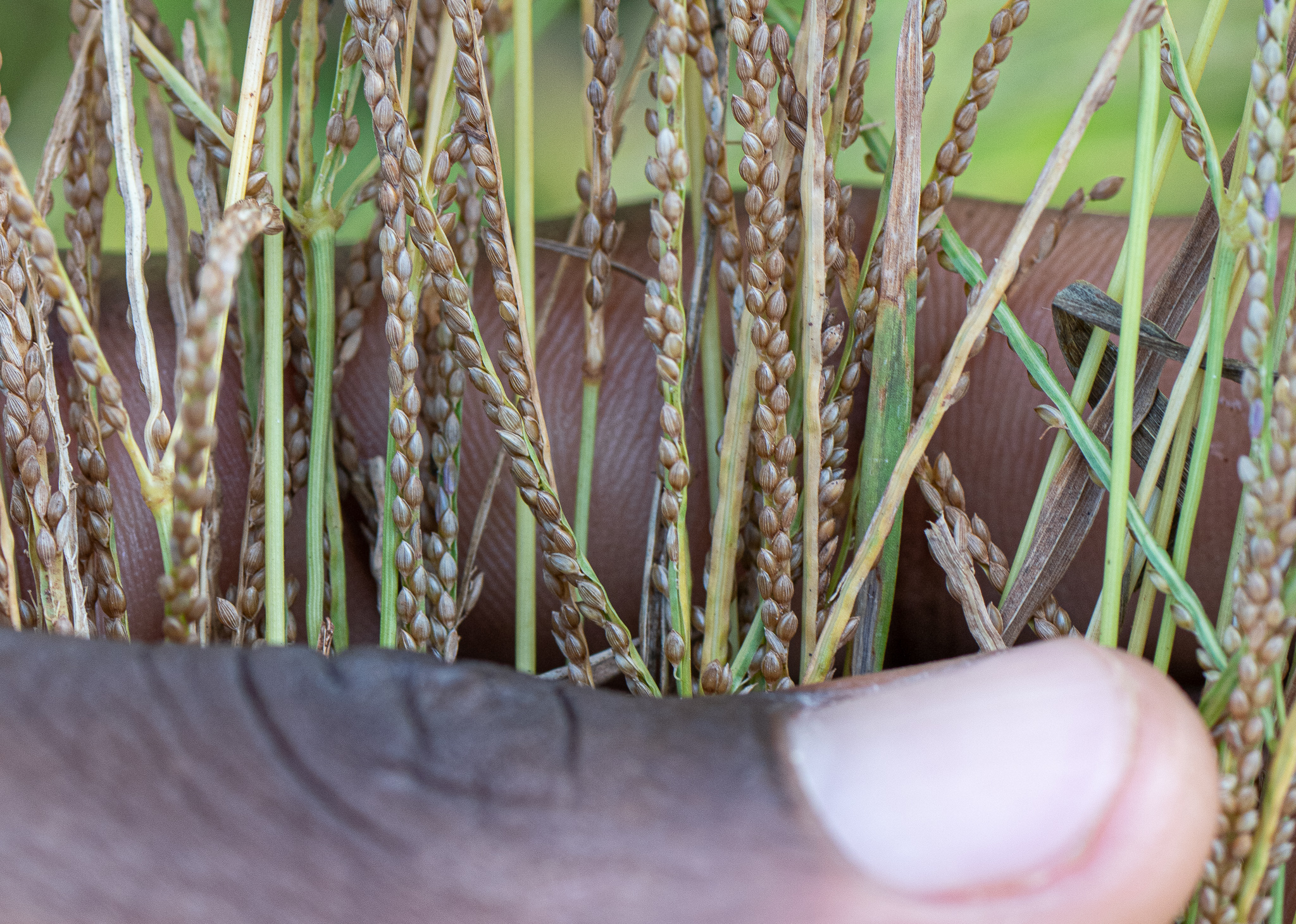
It’s one of the oldest cultivated crops in Africa but you’d be forgiven if you’d never heard of fonio. I had heard of fonio’s many qualities but had never seen nor eaten it. That’s changed now. I travelled to Benin with my colleague Scott Christiansen to learn more. Stakeholders in Benin led by the Crop Trust’s BOLDER project identified fonio as one of several priority opportunity crops. Those are crops which offer great potential in terms of food security but have been neglected by researchers and policymakers and underutilized. Fonio is…
-
CRINCRIN
I never thought I’d enjoy eating green mucilaginous slime. But I did. Jute mallow is a favorite with the Beninese who call the crop crincrin. It’s an annual leafy crop grown in many places around the world. Its leaves are rich in pro-vitamin A, iron, calcium, and vitamins B and C. Those are important in a country where the staple foods are energy-dense but micronutrient-poor. It grows pretty much everywhere in Benin. In small home gardens or market gardens. It’s not fussy about inputs but insects like it as well. Farmers…
If you see this after your page is loaded completely, leafletJS files are missing.