
From Singida’s grain sacks to Mama Lulu’s baskets, we follow the Bambara groundnut to market.
That morning in Unyamikumbi, Scott and I had watched women shell, winnow and stew Bambara groundnuts. In the afternoon, we wanted to see where the nuts go once they leave the village. So we followed them to market in Singida.
Our guide was Henry Mvungi, a World Vegetable Center researcher and PhD candidate. Henry and his team have been mapping the Bambara value chain around Singida – interviewing farmers, traders and hundreds of consumers to find out how the crop moves and where it gets stuck.
One thing became clear quickly. Bambara is grown almost entirely by women, but once it’s in a sack it’s mostly traded by men.
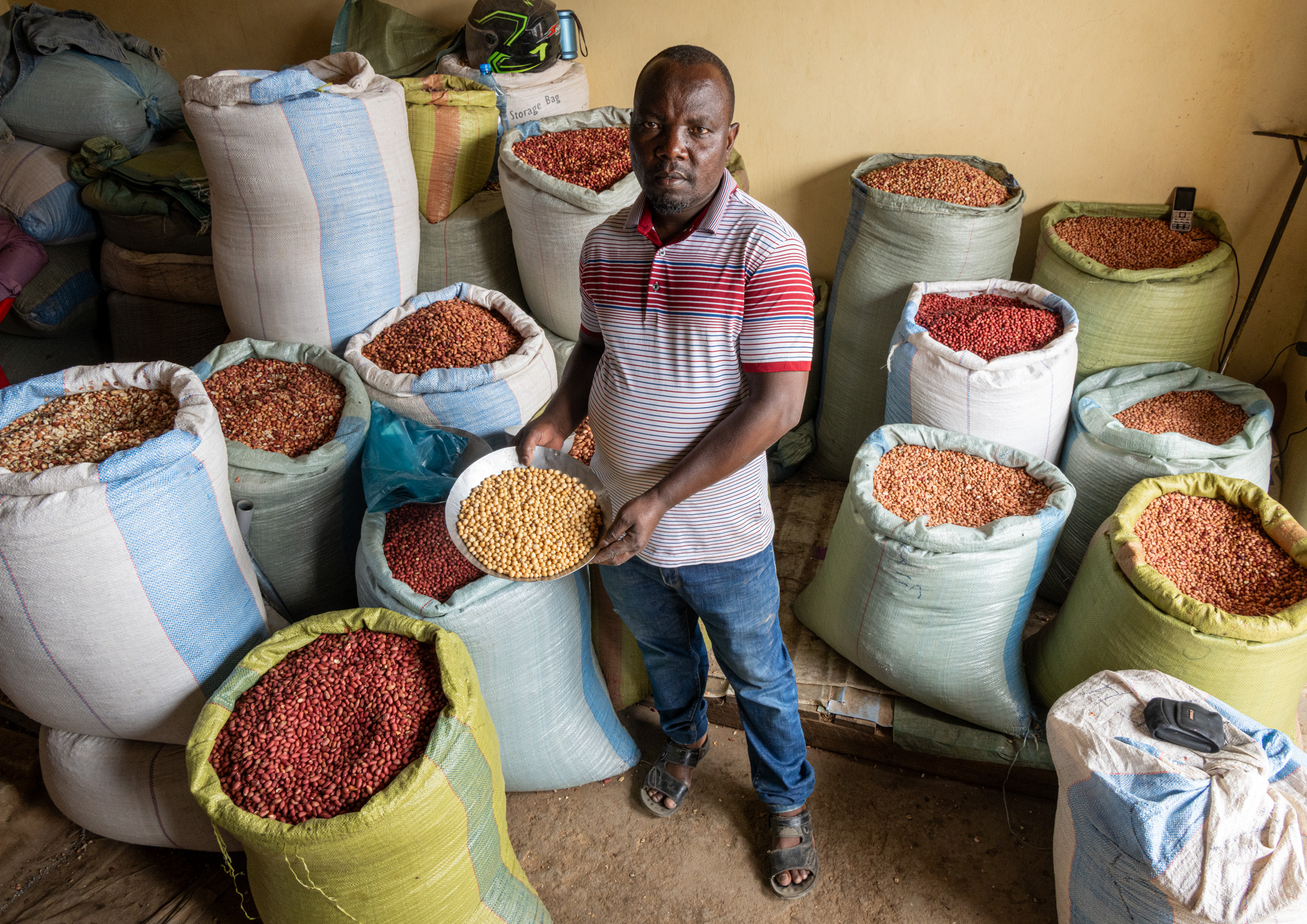
First stop was Musa Msafiri, a wholesaler at Namfua Market. Musa’s storeroom was a jumble of bulging sacks, their tops rolled down like socks. He buys from more than ten farmers he knows and trusts, and he’s fussy. The grain must be clean and each lot must be one colour – white, red, spotted or yellow. Sorting a mixed lot costs him money.
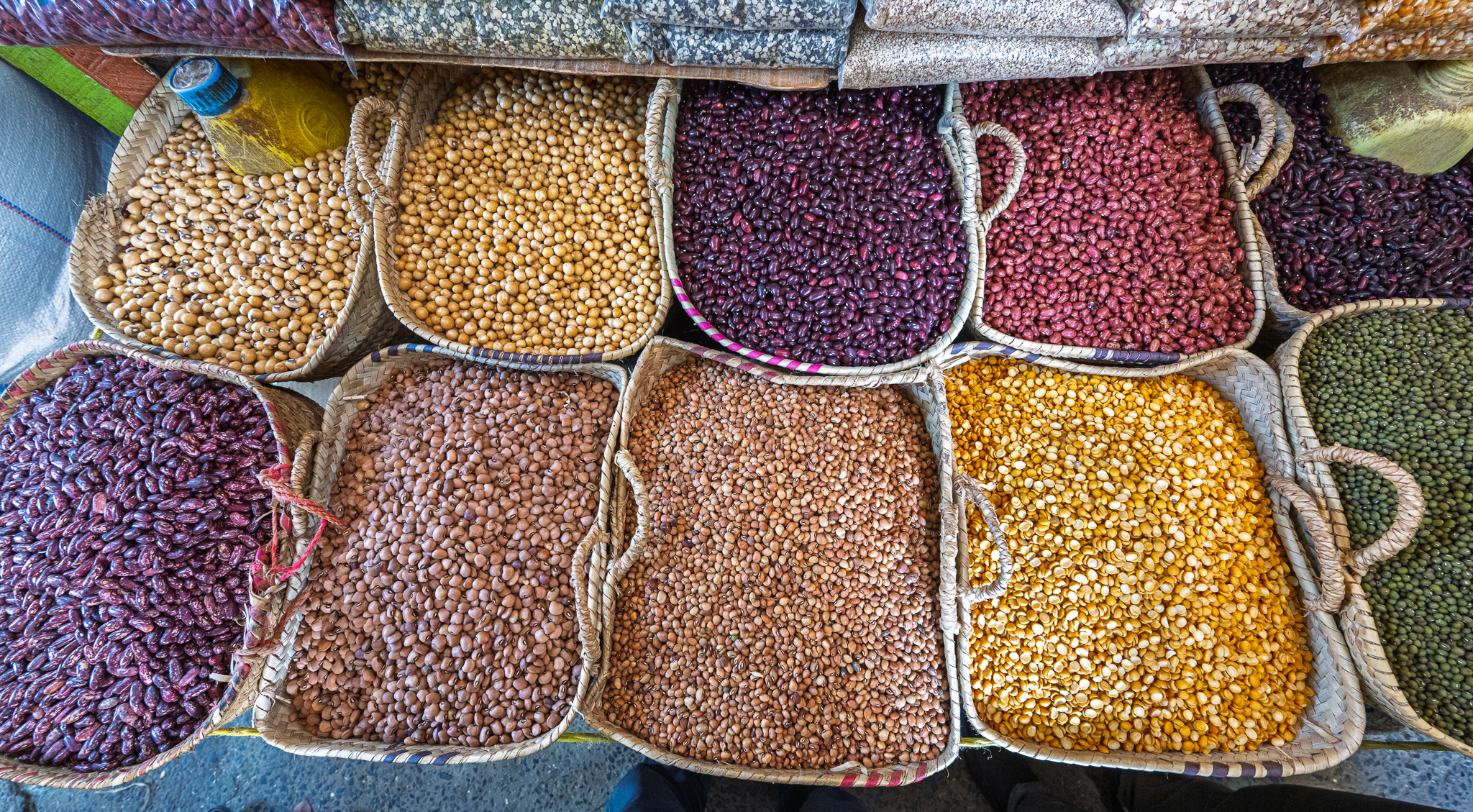
Across town at Msufini Market, retailer Amrani Kidunda’s shopfront looked like an artist’s palette. Pink, green and blue sacks overflowed with grains and pulses, creamy Bambara beside deep maroon. Amrani buys in bulk during the May–August harvest, seals the grain in hermetic bags to keep the weevils out, and sells it bit by bit as prices rise.
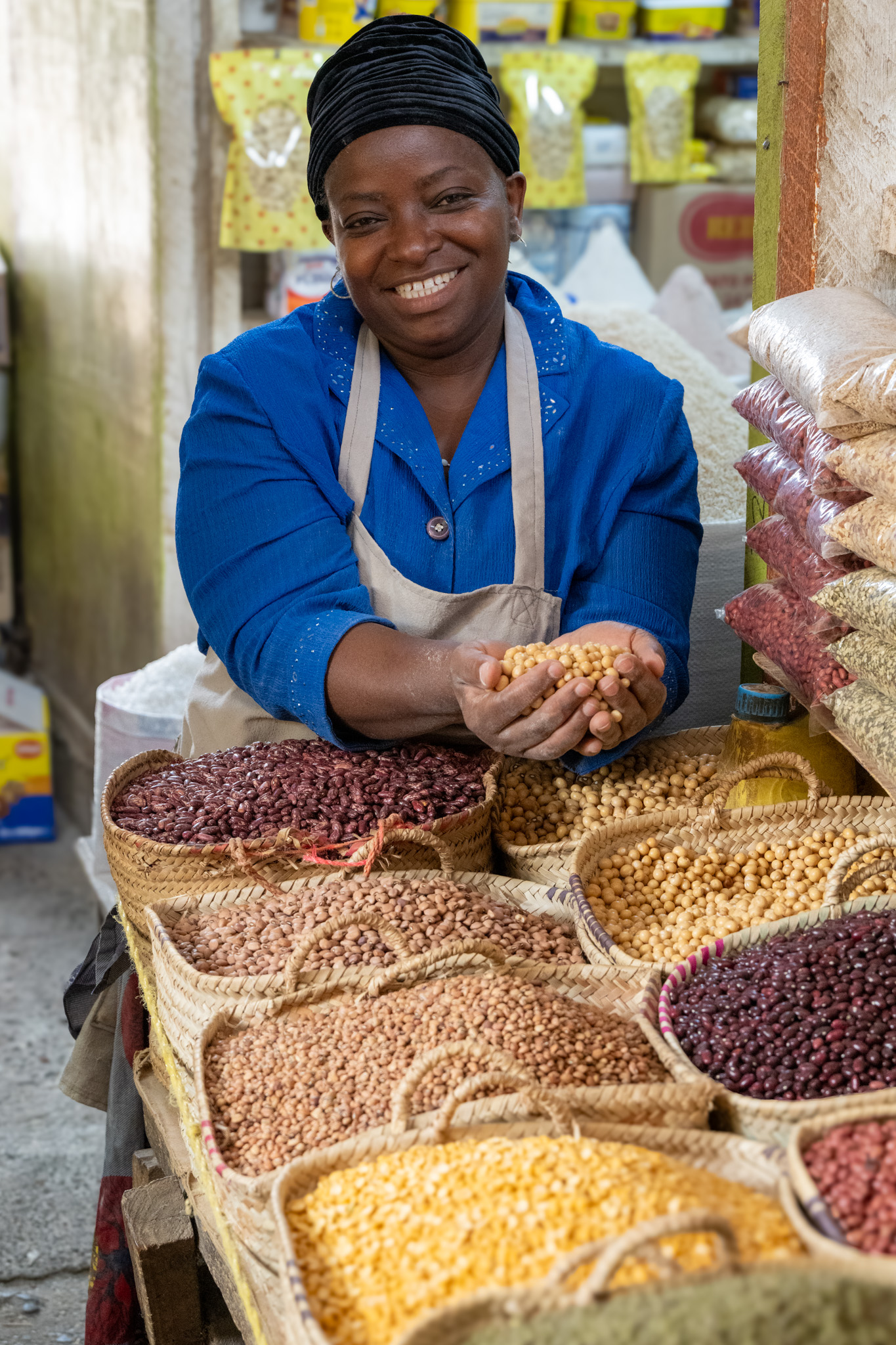
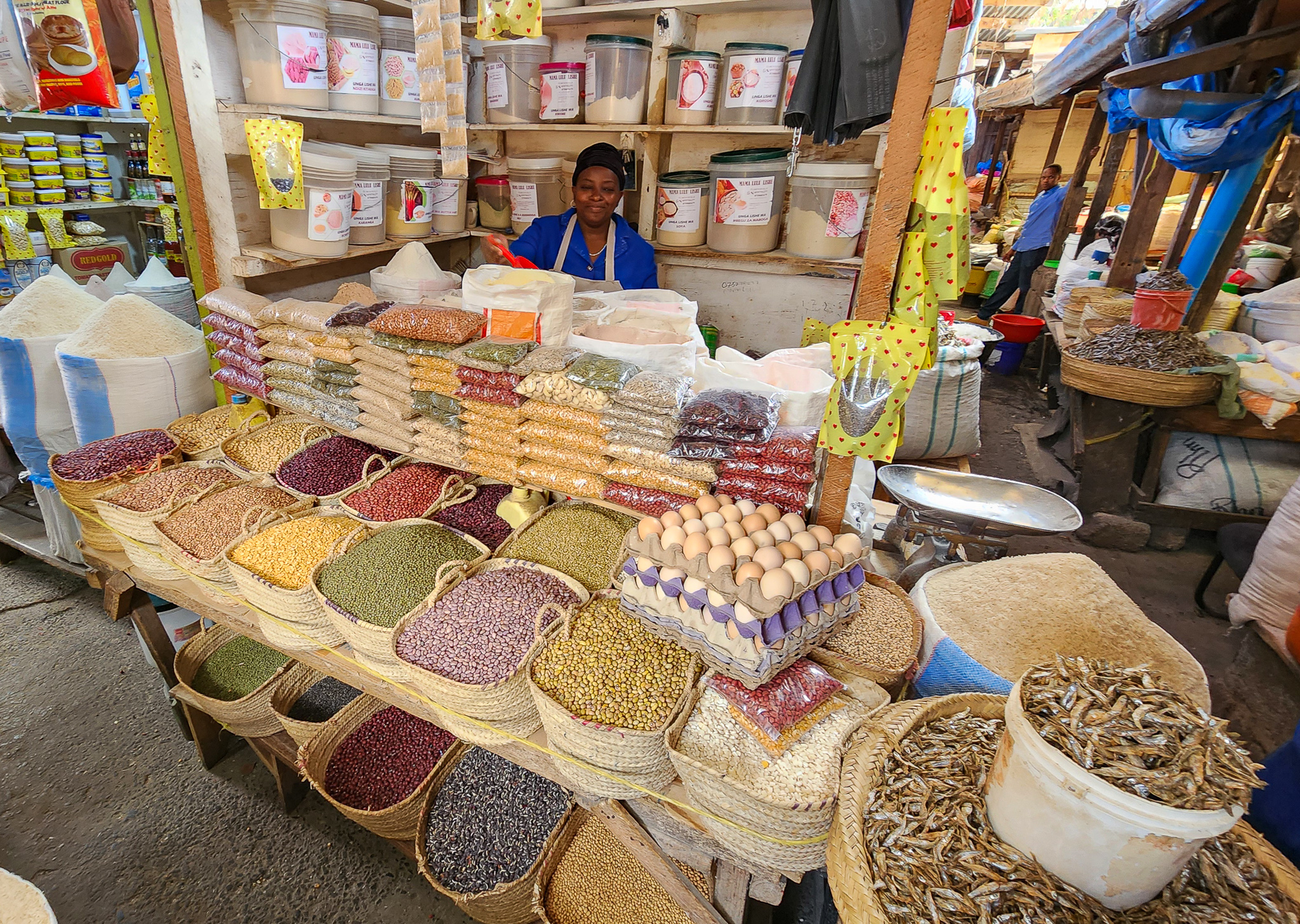
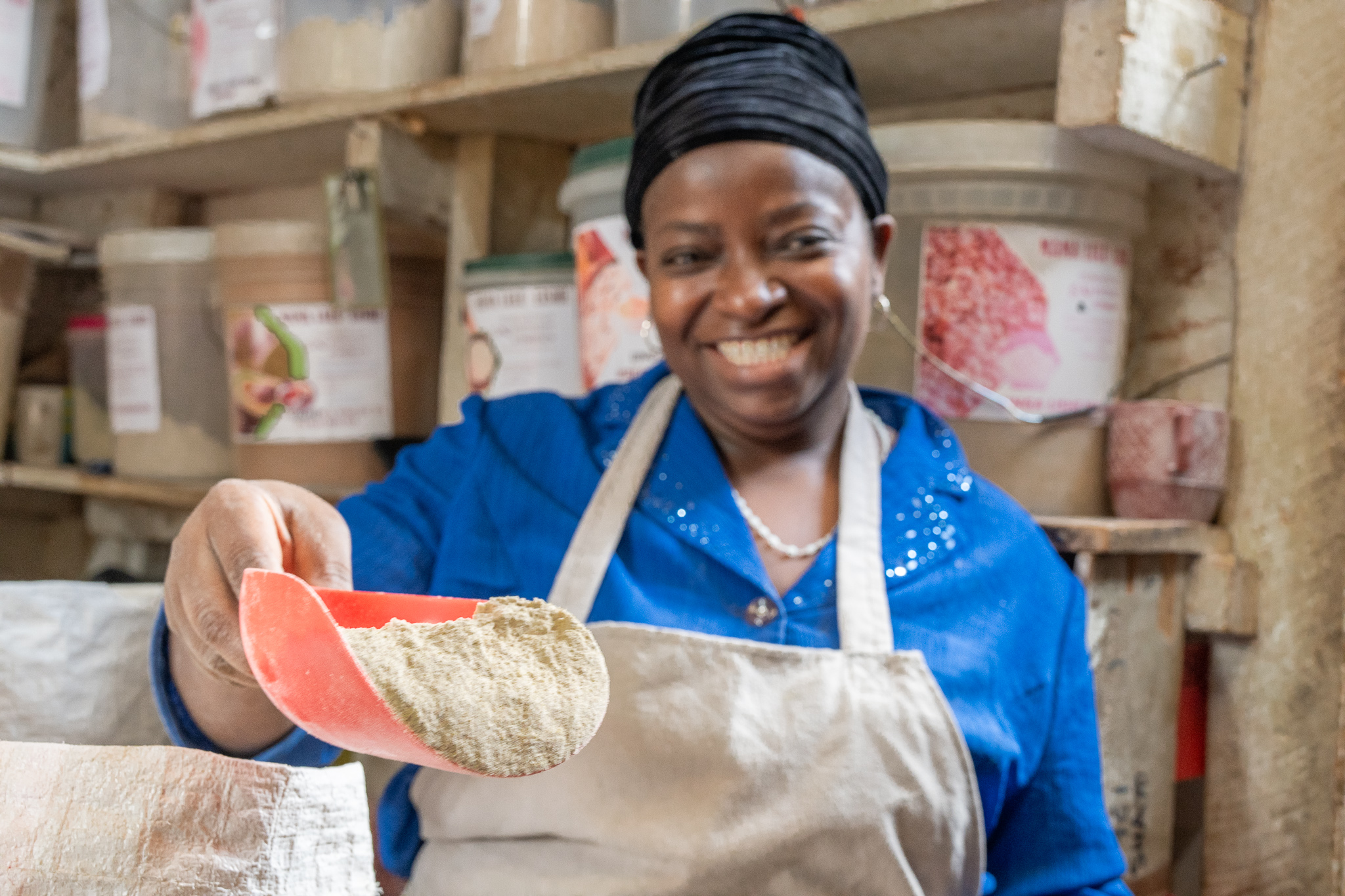
And some of Amrani’s stock travels north to Arusha. So did we. Five days later we found Leonia Gabriel Swai at her Mama Lulu stall in Arusha’s Majengo Market – a pantry of woven baskets brimming with beans, maize, dried fish and eggs, and right up front, Bambara groundnuts. She scooped up a double handful and gave me a smile that needed no coaxing.
Here’s what surprised me. Both Musa and Amrani told us they could easily handle more. Supply isn’t the problem. Demand is. Too many city folk still dismiss Bambara as a ‘poor person’s crop’.
Having eaten it in a village kitchen and a Babati bakery, I reckon that’s their loss. It’s a mighty tasty, drought-tough, protein-packed legume just waiting for the city to catch up with the village.

All images used on this page were photographed by Michael Major for the Crop Trust and used here under a CC BY-NC-ND 2.0 license.