
Kota Bahru – March 1978
Kelantan sits in the far northeastern corner of the Malay peninsula, up against the Thai border, with the mountain spine of the country between it and everywhere else.
I left on a bus from Kuala Lumpur at half past six in the morning and arrived in Kota Bahru twelve hours later. The crossing felt like passing through a membrane. The west coast was tin and rubber and Chinese shophouse towns. Kelantan in the east was rice fields and fishing boats and kampongs, over ninety per cent Malay, speaking a dialect people in KL claimed they could barely follow. No alcohol was sold, the call to prayer organised the day, and the state was famous for what it made – batik, gold-threaded songket, kite-flying, shadow puppetry, top-spinning; crafts that elsewhere in the country had thinned into folklore and here were simply what people did.
I went for the market.
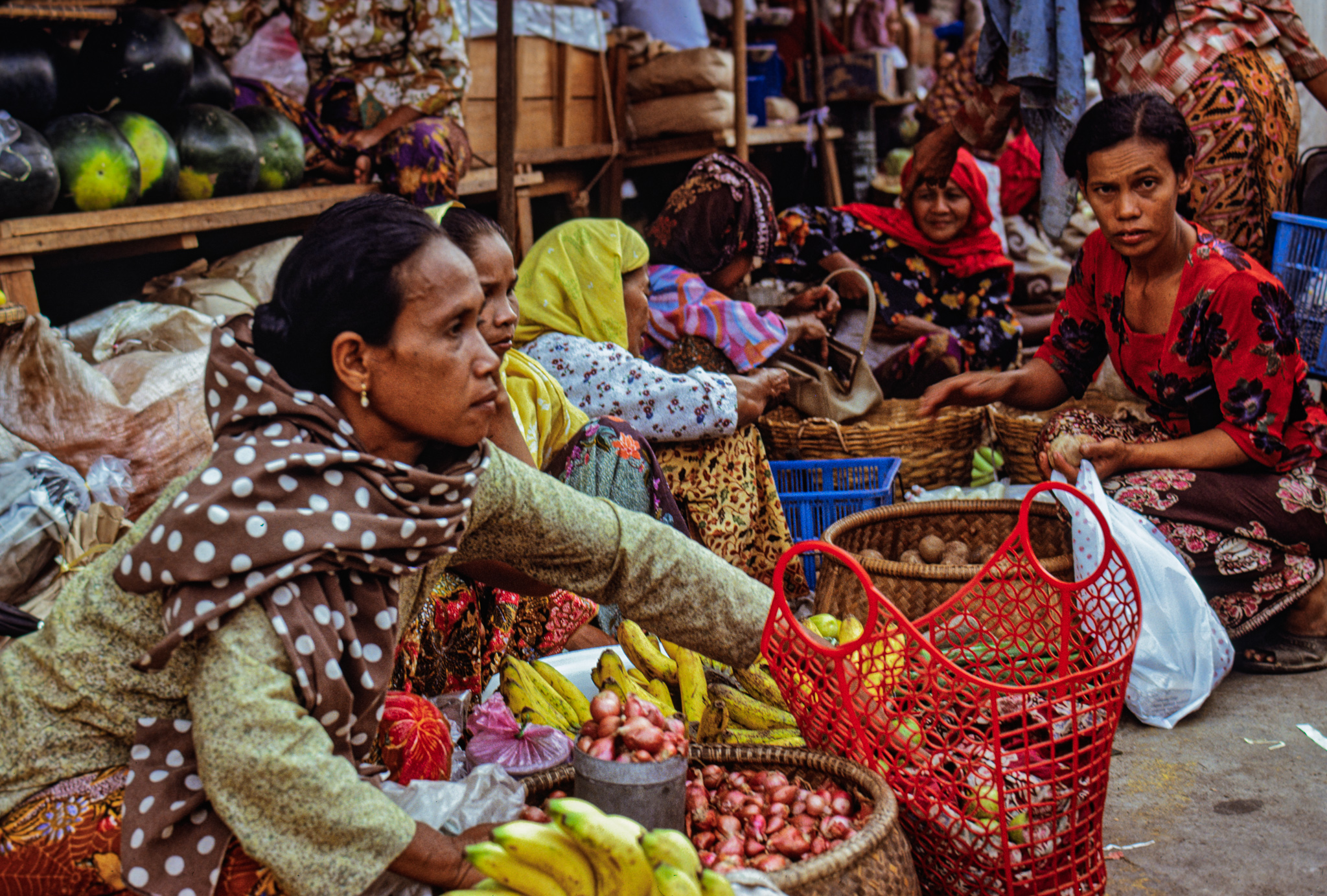
It stood near the river in a low sprawling building that has since been replaced. It was the town’s engine, and it belonged to women. This is the thing about Kelantan that took me longest to absorb, because I had arrived with a set of assumptions about Muslim women in a conservative state and the market dismantled them within an hour. The traders were almost all women. They set the prices, held the cash, and dealt with the men who came in to buy as people plainly in charge of the transaction. The men, in the main, sat in the coffee shops around the edges.
Trading began well before dawn and was at its height in the cool dark hours. By the time the sun cleared the shophouse roofs the crowd had started to thin, and by noon the heat had emptied the place entirely. To see it working you had to be up before the sun, or close to it. And that’s when I went.
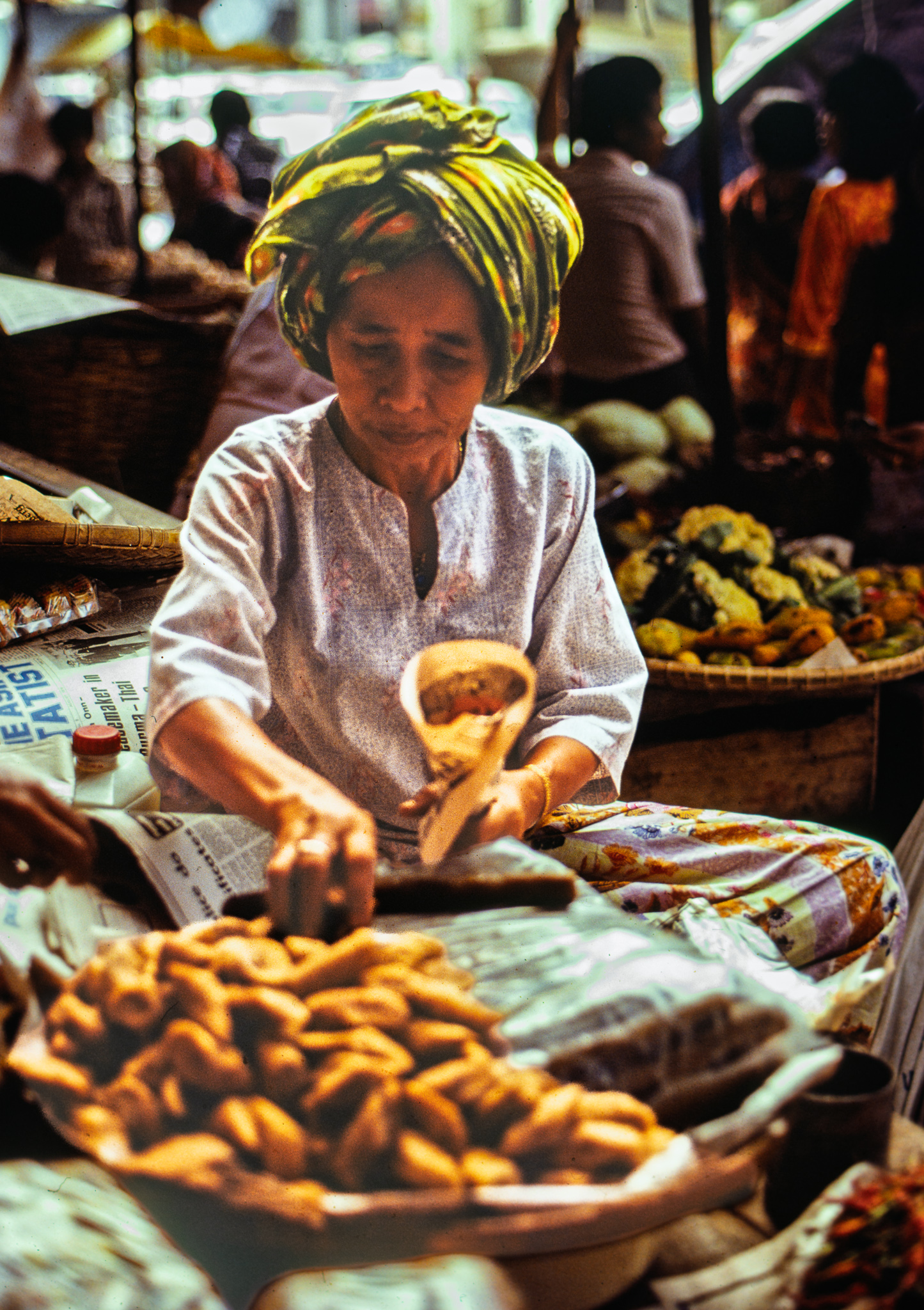
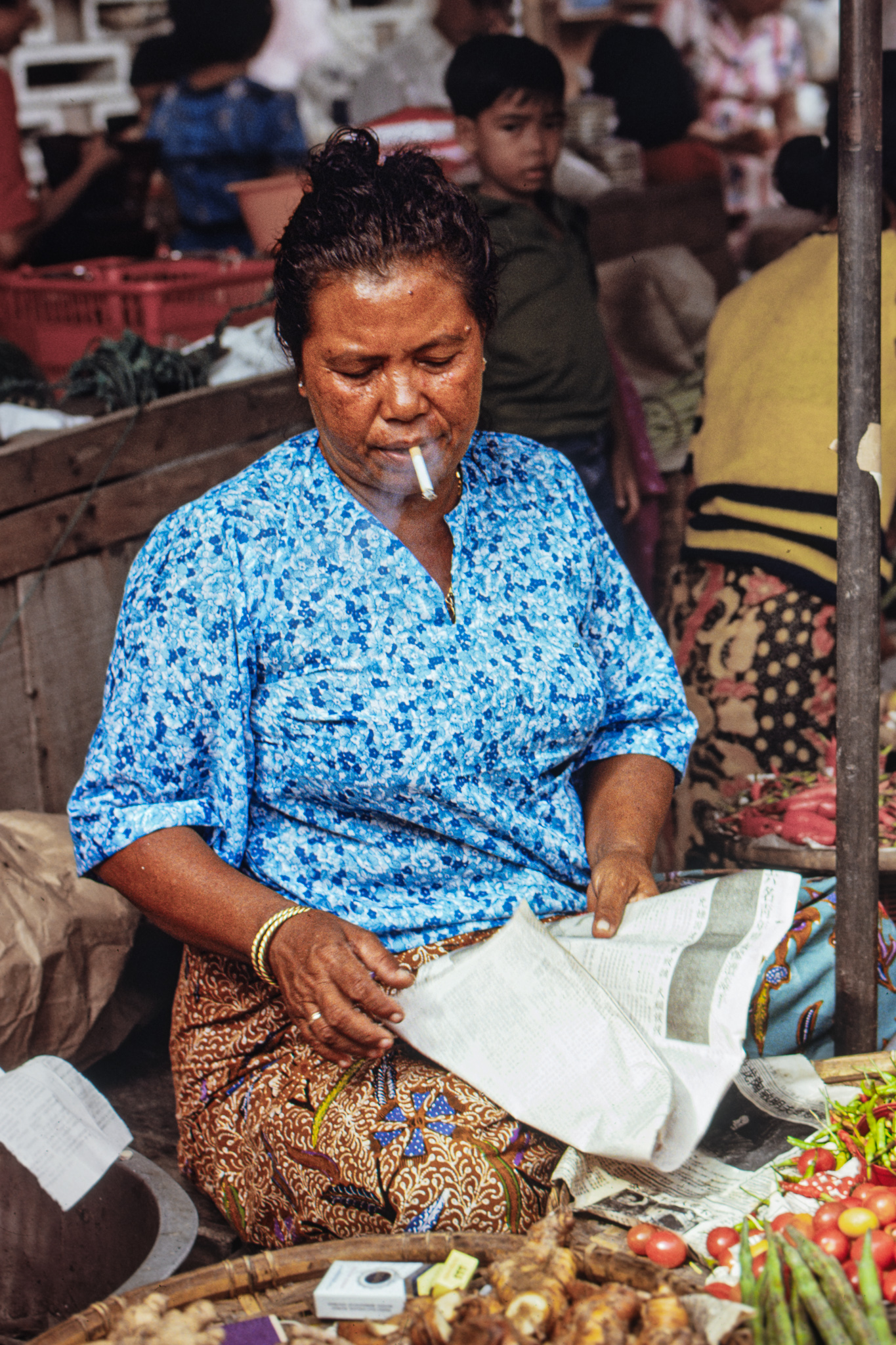
What stays with me is the density. Women sitting on the ground behind their goods, close enough to touch one another, each with a small territory marked out in bananas and shallots and limes and long beans. Rattan trays, red plastic baskets, watermelons stacked in a dark green wall at the back. Everyone was working and everyone was talking and the two were not separable – a negotiation over the price of a pineapple could run five minutes and appeared to be the point rather than a cost of doing business. Newsprint was the packaging of the whole operation. Fish went out in it, vegetables went out in it, and it was spread under the trays of fried snacks to catch the oil.
I was the only white face in the building and there was no pretending otherwise. Hey, Joe – the standard hail for an American, which everyone under thirty seemed to know. It got me more conversations than my Malay could carry, and it got me fed. Look curious enough in that market and things were put into your hands. A boy showed me how to open a small clam by setting it between his front teeth and prying, and I tried it, and chipped a tooth, and a crowd of boys gathered to watch the foreigner fail and then cheered when eventually he didn’t. Somebody split a durian and handed me a piece. I liked it, which seemed to please everyone present considerably more than the eating of it pleased me.
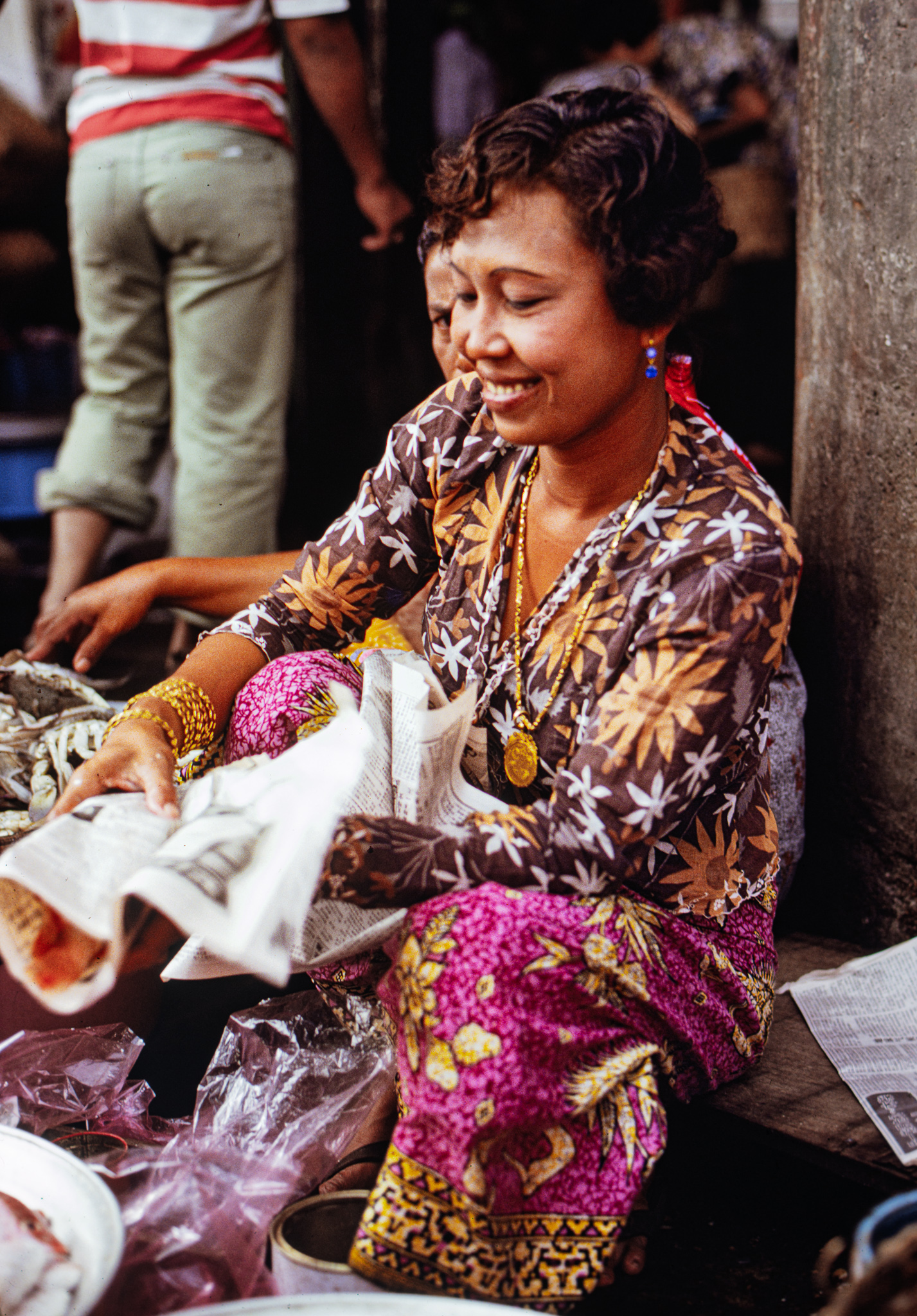
The fish end was where my nerve went – whole fish piled on the boards in rising heat, a smell I walked fast to get past and could not photograph without holding my breath. The women working it were untroubled, laughing across the aisle at something I couldn’t follow, gold at the throat and both wrists, dressed better for a morning’s work than I was dressed for anything.
By the time the sun was overhead it was breaking up. Apples and oranges that had been stacked all morning in a careful pyramid went back into a basket in no order at all. The spices were covered, the chickens fed. Everyone went home to get out of the heat.
On my second day I went out to a batik works, which turned out to be less a factory than a compound – an open-sided shed, a yard of bare earth, and a family.
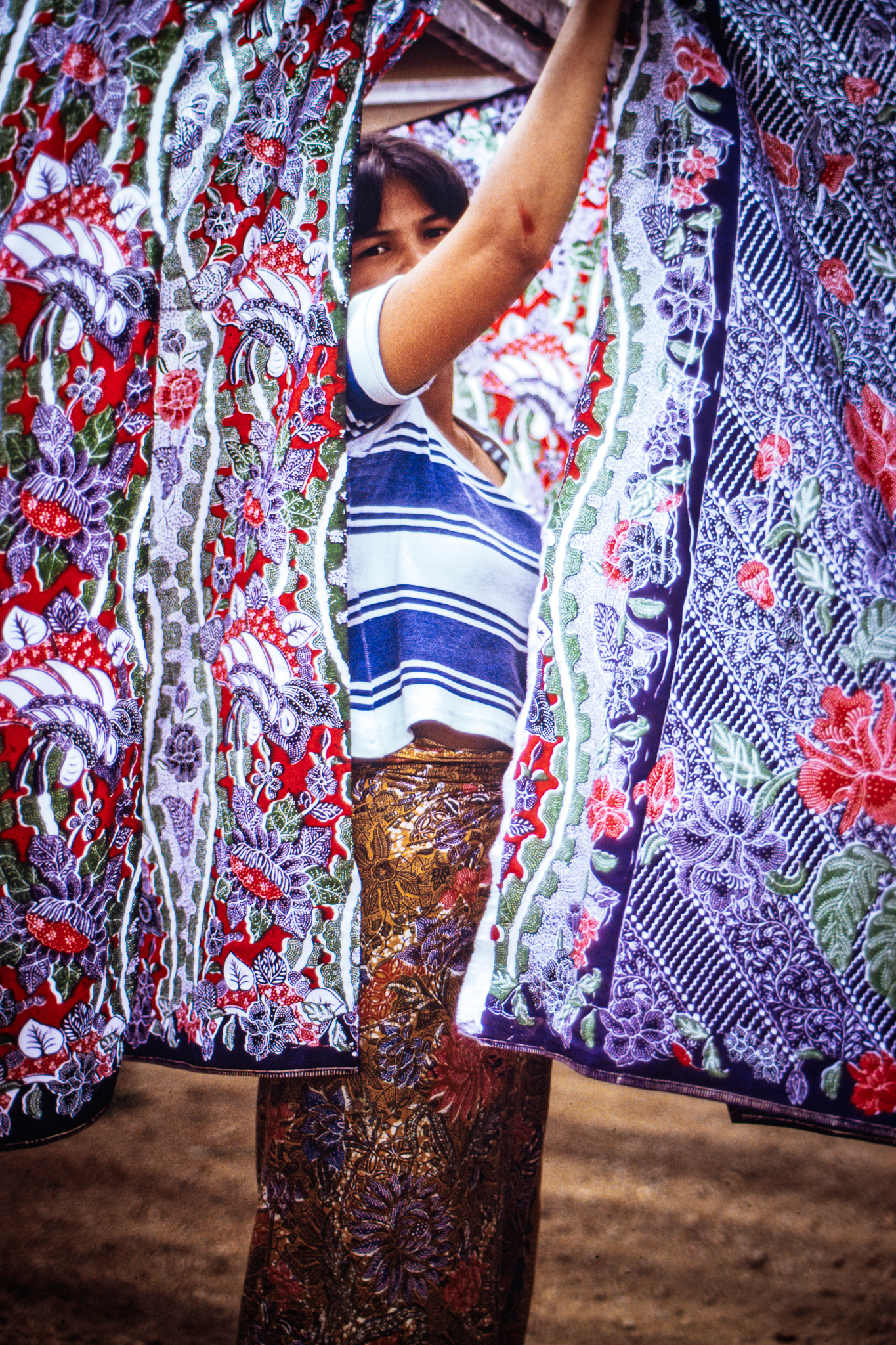
The pattern goes on in wax, and there were two ways of laying it down. The slow way used a small copper cup on a handle with a fine spout, molten wax drawn freehand over the cloth like ink from a pen. The fast way used blocks — copper strip bent and soldered into a design, dipped in hot wax and pressed onto the fabric, one panel abutting the next down the whole length. It looked simple and was not. Too much wax and the line spread, too little and the dye crept under it, one block set carelessly and the repeat ran crooked for six feet.
Then colour, brushed by hand into the spaces the wax had fenced off. I had assumed dyeing meant a vat. Much of what I watched was painted — one colour laid into a leaf shape, then the next into the next, working down the cloth. It explains the look of east coast batik: big open florals, hot colour, nothing like the dense Javanese work I would see later that year. No people or animals anywhere in the patterns except butterflies.
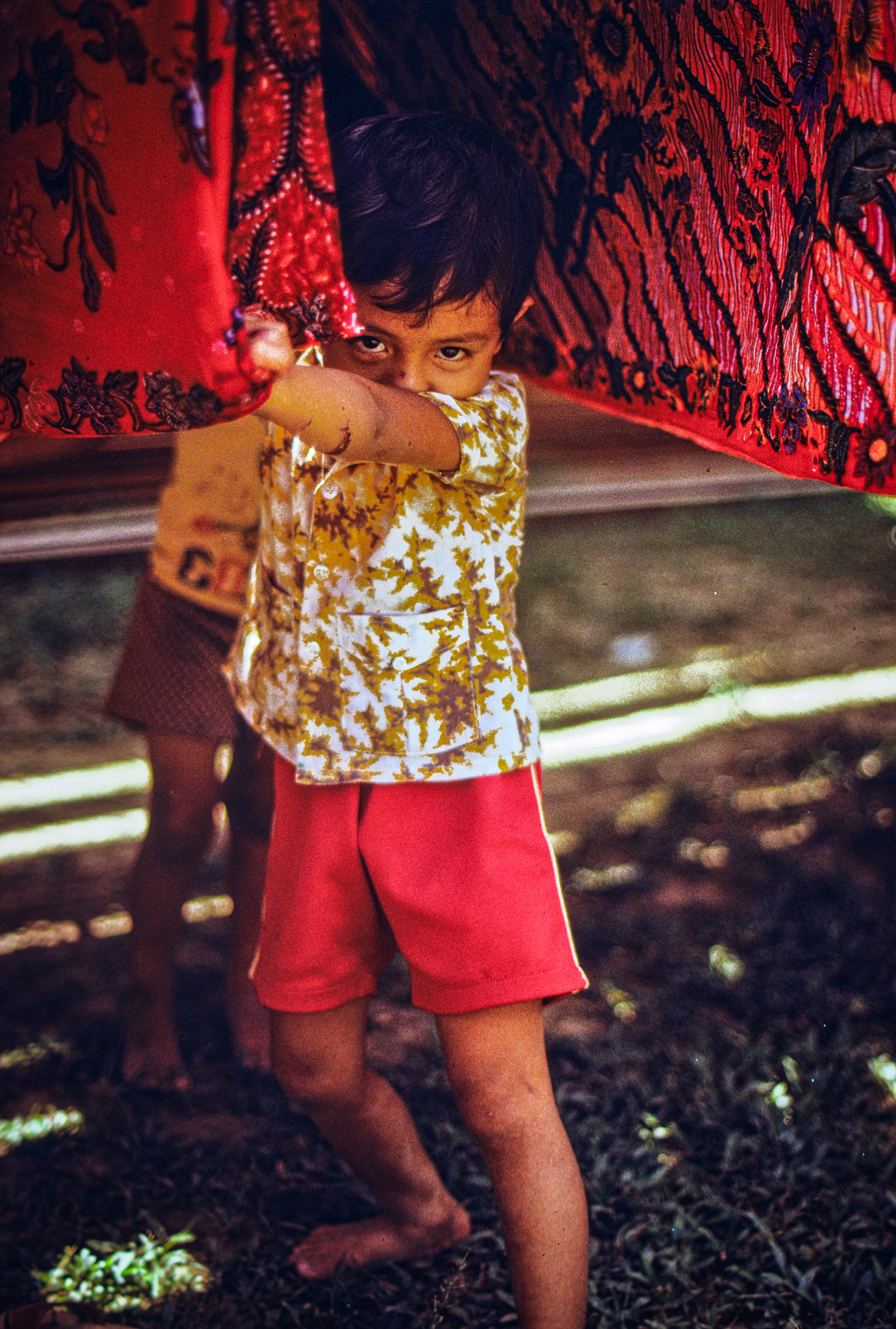
Then the wax was boiled out and the cloth carried into the yard to dry, and the yard was the best thing on the property. Finished lengths hung on lines with the sun coming through them, a corridor of purple and red and green that shifted whenever the breeze got into it, and a young woman moving down the row hanging more. Children ran in and out of the rows, using the wet cloth as cover, watching me from behind it and ducking away when the camera came up.
My own clothes were going ragged by then. I bought a batik t-shirt, which I needed, and wore it hard. It came home to Wisconsin with me.