
Selangor – 24 March 1978
We went out in the university bus, eighteen of us, on a day the programme had billed as a look at Malaysia’s oldest industry. It turned out to be three stops that told a single story backwards: a working tin mine, the Sultan’s palace, and a pewter factory.
We started in the mud.
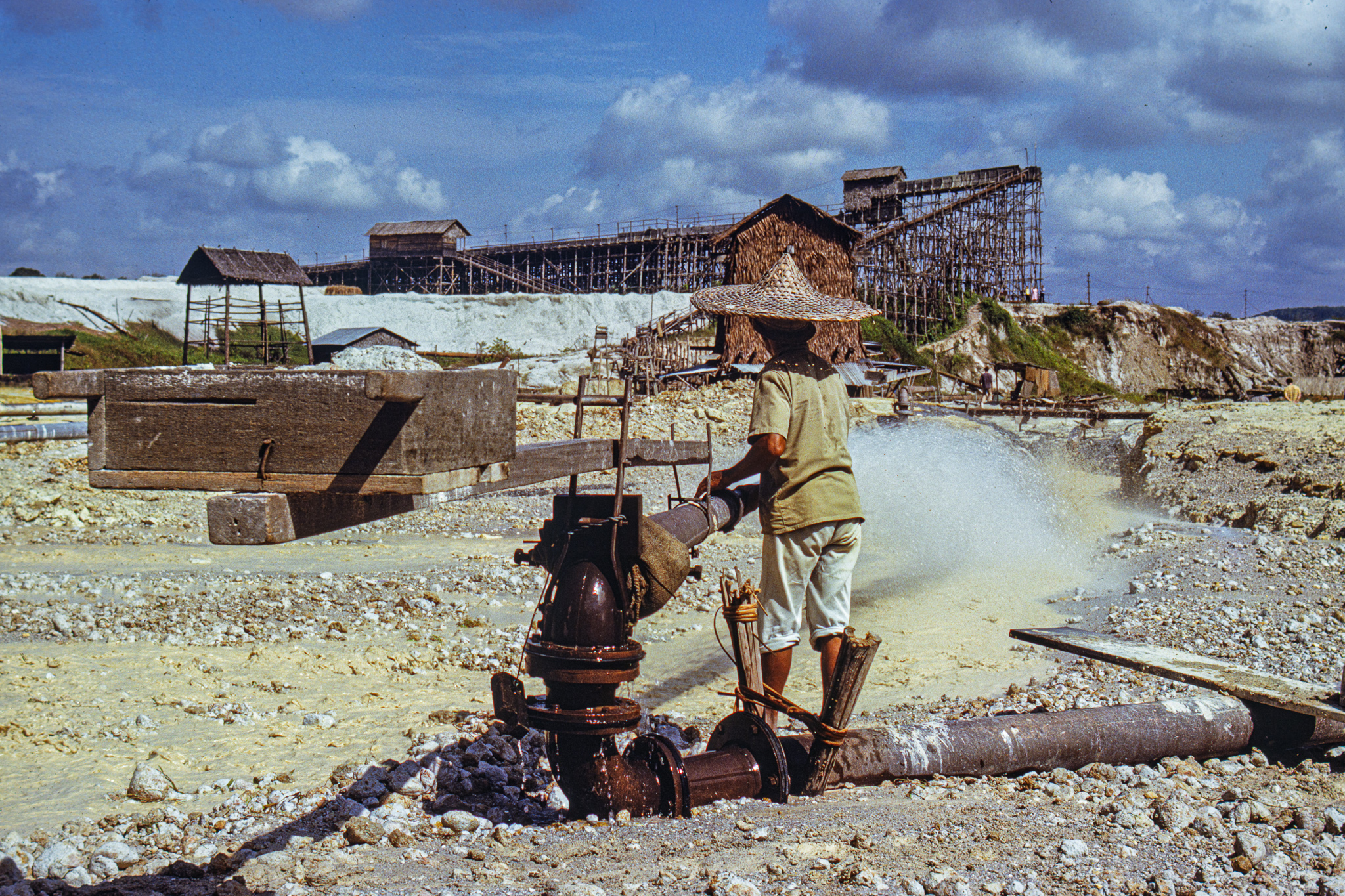
What I remember first is the sound. Not machinery, exactly – a hiss, steady and enormous, like standing beside a waterfall that never varied. It came from the monitors: iron nozzles bolted to elbows of pipe at the pit floor, throwing a jet of water hard enough to take a man’s arm off, aimed at a wall of pale ground. The ground came apart under it. That was the whole method. You did not dig the tin out. You washed the hill down and let the water sort it for you.
The pit was white and grey and glaring, terraced in shelves, with brown pools standing at the bottom and the jungle held back at the rim like something waiting. Cassiterite – tin oxide, the ore – is nearly three times the weight of the sand it lies in, and everything at the mine followed from that one fact. The slurry ran downslope to a sump, a gravel pump lifted it up a trestle of scaffolding to the palong, and the palong was simply a long wooden sluice tilted at the sky. In the sluice the heavy black grains dropped into riffles and the light stuff kept going, out the end, into the tailings.
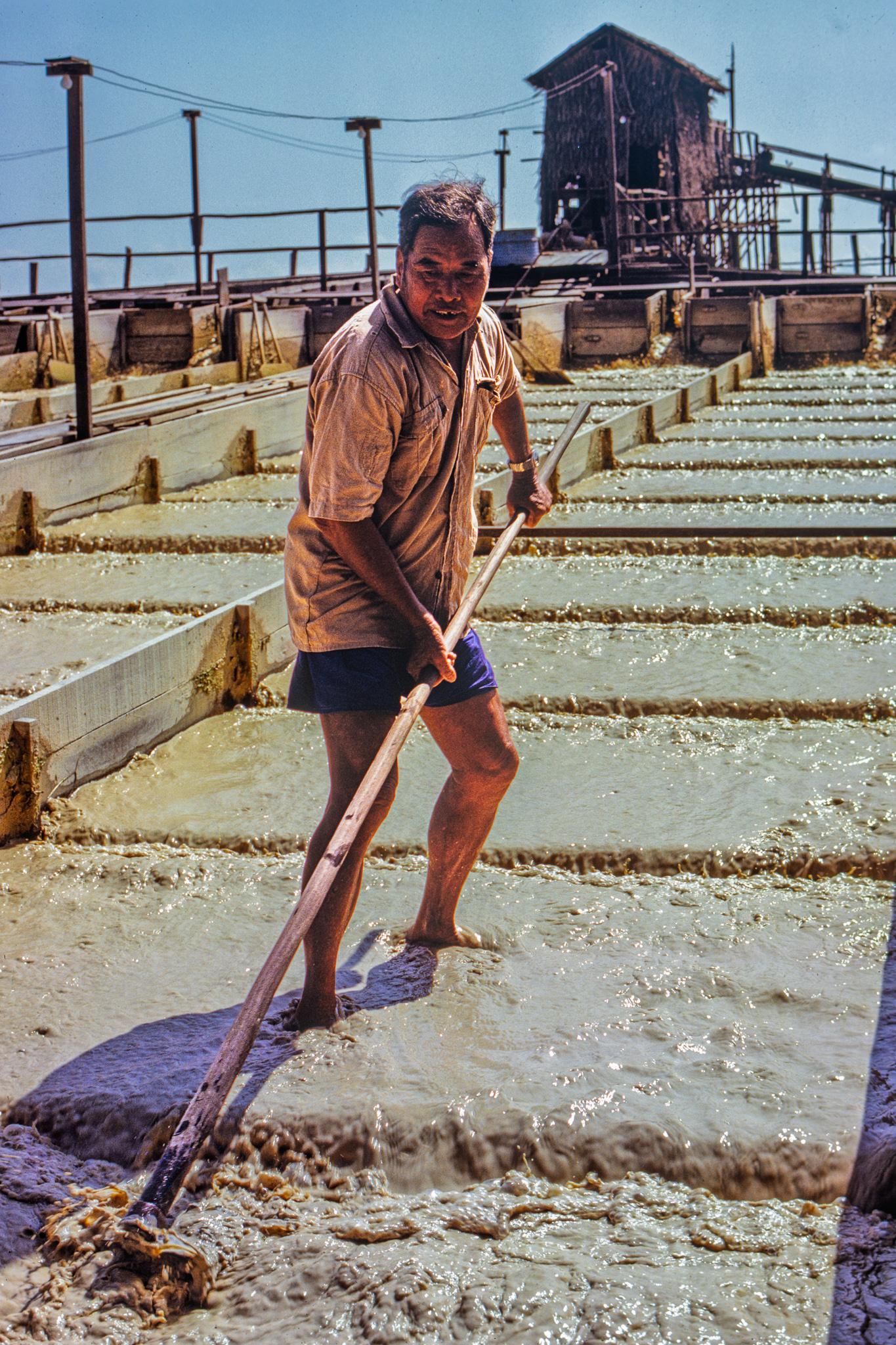
I had expected ore. There was no ore to see. There was mud going up a wooden chute, and mud coming out the other end, and somewhere in the difference between them was the metal.
What struck me was the water. The stuff moving through that sluice was not wet gravel. It was water with a little gravel in it, a few parts solid in a hundred, which meant that for every tonne of ground the mine treated, something like ten or twenty tonnes of water had to be raised, run down the boards, and dumped. A mine of that kind ran its pumps all day and used its own flooded pits as a reservoir, pulling the same water round and round because there was no other way to get enough of it. Downstream, the Kinta and the Klang ran the colour of milky tea. Kuala Lumpur means muddy confluence; the city sits where it does because men came looking for tin, and the mud in the name is this mud.
In 1978, Malaysia was the largest tin producer on earth and had been for most of a century – roughly a third of world output, some forty thousand men employed at it, more than seven hundred gravel-pump mines like this one scattered through Perak and Selangor alongside a few dozen big bucket dredges. The industry was past its peak. Output had been sliding for six years and had only just turned up again. Inside a decade the price would collapse, and most of these pits would fill with water and become fishing ponds, and eventually car parks.
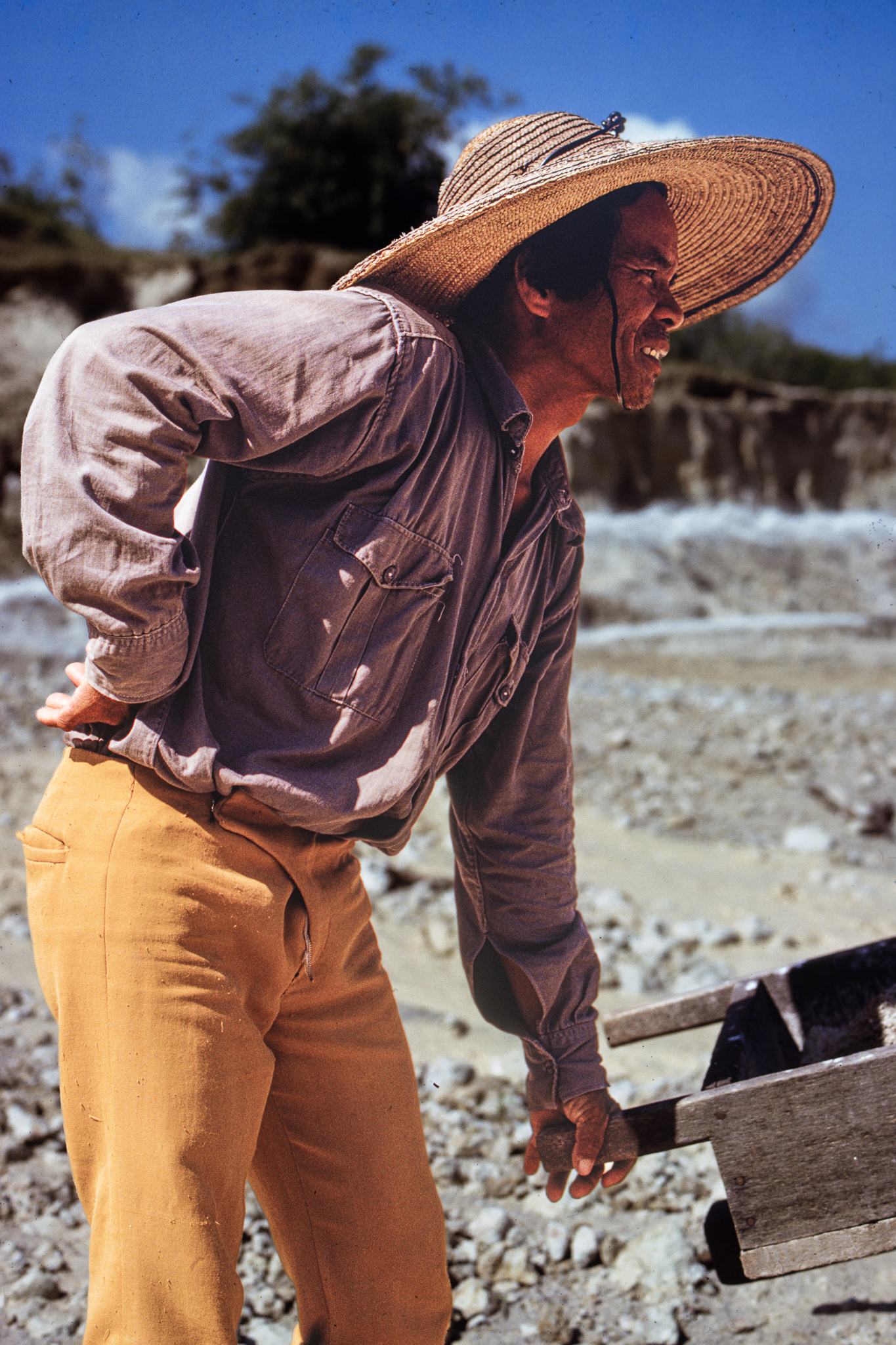
The men were what the photographs kept. A labourer in a straw hat, straightening up from a wooden wheelbarrow to grin at the American with the camera. A man at the monitor in a conical hat and rubber boots, one hand on the nozzle, the jet going out of frame in a white plume. A third standing barefoot in the sluice channels in shorts, working a long wooden rake through the settling sand, ankle-deep in the stuff all day.
Then we got back on the bus and went to the palace, and after that to the pewter works, where girls in uniform hammered the same metal into tankards and tea caddies and a man explained the alloy to us in excellent English. The showroom was cool and the pieces were beautiful. I wanted to buy something for my mother but couldn’t seem to find enough ringgits in my pocket to afford such a fine piece.