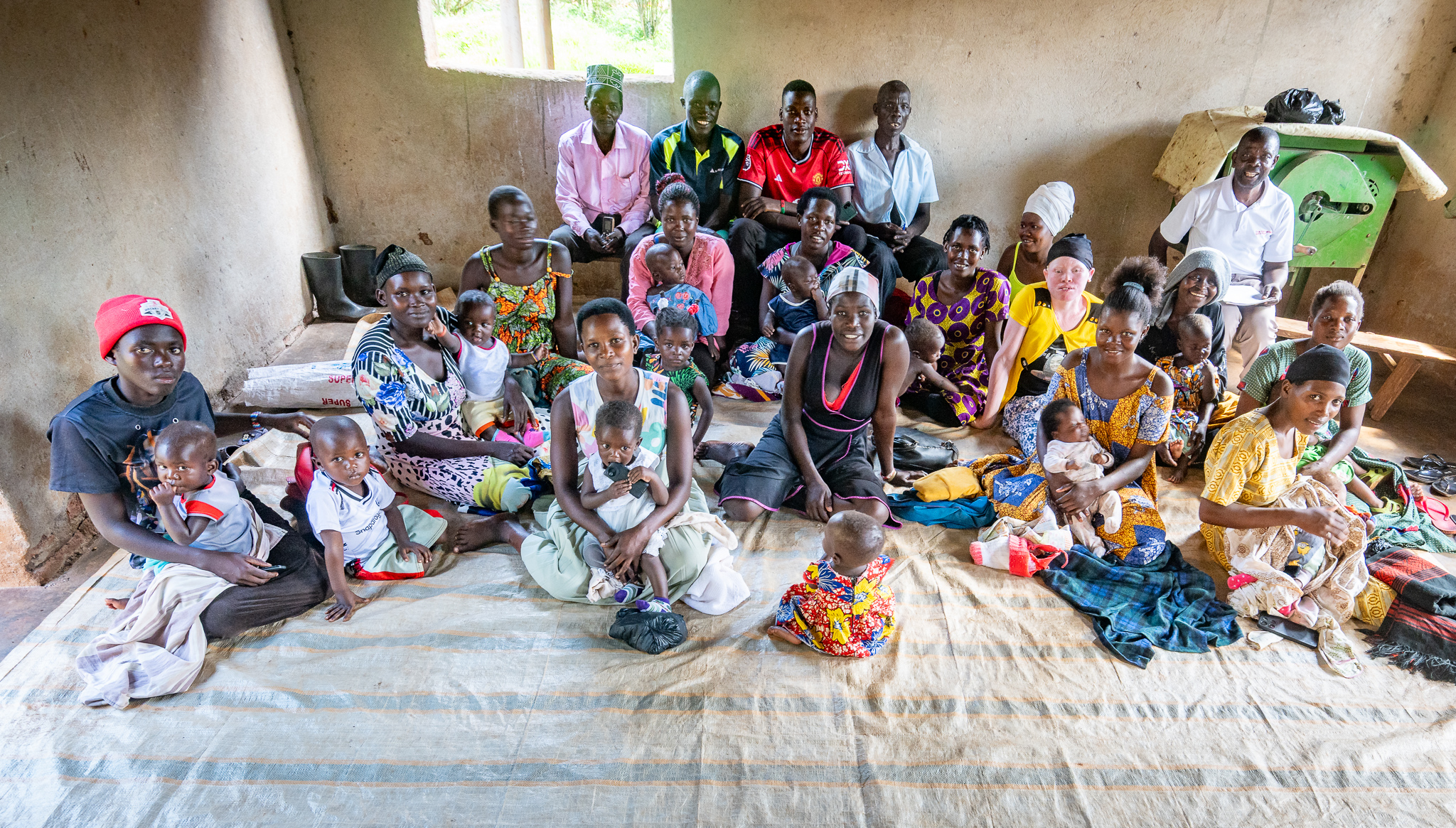
The room in Naluwoli was full of women as we entered – babies on hips and laps, a lively chatter amongst mothers. My colleague Scott Christiansen and I were in Uganda to document the amaranth value chain research conducted by the World Vegetable Center with support from the Crop Trust’s BOLDER project. We wanted to document how to build markets and nutrition around lesser-known crops.
This room was where the whole chain finally arrives.
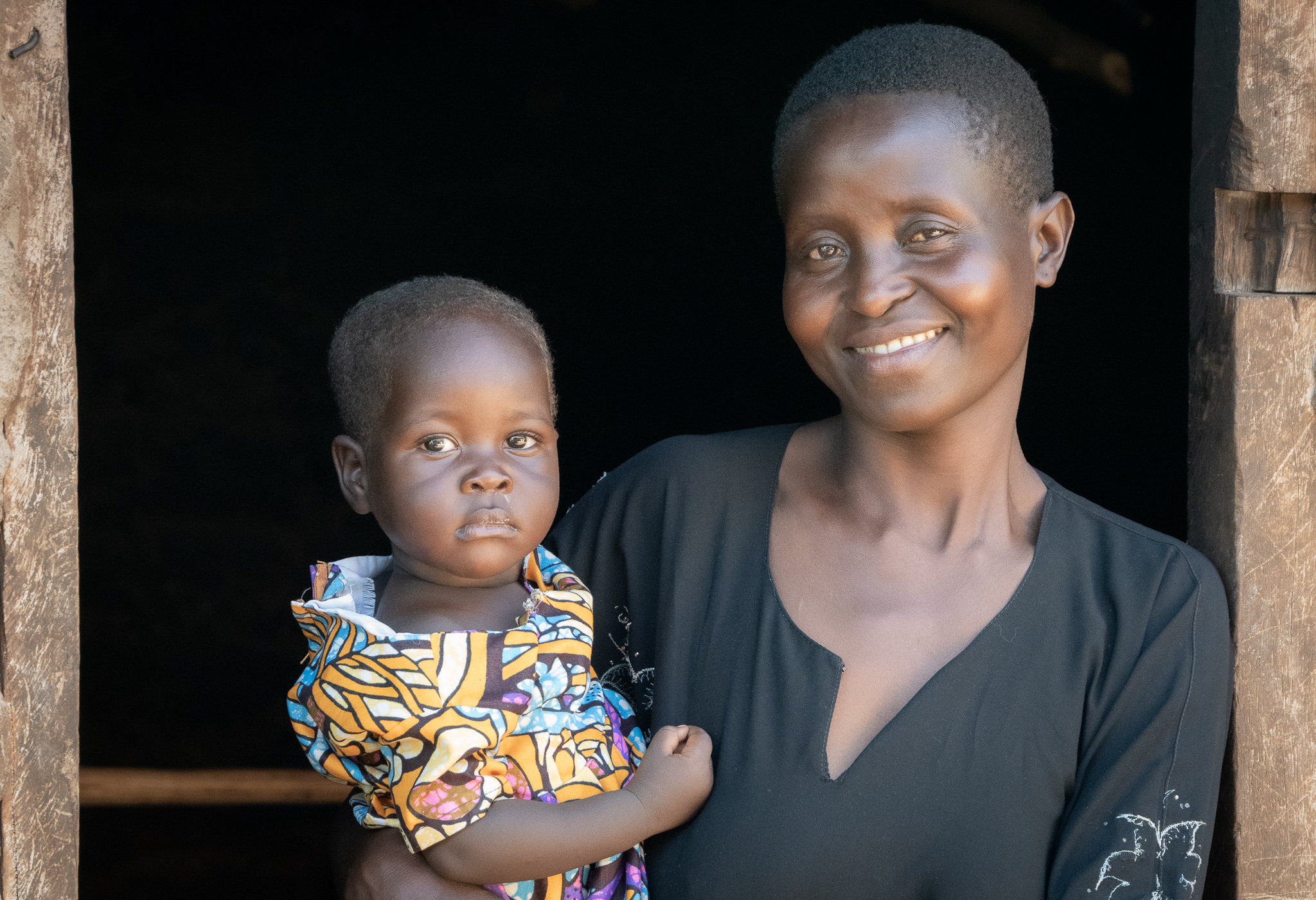
After a welcome song and dance, one woman rose. She has come, she says, because she wants us to know what a special porridge did.
When she first brought her son here, he was failing. The nutrition workers slipped a paper tape measure around his upper arm. His reading fell into the red: below 11.5 centimetres, severe acute malnutrition, the band that means a child is at real risk of dying. She didn’t need a tape measure to tell her that. She could see it in his face.
Her son was far from alone: across Uganda, around one in four children under five is stunted – a sign of chronic undernutrition that has barely shifted in years.
Then she joined a program and began bringing home a nutritious amaranth porridge.
Week by week the tape told a different story. The last time they measured him, the band sat well into the green – past 12.5, the range that means a well-nourished child. She says the number out loud and the room murmurs, because everyone here knows what that climb costs.
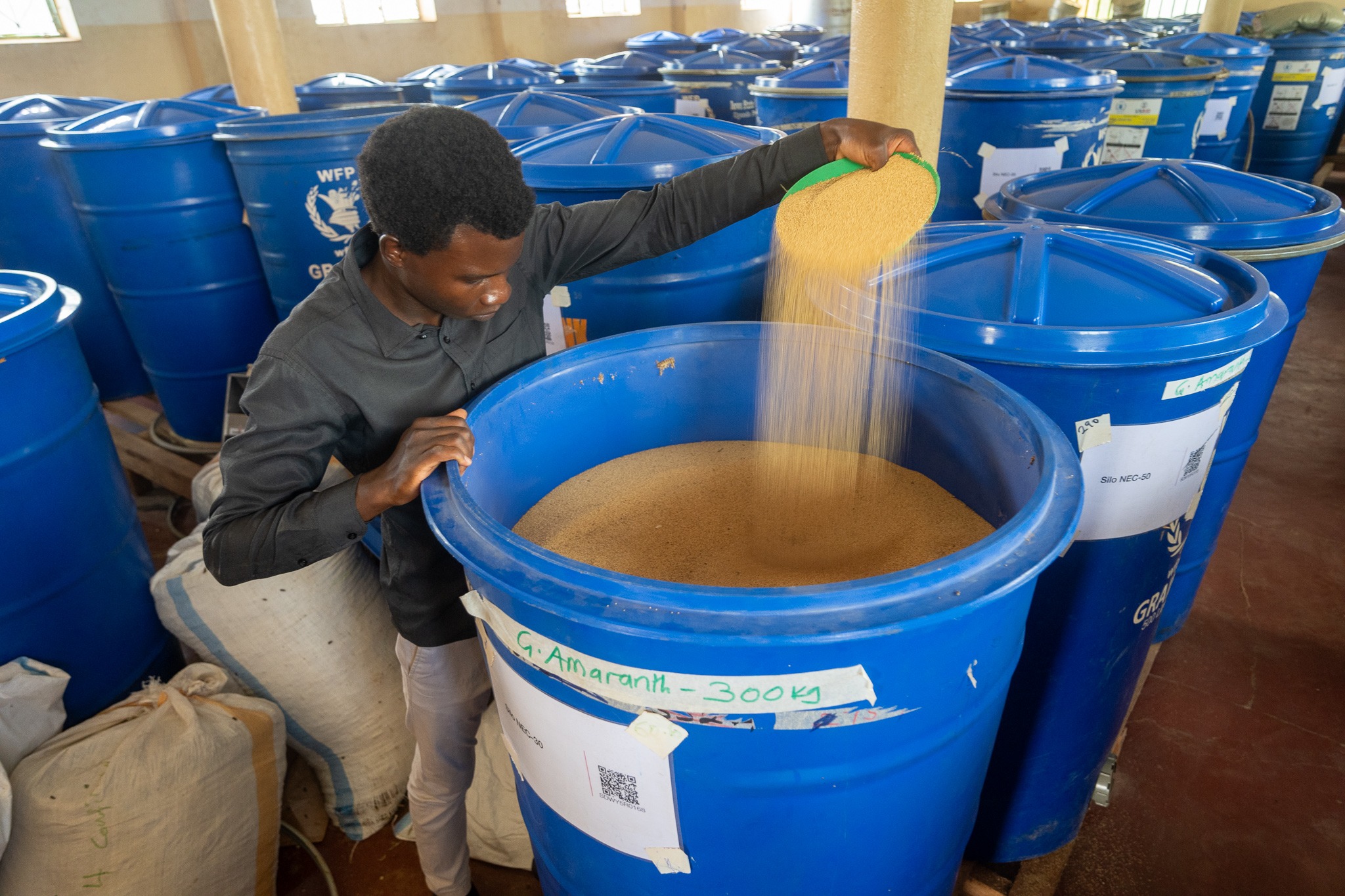
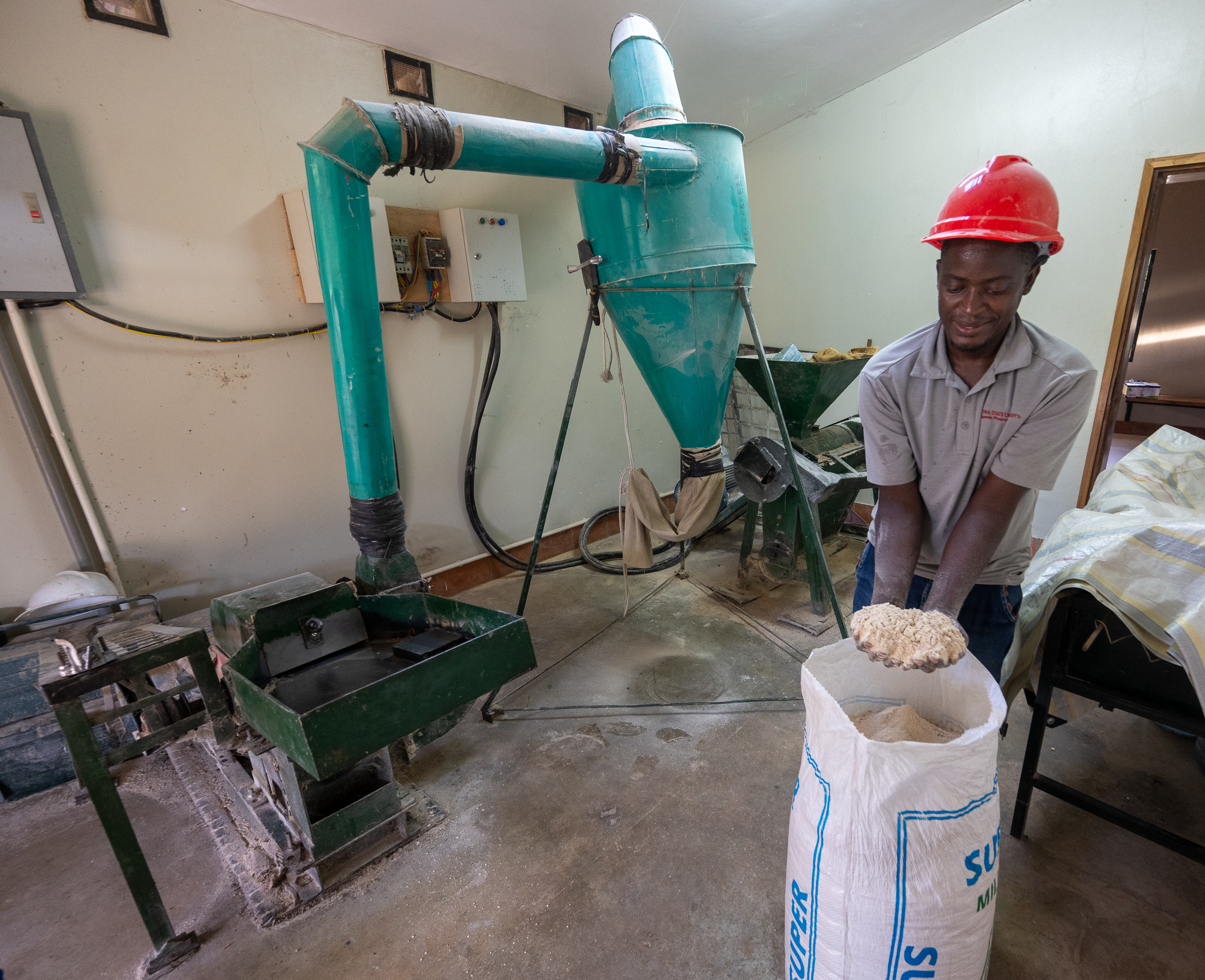
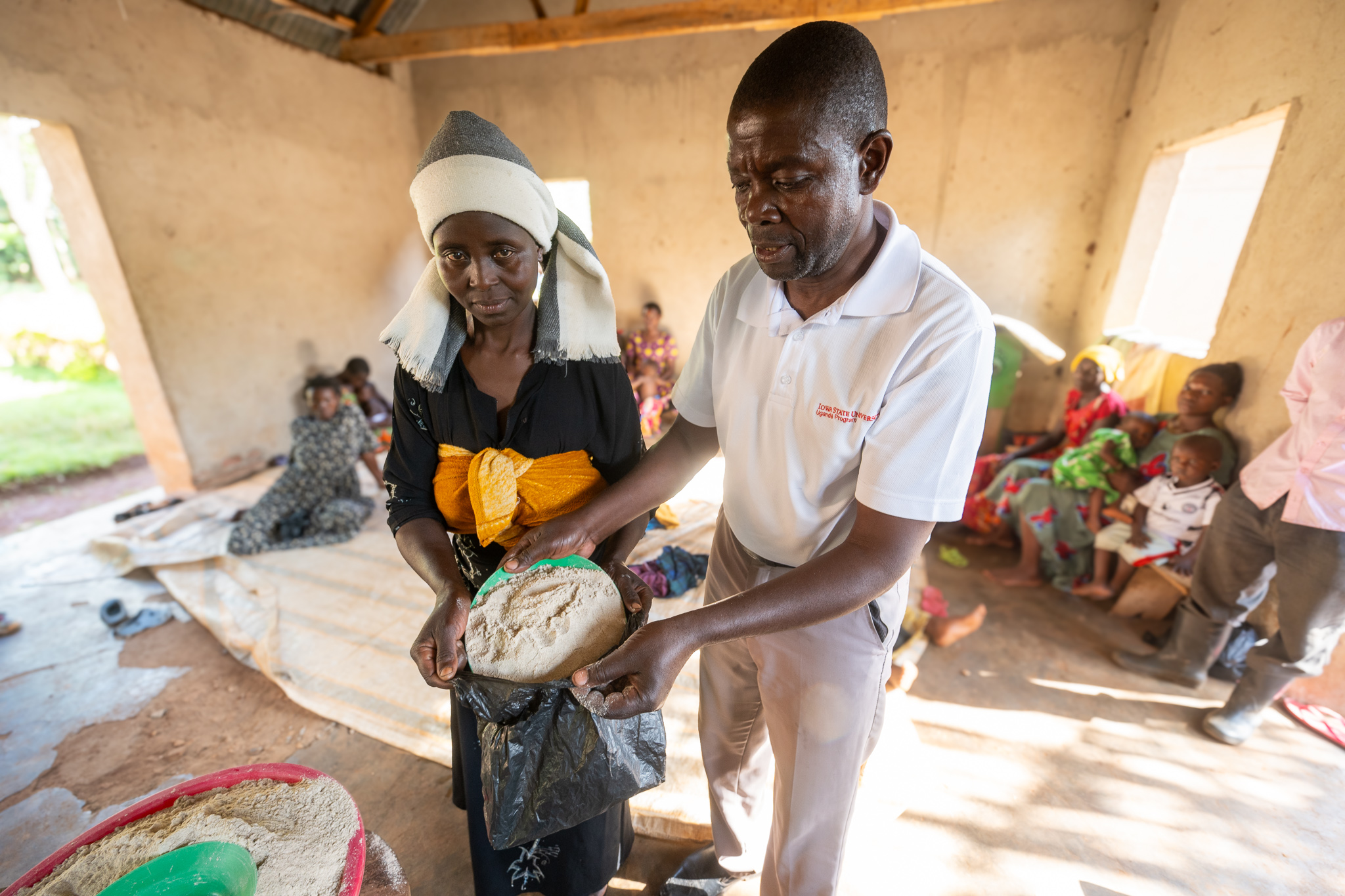
Nutritionist Caroline Nambafu explained to us that the Iowa State University Uganda Program buys grain amaranth from local farmers, blends it into a fortified porridge flour, and runs a network of nutrition centres and schools in Kamuli District which distributes the porridge mix to mothers and children.
I wanted to understand how a bowl of porridge does this. So I travelled the amaranth chain, from seed to bowl.
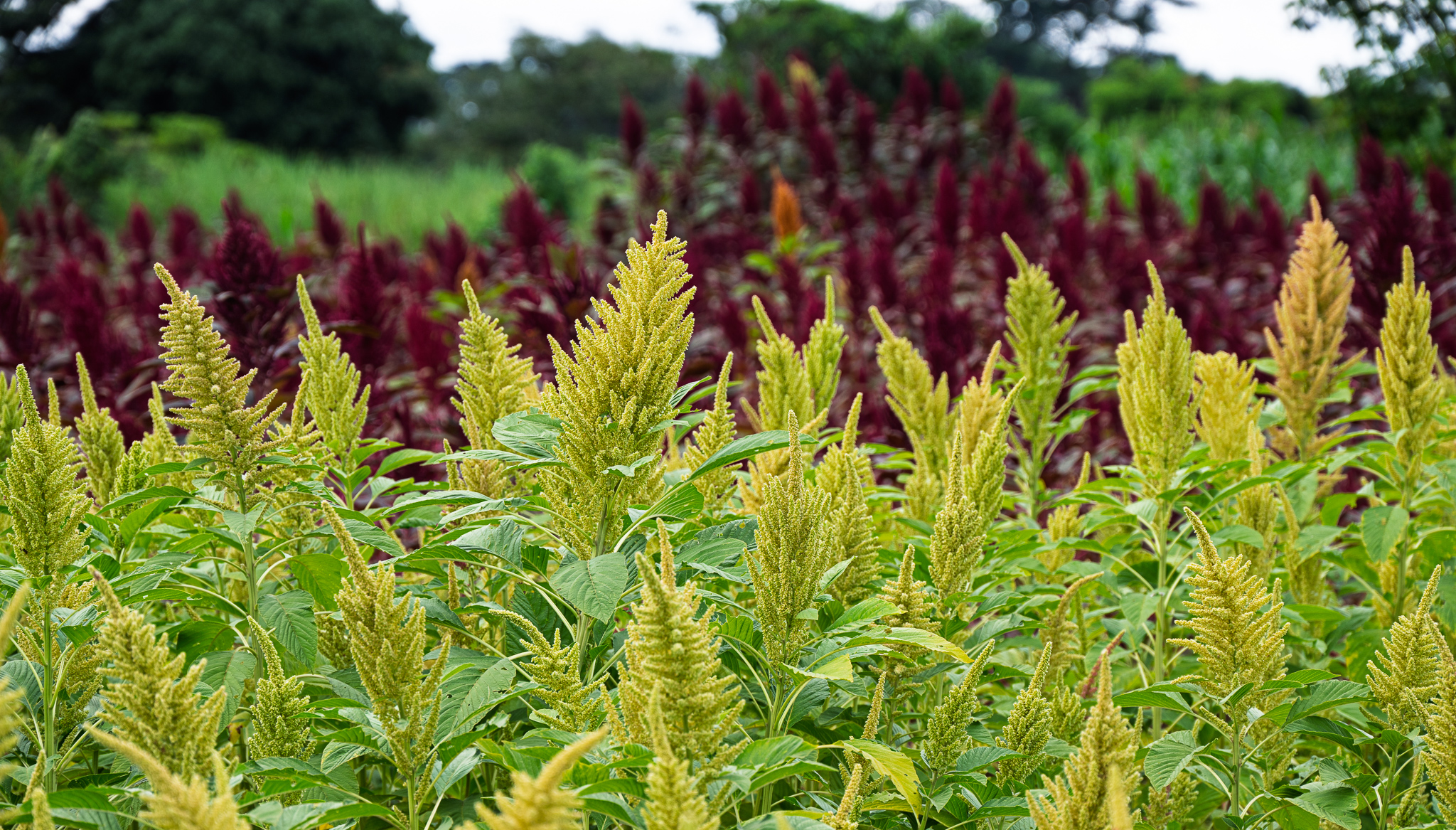
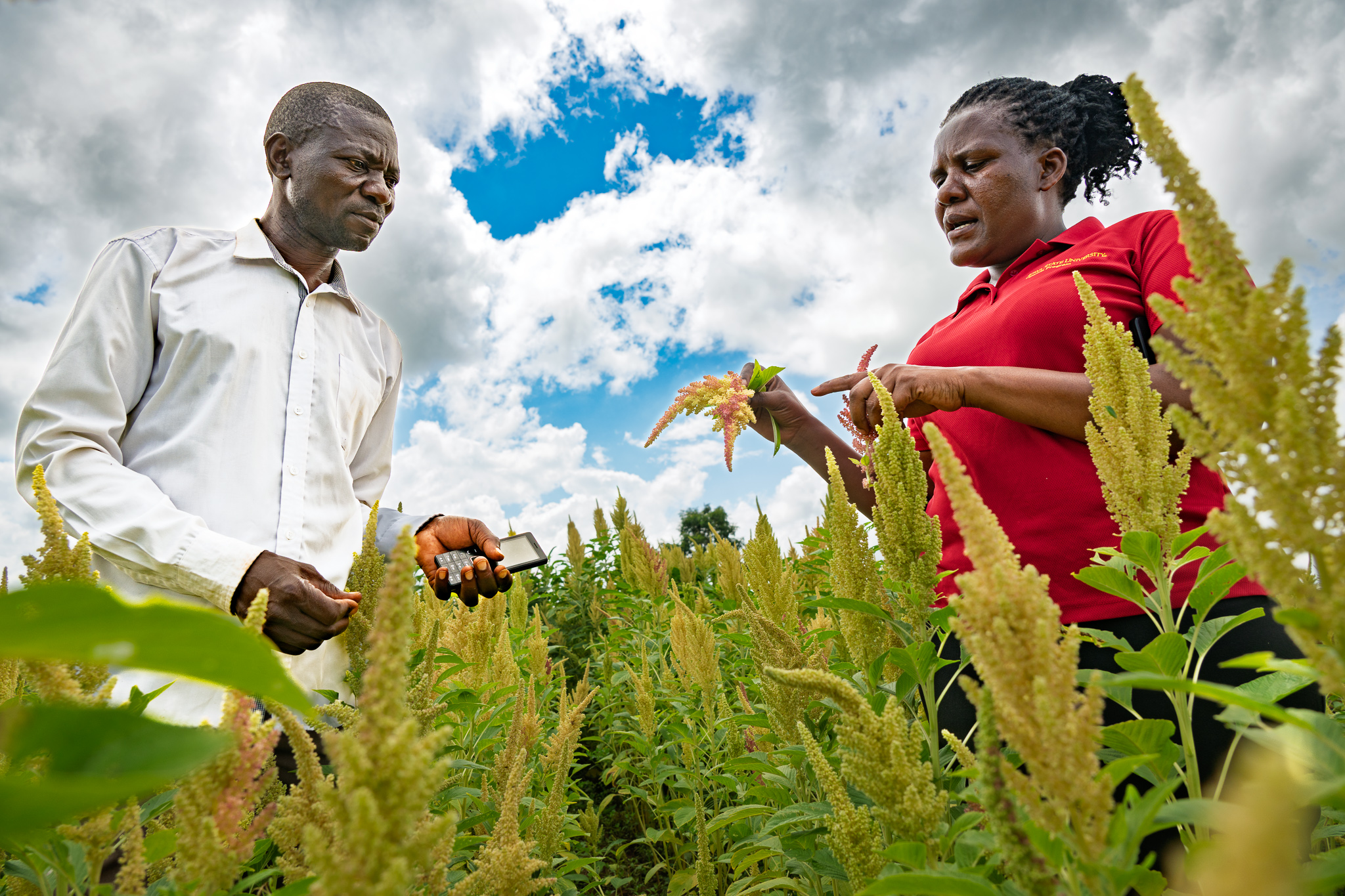
It begins in a field with farmer Robert Banji. He grows grain amaranth, and on the morning Scott and I found him he was standing in a sea of creamy coloured amaranth with Moureen Mbaiza, the Iowa State agronomist. They talked about roguing off-types, about drying speed, about how to keep the grain clean enough that no one rejects it later.
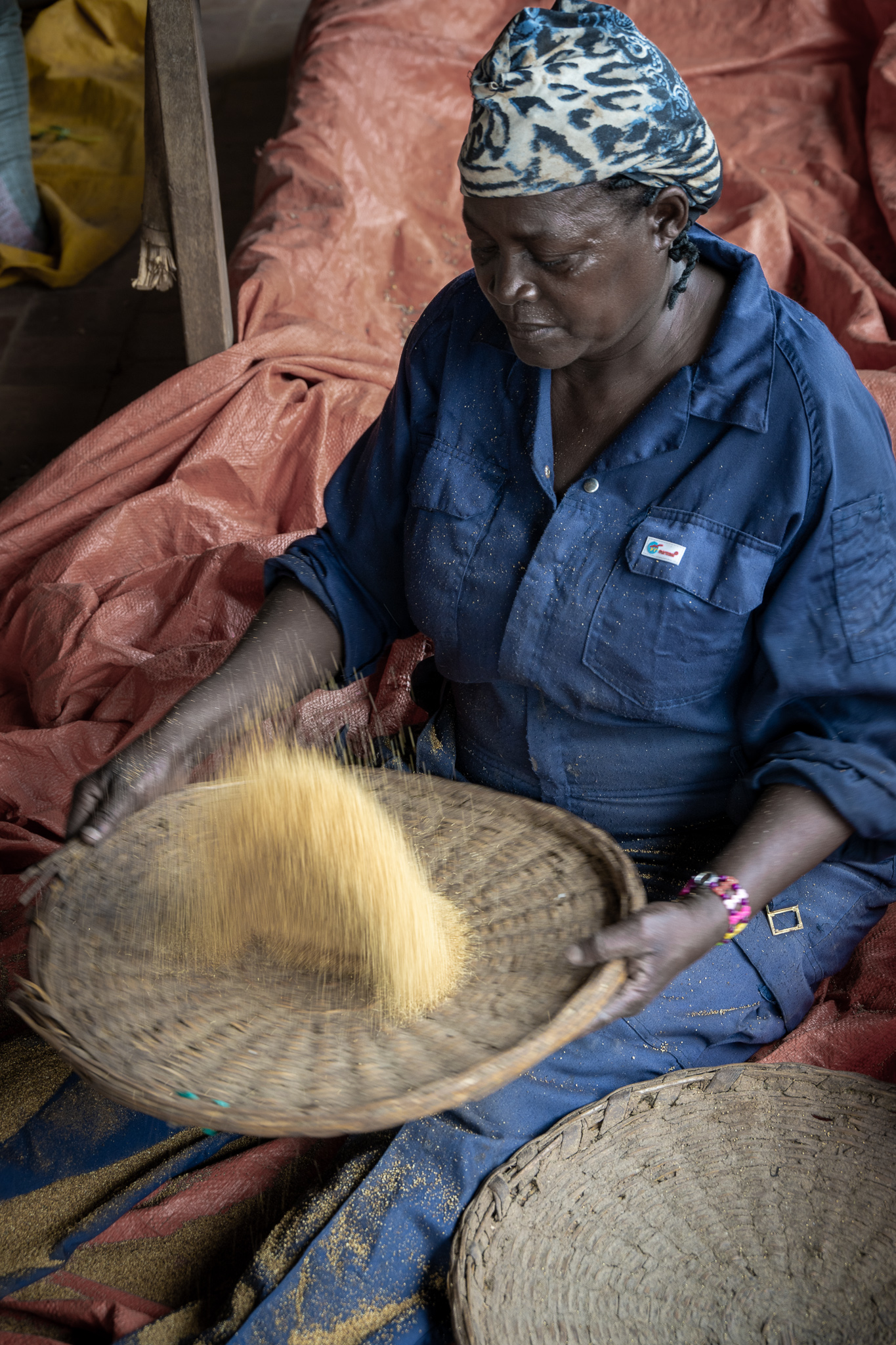
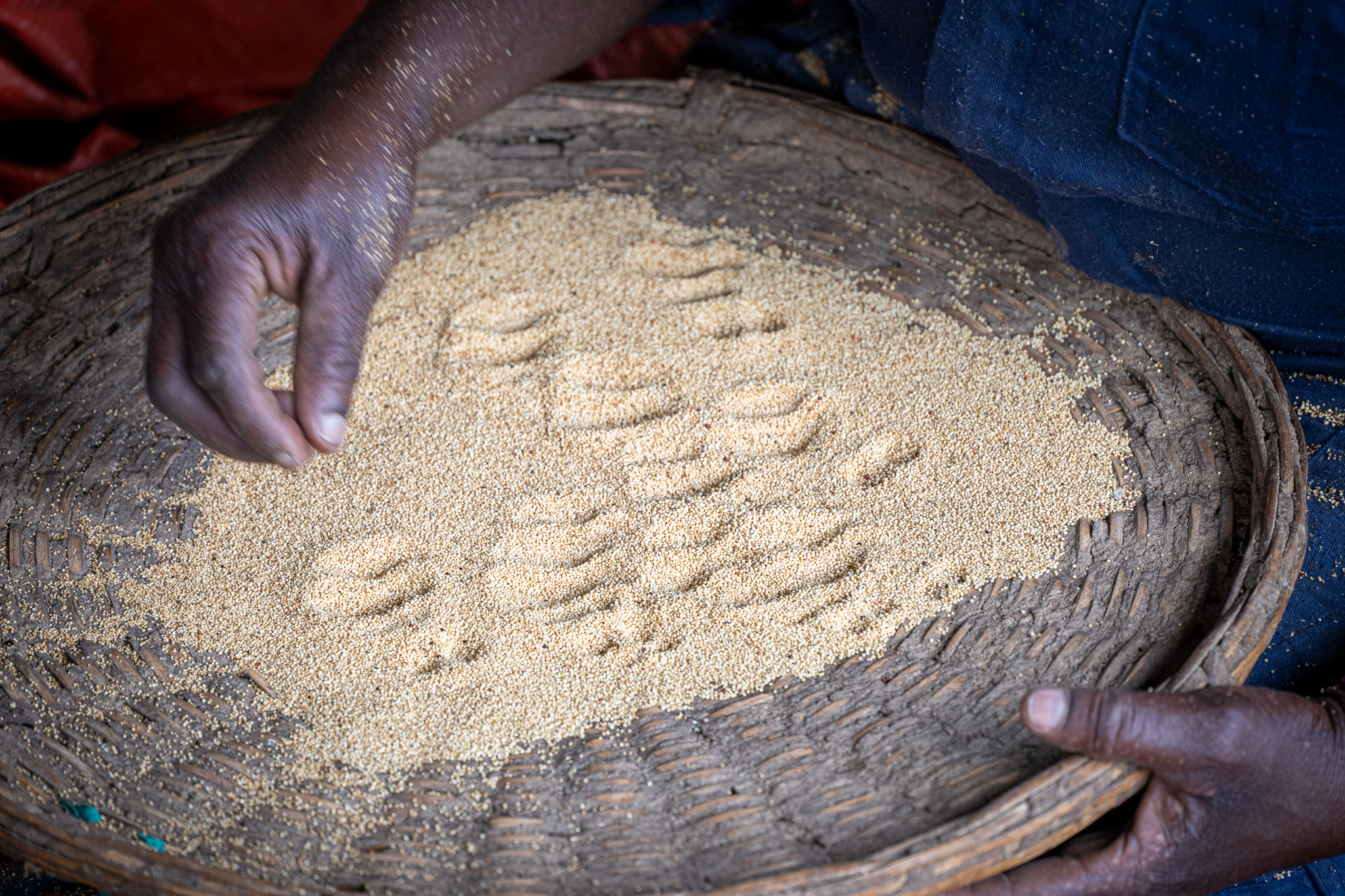
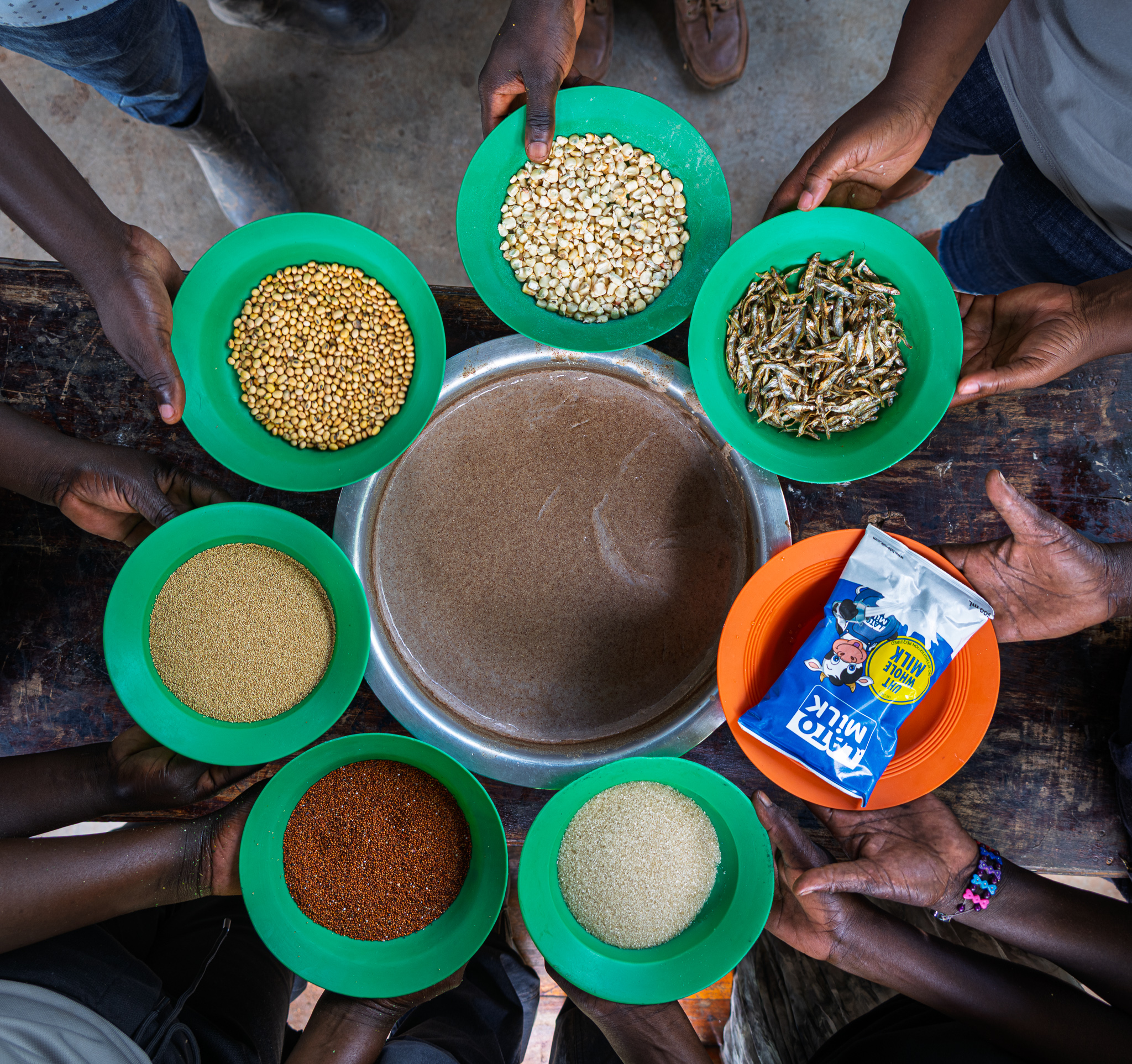
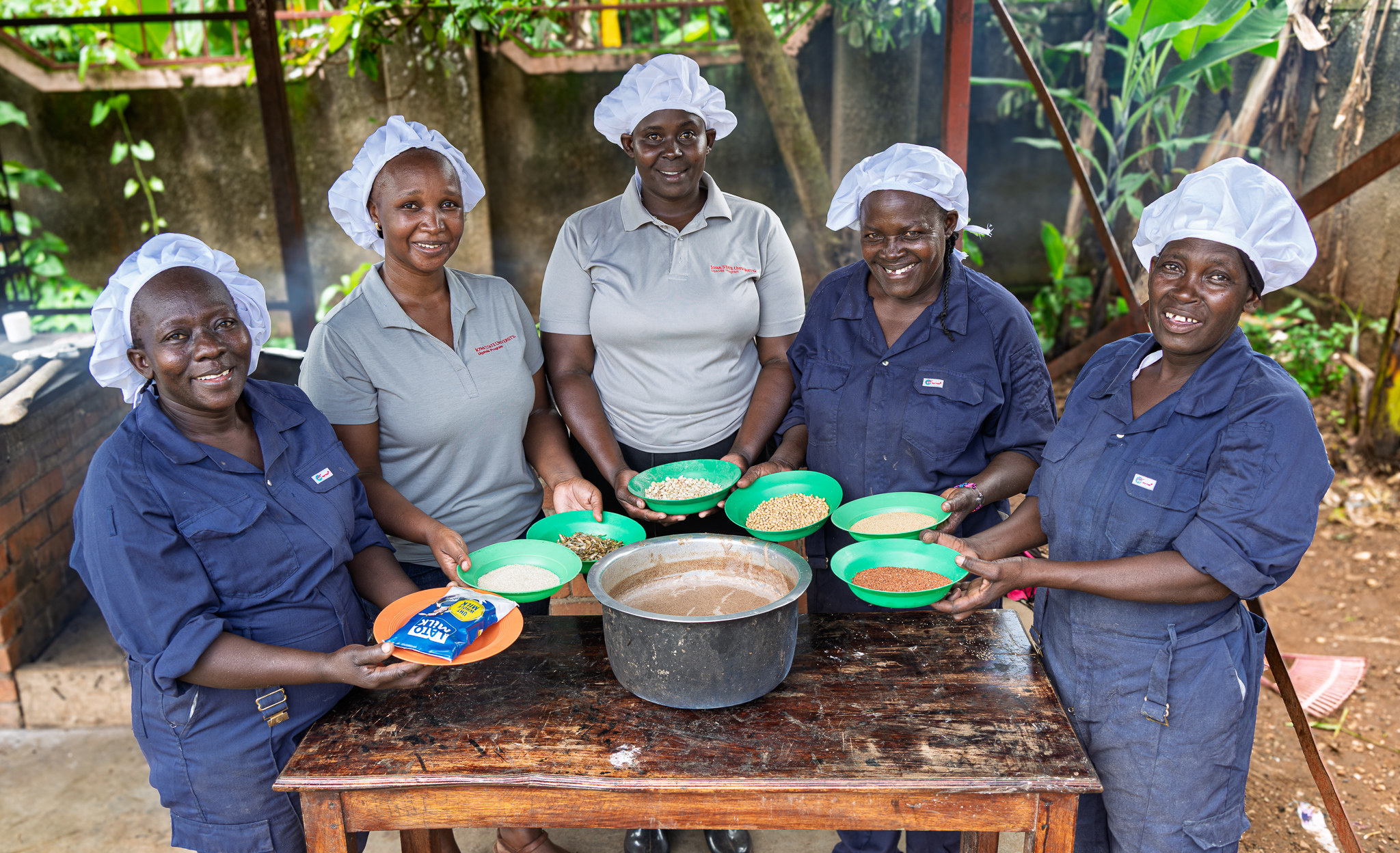
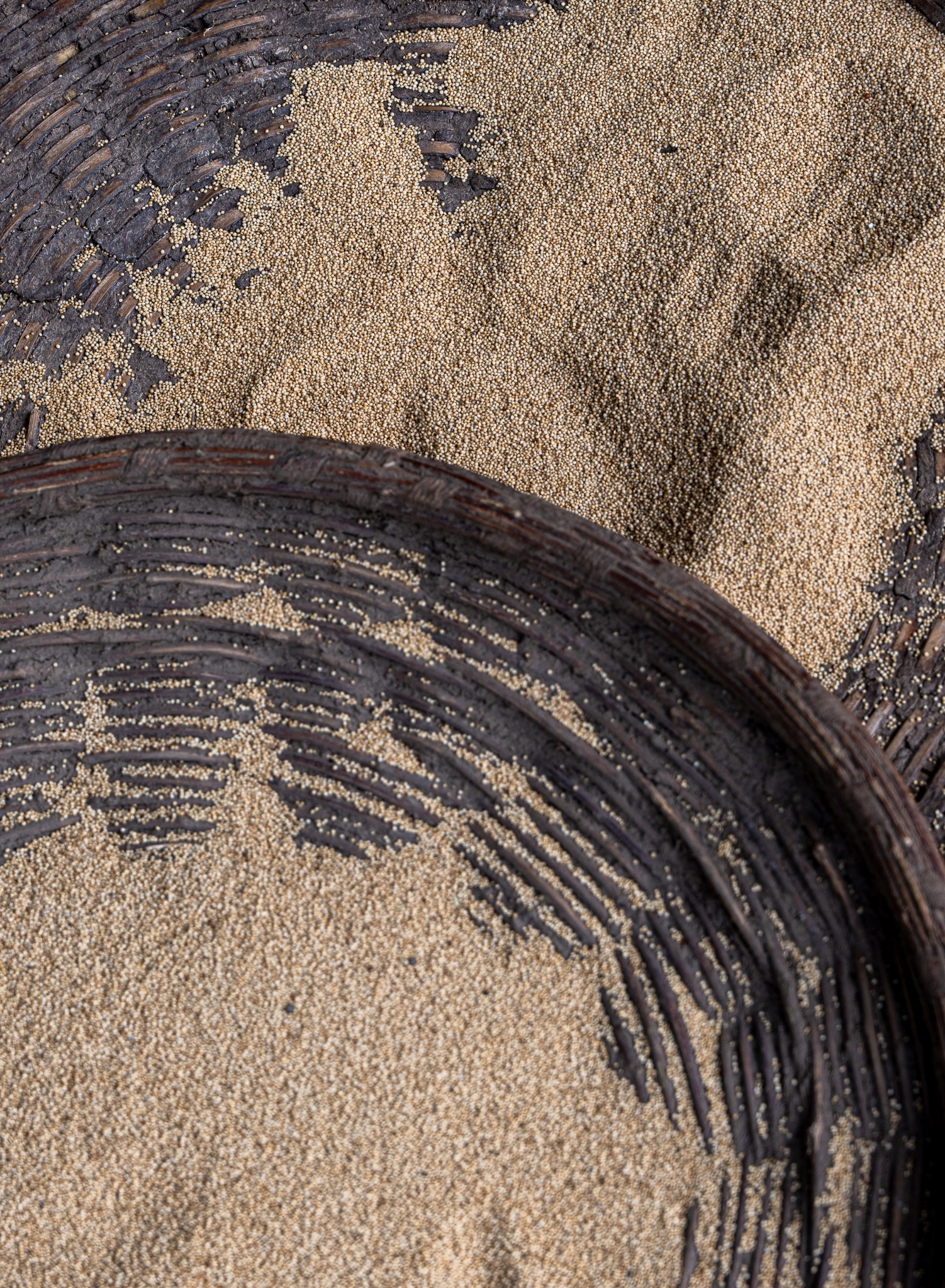
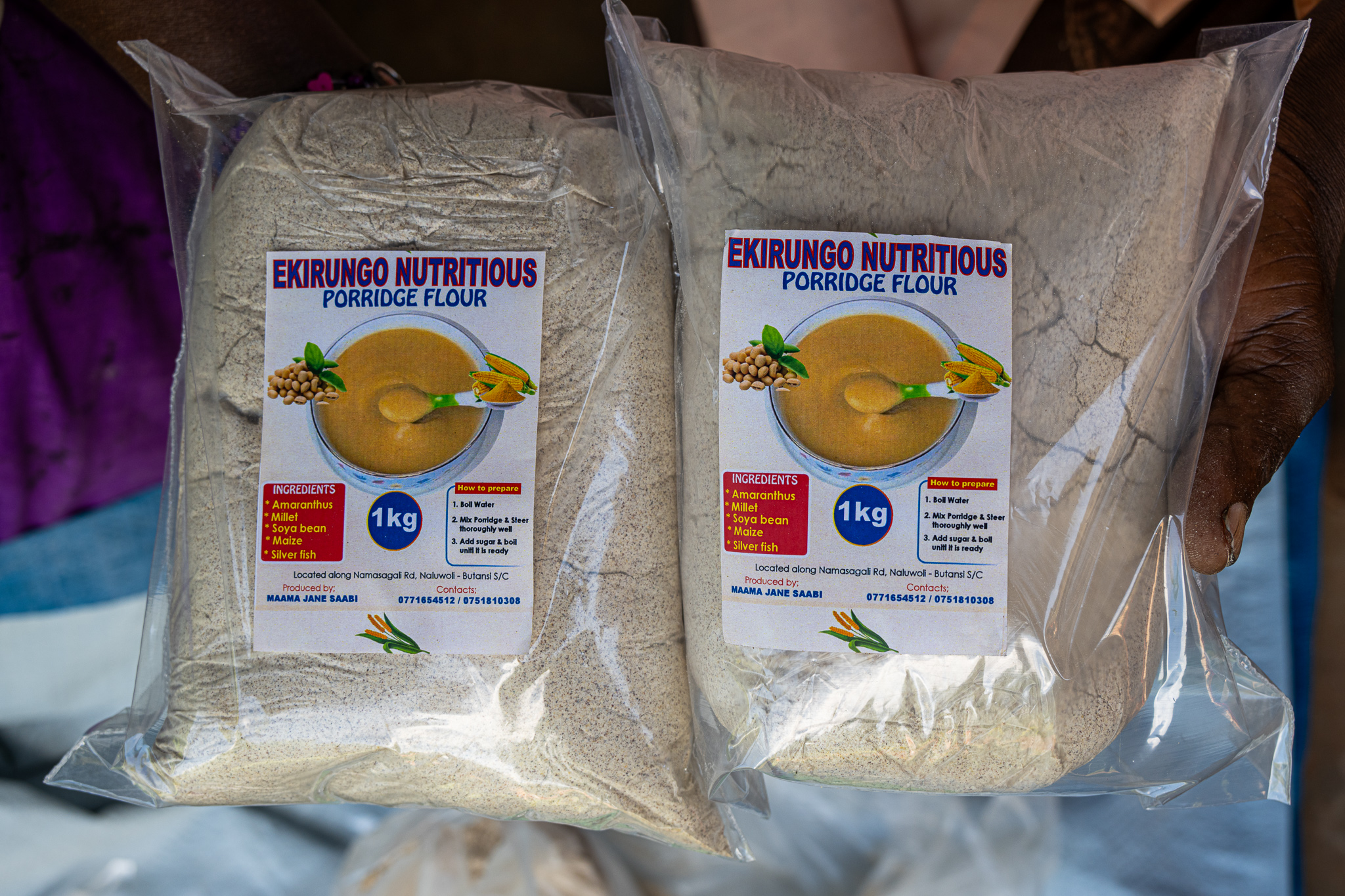
From Banji’s field the amaranth travels to the Iowa State training centre back in Naluwoli. I watched women winnow – tossing the grain in flat baskets and blowing so the chaff lifts away in a golden haze. A group of women then mixed the cleaned amaranth grains with other ingredients – millet, soybean, maize, silver fish – to make a composite flour. Sugar and milk are later folded in to complete the mix.
Amaranth is the heart of the recipe. The tiny grain carries an unusually complete protein – it is one of the few plant foods rich in lysine, the essential amino acid that cereals like millet and maize lack – along with a heavy load of iron, calcium and magnesium. That’s exactly the things a depleted small body needs to rebuild bone and blood.
The other ingredients round out the bowl: soybean and silver fish add more protein, milk and sugar add energy and palatability, and the cereals lend bulk and familiar flavour. Together they cover what any one of them alone would miss. It’s a recipe worked out to feed a body that is trying to rebuild itself.
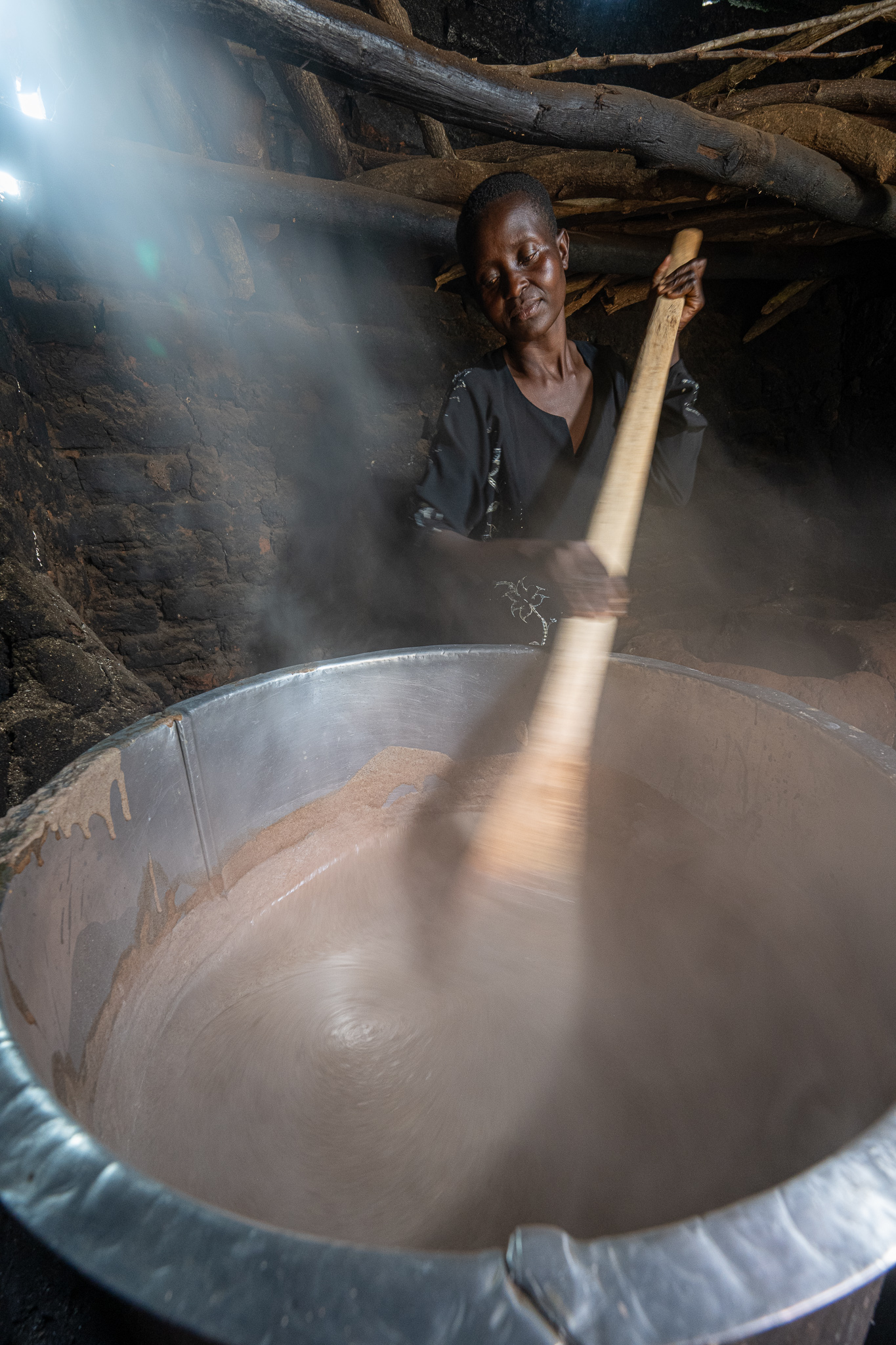
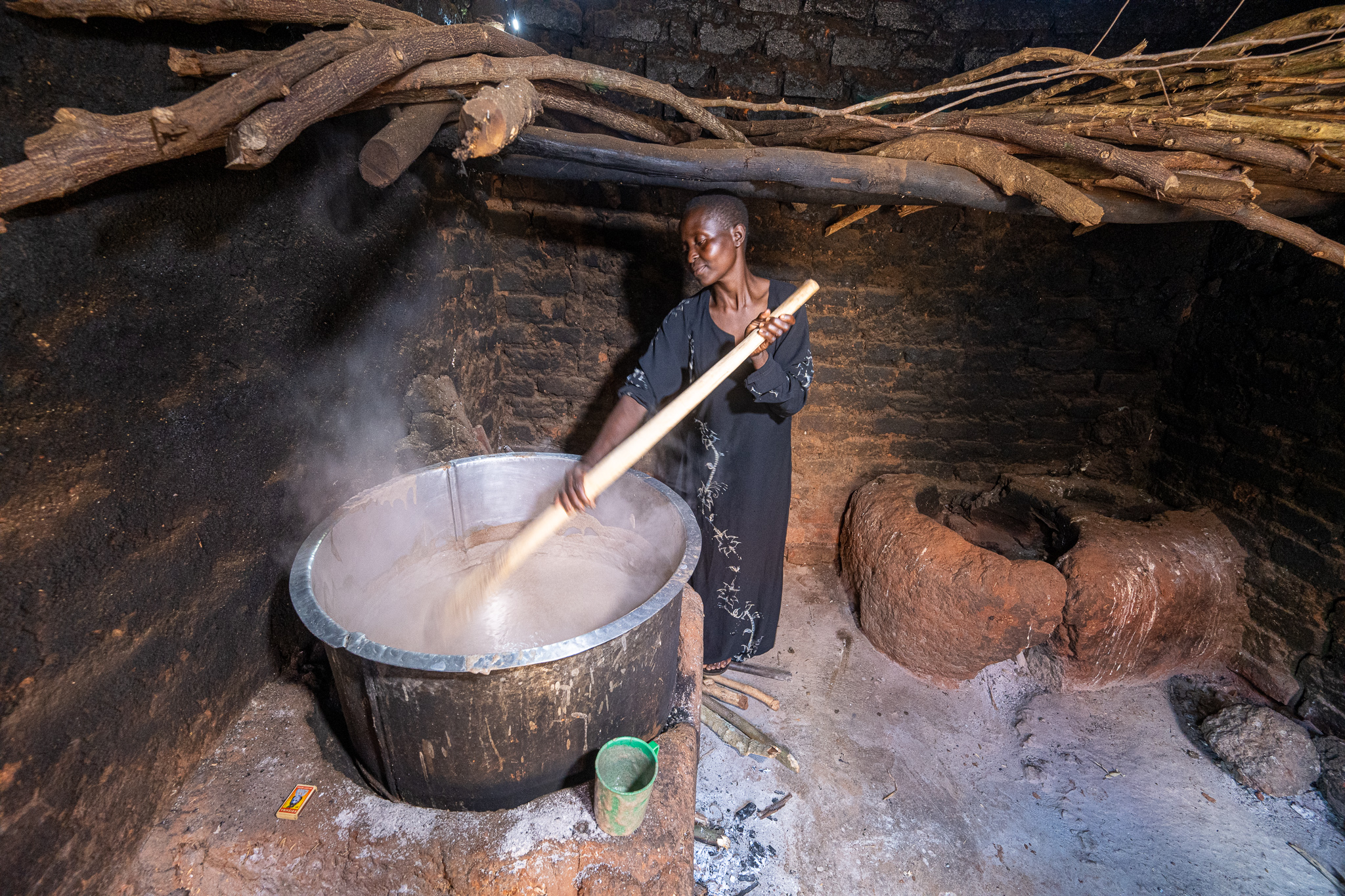
Once a week the mothers come to the centre for a communal meal of the porridge. I went into the cookshed as one of the mothers, Namutesi Zeda, stood over an enormous vat, stirring with a paddle as long as she is tall, steam rising into the rafters.
The women and their children share a communal meal of the porridge and listen as Iowa State nutritionists give advice. At the end of the session each mother receives a kilo of the porridge to last them till the week.
It’s a short journey, really. A seed, a field, a basket, a mill, a vat, a bowl. But somewhere along it a tape measure goes from red to green, and a mother stands up in a crowded room to tell two strangers that her son is well.