
We said goodbye to the Himalayas and drove a couple of hours down to Srinagar, the summer capital of the Indian state of Jammu and Kashmir.
Kashmir is a shopper’s paradise due to its carpet and textile industries so our first stop was a carpet wholesaler. Our home is already well decorated with handmade carpets from Iran, Turkey, Afghanistan and India but we weren’t thrilled with the carpet Padma bought a few years ago in Agra so we thought we’d have a look at some Kashmir carpets to replace it. Big mistake.
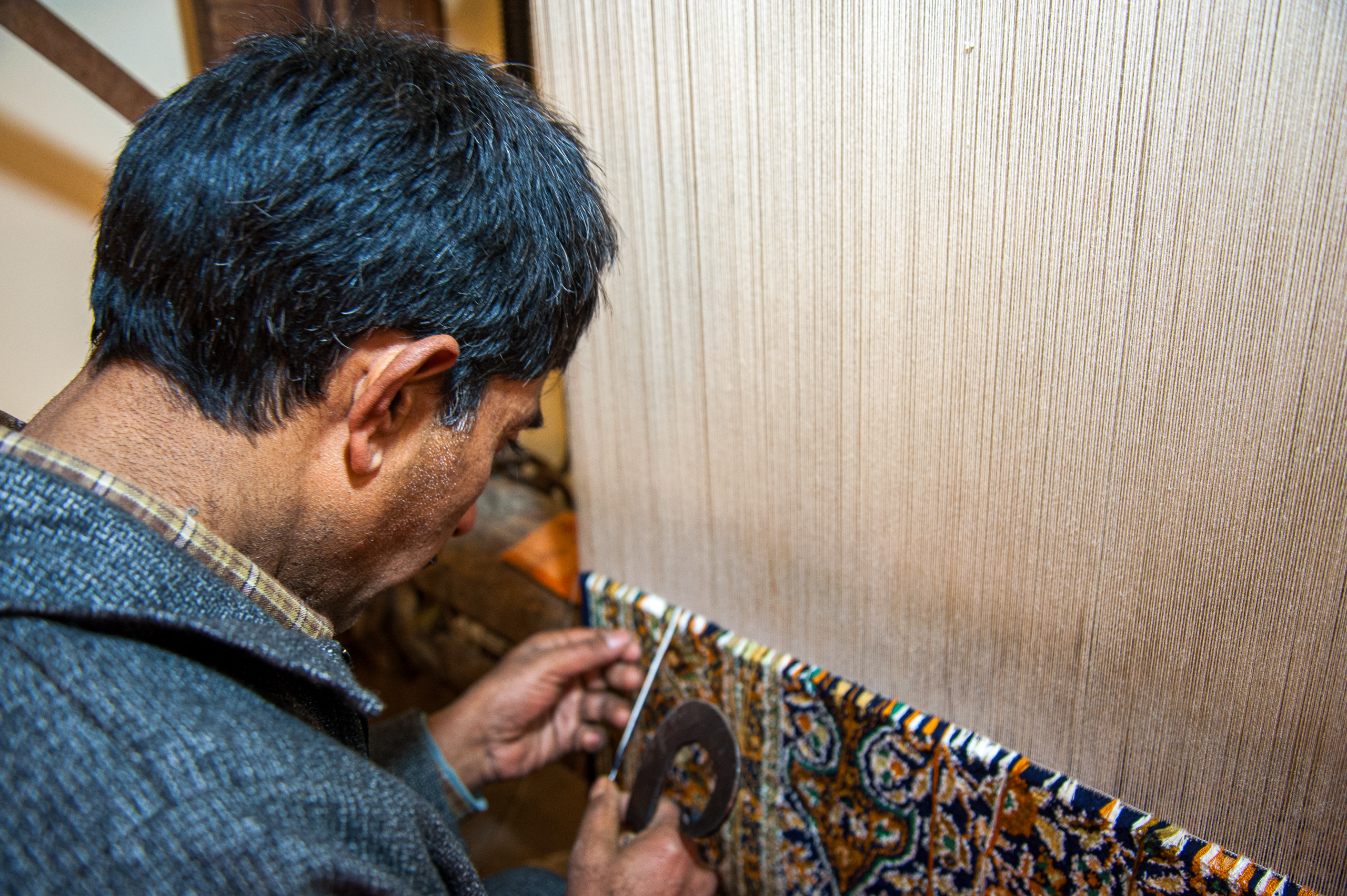
Carpet making was brought to Kashmir by the Mughals in the 16th century and today’s carpets are very much influenced by Persians designs and knotting techniques.
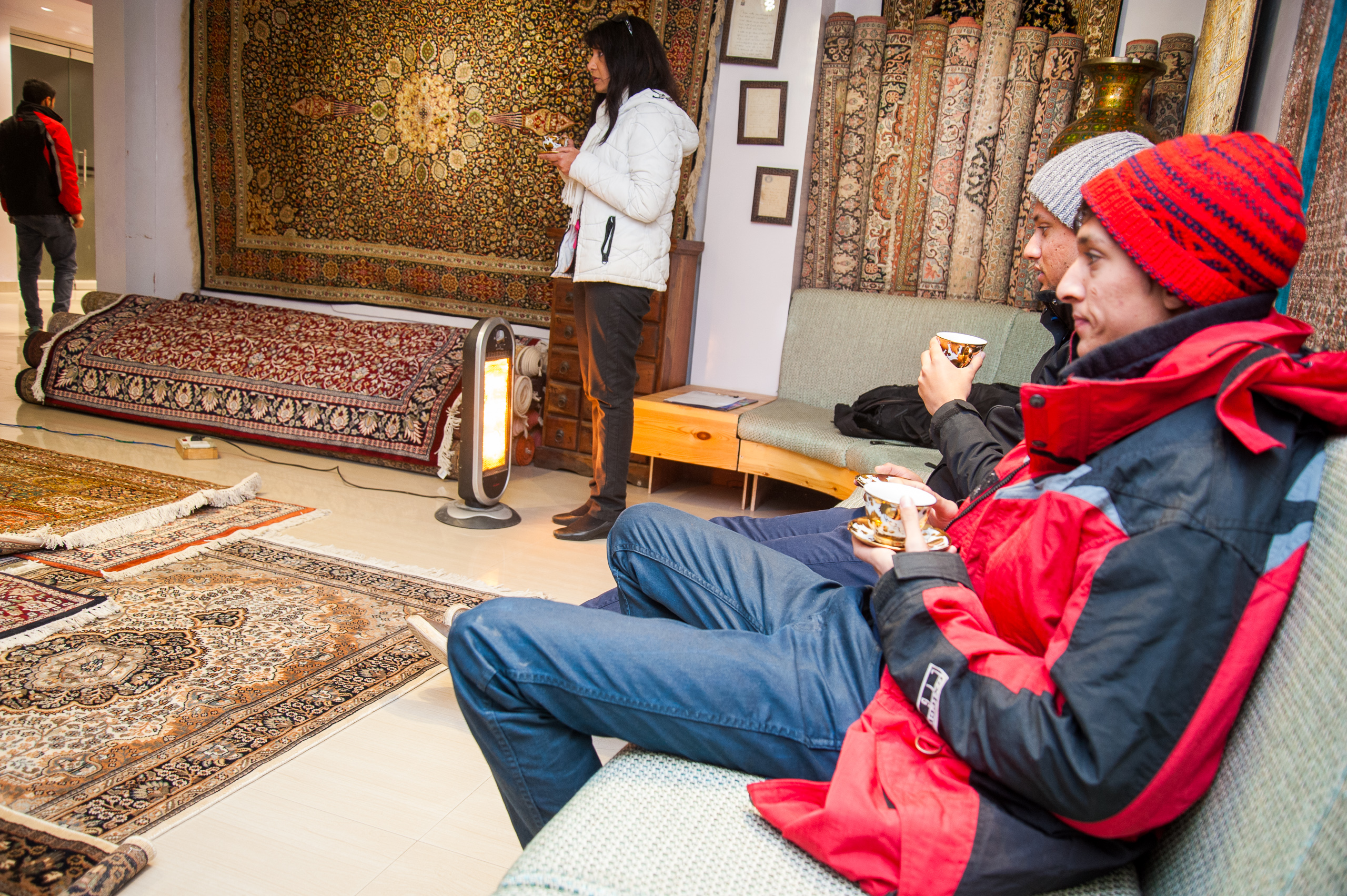
When I lived in Syria there was nothing I enjoyed more than to go to the souk and buy a carpet. I would sit for hours and drink apple tea and look at endless carpets. I loved it. Joseph and Xander got a taste of that experience, albeit not in a covered bazaar but in a modern showroom with halogen lighting and they drank kahwa or Kashmir tea instead of apple tea.
We looked at quite a number of carpets and Padma kept apologising to the boys to have to sit through it but they claimed they enjoyed it. And they did. With every new carpet displayed there were ‘oohs’ and ‘aaahs’. The boys appreciated the beauty of these carpets which could take up to nine months to make by hand.
I told Joseph and Xander that the final choice of carpets should be theirs as they would enjoy whatever we purchased for longer than Padma and I would. A good quality handmade rug, like a Persian or Kashmiri, is an investment for the generations and if taken care of I’m sure the grandchildren of Joseph and Xander will still enjoy the carpets as much as we did today.
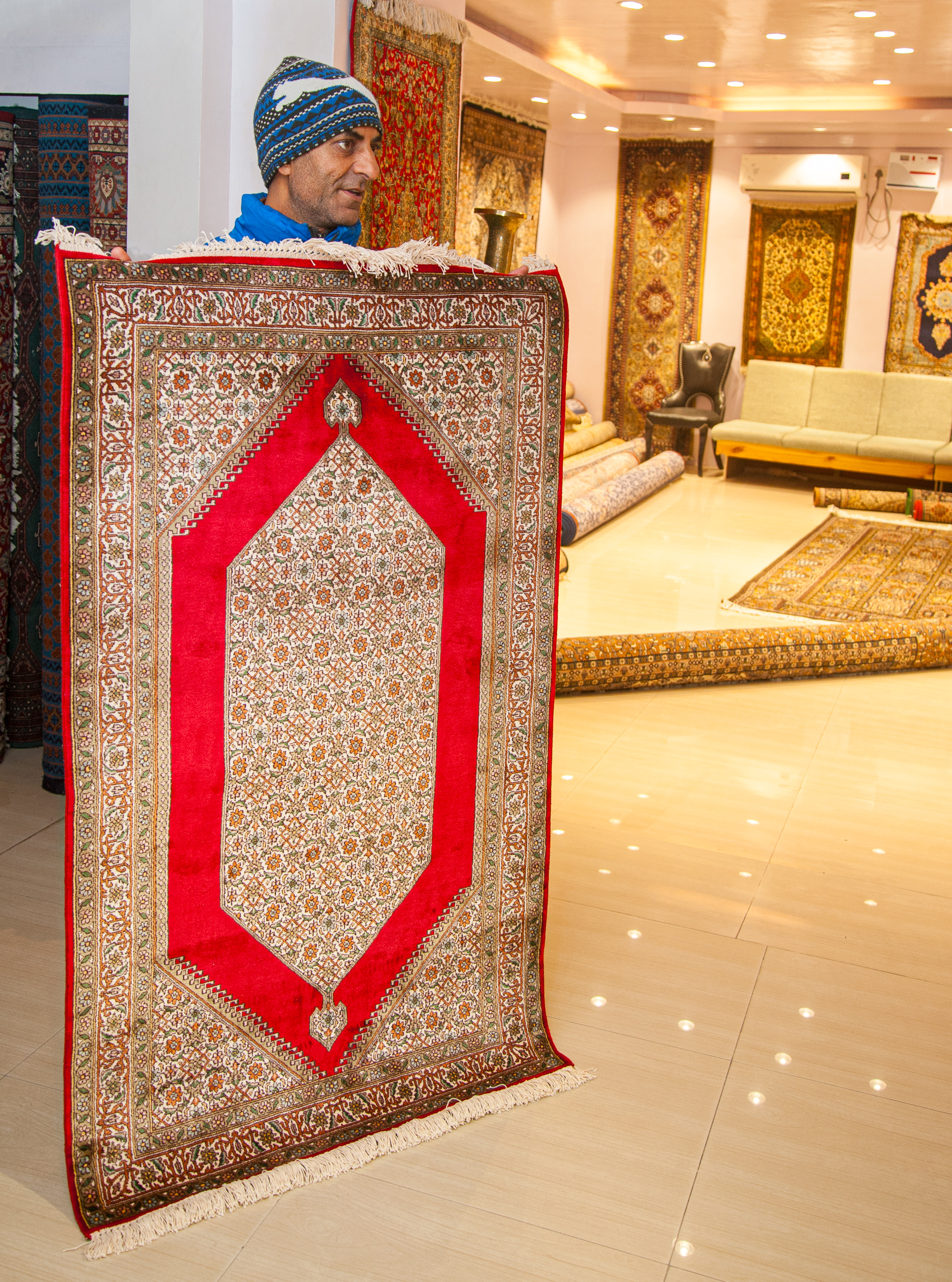
Suffice it to say we didn’t leave empty handed. We were only after a smallish rug to replace a low quality Agra rug we had but in the end we left with two fairly large wool carpets. It’s a weakness I have and now I see that Padma has the same affliction. I can’t say ‘no’ to such beauty. I love the smell, the feel, the colours, the patterns, the story of the villagers spending thousands of hours knotting the carpet. I’m hopeless at saying ‘no thanks’ to a carpet salesman.
The Kashmir wool comes from the underbelly of sheep grazing in the Himalayas. The Kashmir wool carpets had the sheen of a silk carpet which I hadn’t seen in Persian or Turkish wool carpets. Our salesman asked if we would like to see a magic carpet. We did and he rotated the carpet 180° and the carpet magically changed in front of our eyes as we were know looking into the nap rather than with it.
We knew we couldn’t afford a silk carpet but we asked to see a few. More ‘ooohs’ and ‘aaahs’ until we asked the price out of curiosity. I think the one in this picture was about $AUD3,000. We politely said ‘thanks, but no thanks’.
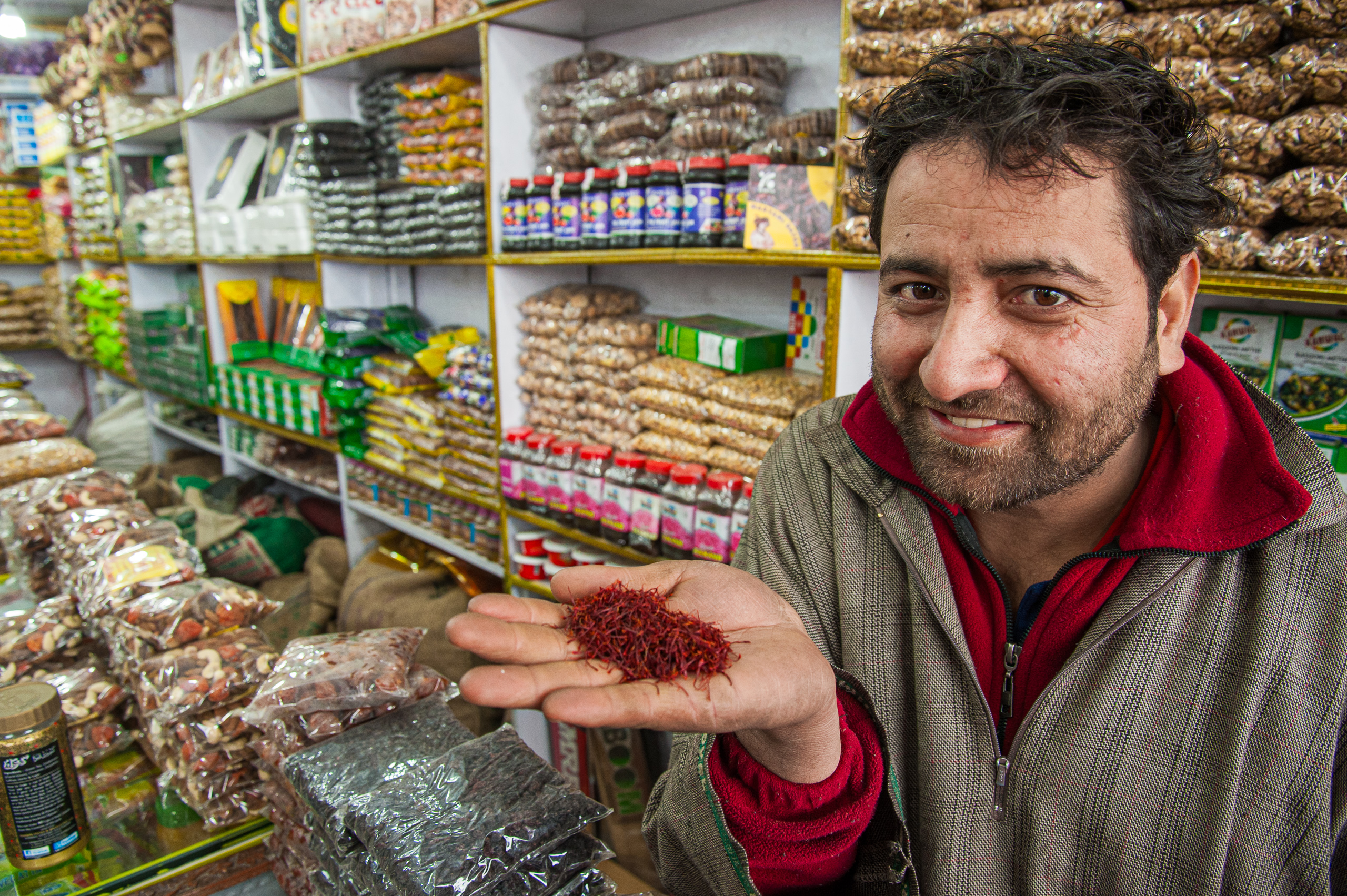
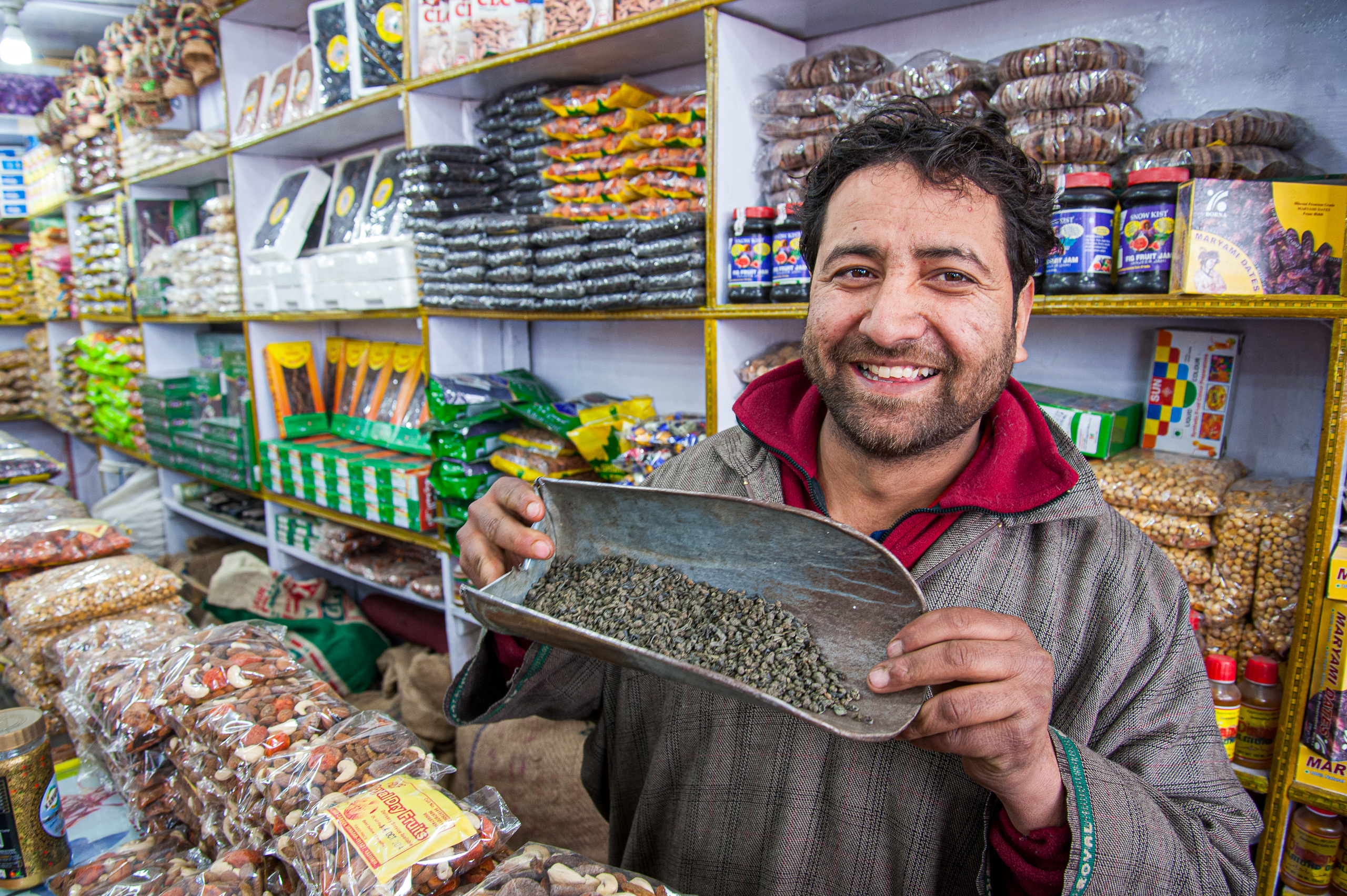
Saffron generally comes from Iran which accounts for about 95% of the production but Kashmir ranks as the world’s third largest producer of the pricey spice. In Kashmir it had a fixed price of 300 rupees (AUD$6) per gram which is considerably less than what you would pay in Australia.
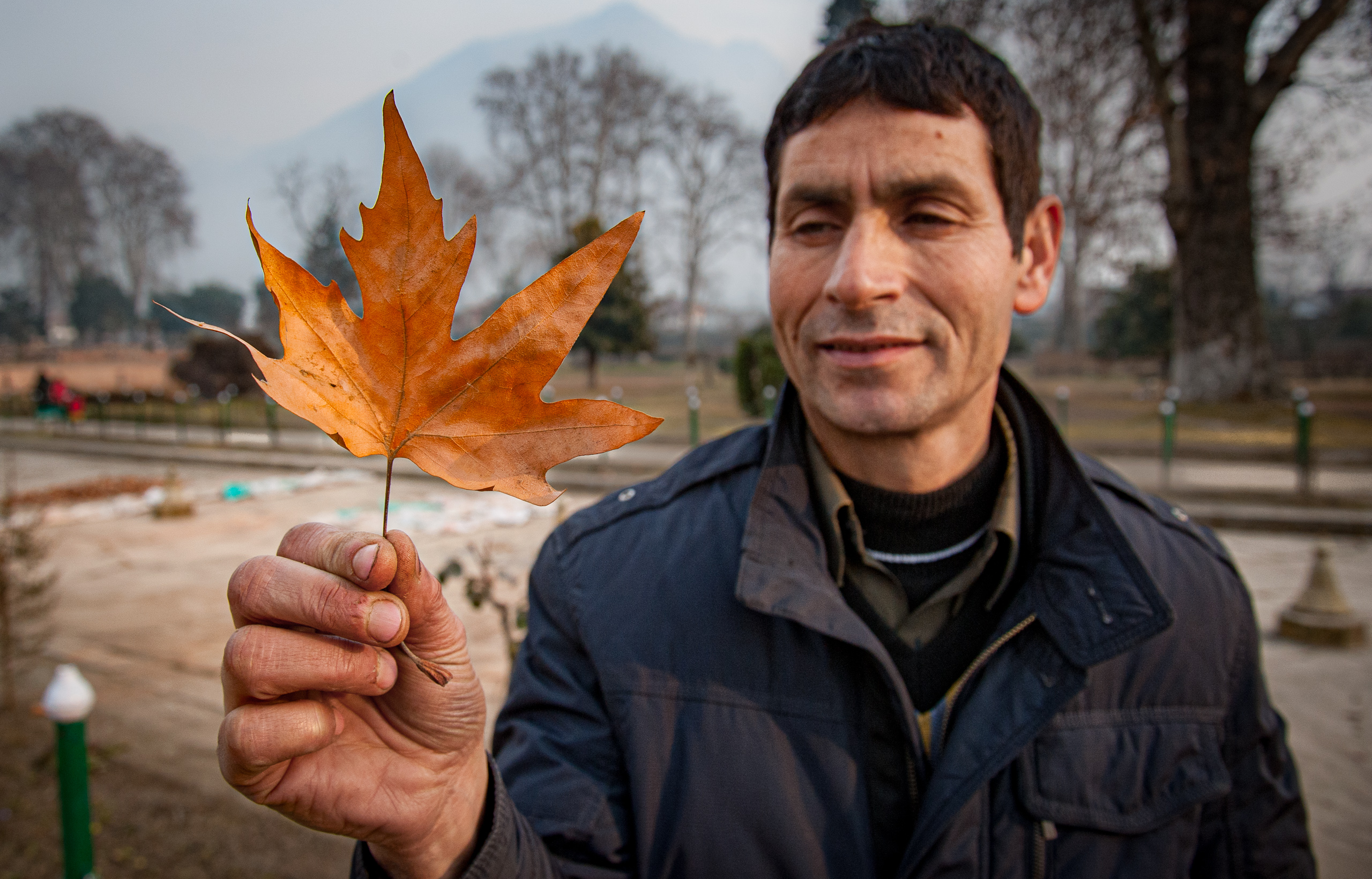
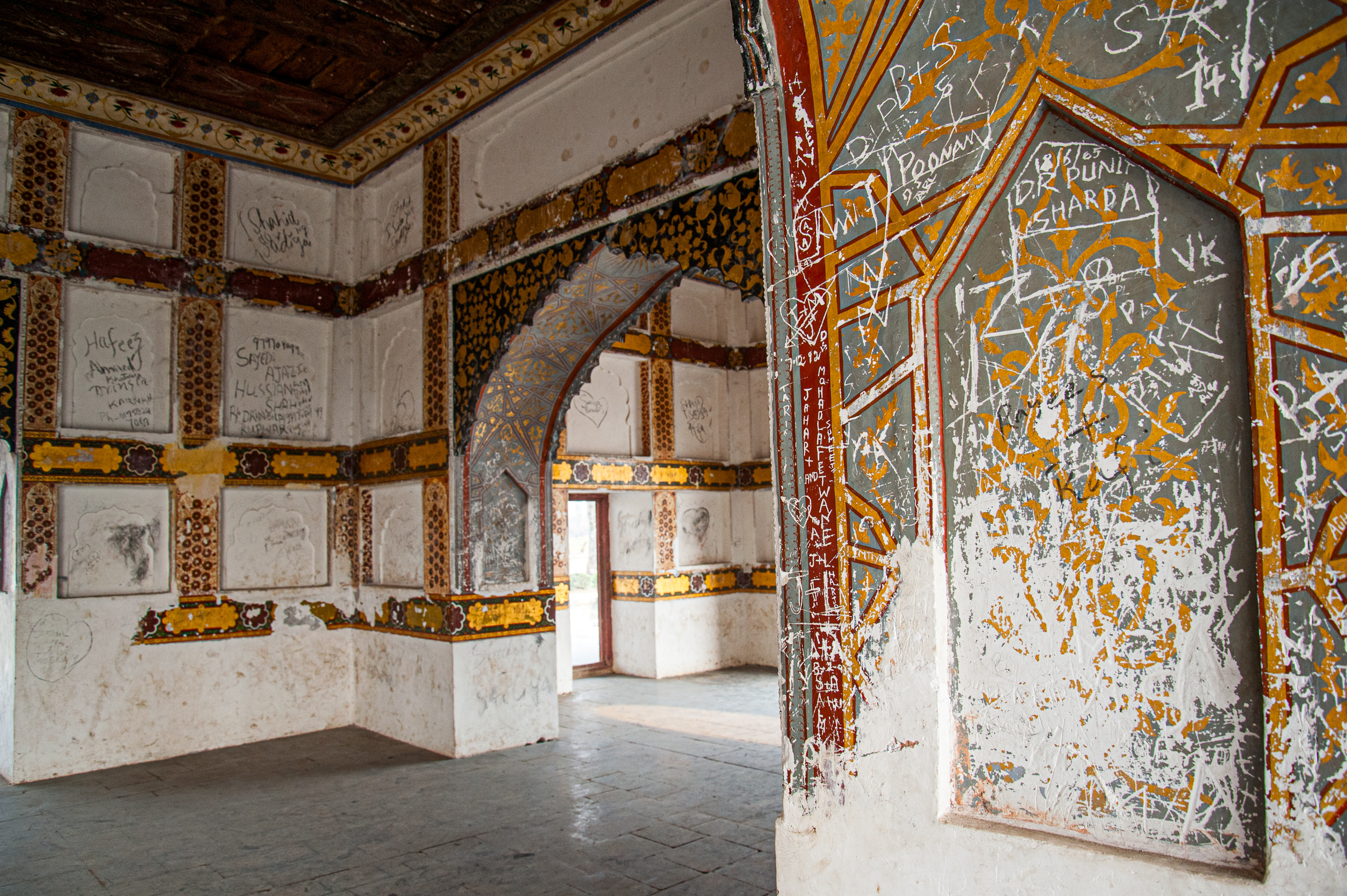
The Shalimar Bagh, a garden in Srinagar built by the Mughals in 1619, showcases some of Kashmir’s flora. We were told that in autumn it’s quite spectacular when the Chinar trees turn colours. We had to use our imagination of what the gardens looked like and how the Chinar trees look in their glory as we arrived in winter and all was pretty much brown. The Chinars planted in established gardens throughout Kashmir are a reminder of the Persian influence in the region and many are now protected.
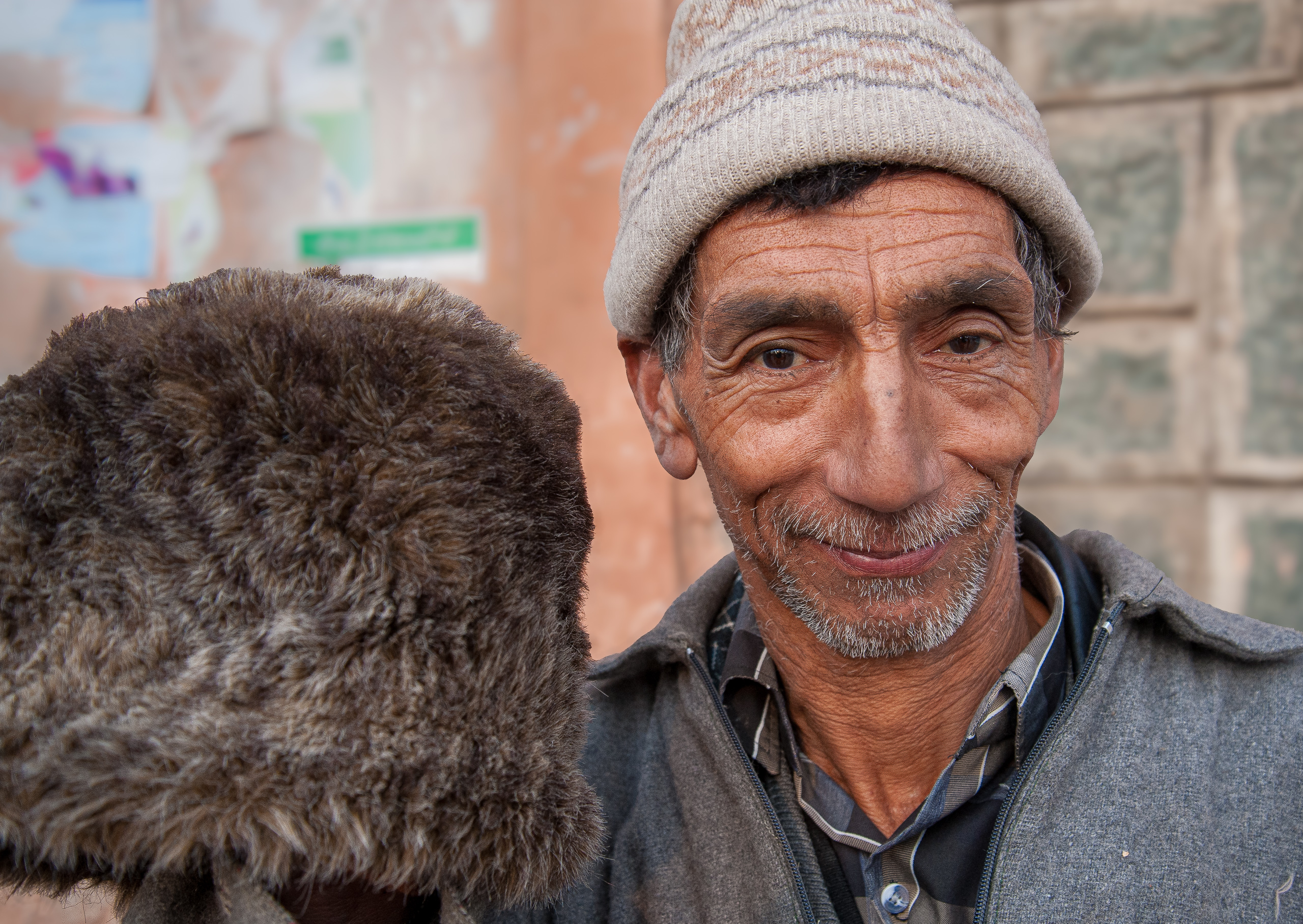
This Kashmiri gentleman followed us around with a big bag of faux fur hats. It was cold and I wasn’t wearing a hat and at AUD$8 I figured I could afford a hat. He said it was rabbit but I knew for $8 it had to be fake fur. We liked the man so much that we bought two more hats.
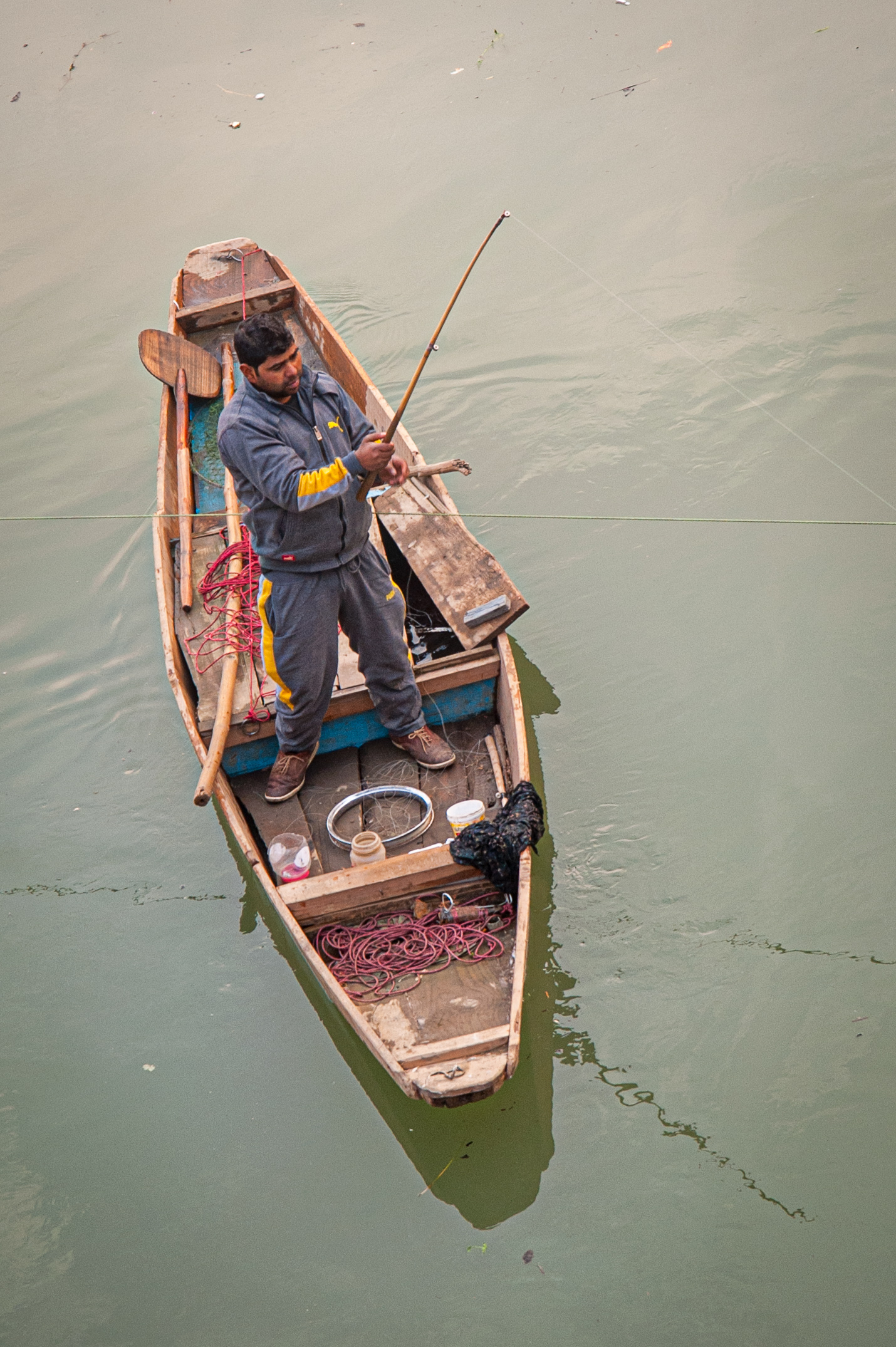
Fishing in Srinagar’s Jehlam River which originates in Kashmir, then flows through Pakistan and eventually empties into the Indus River.
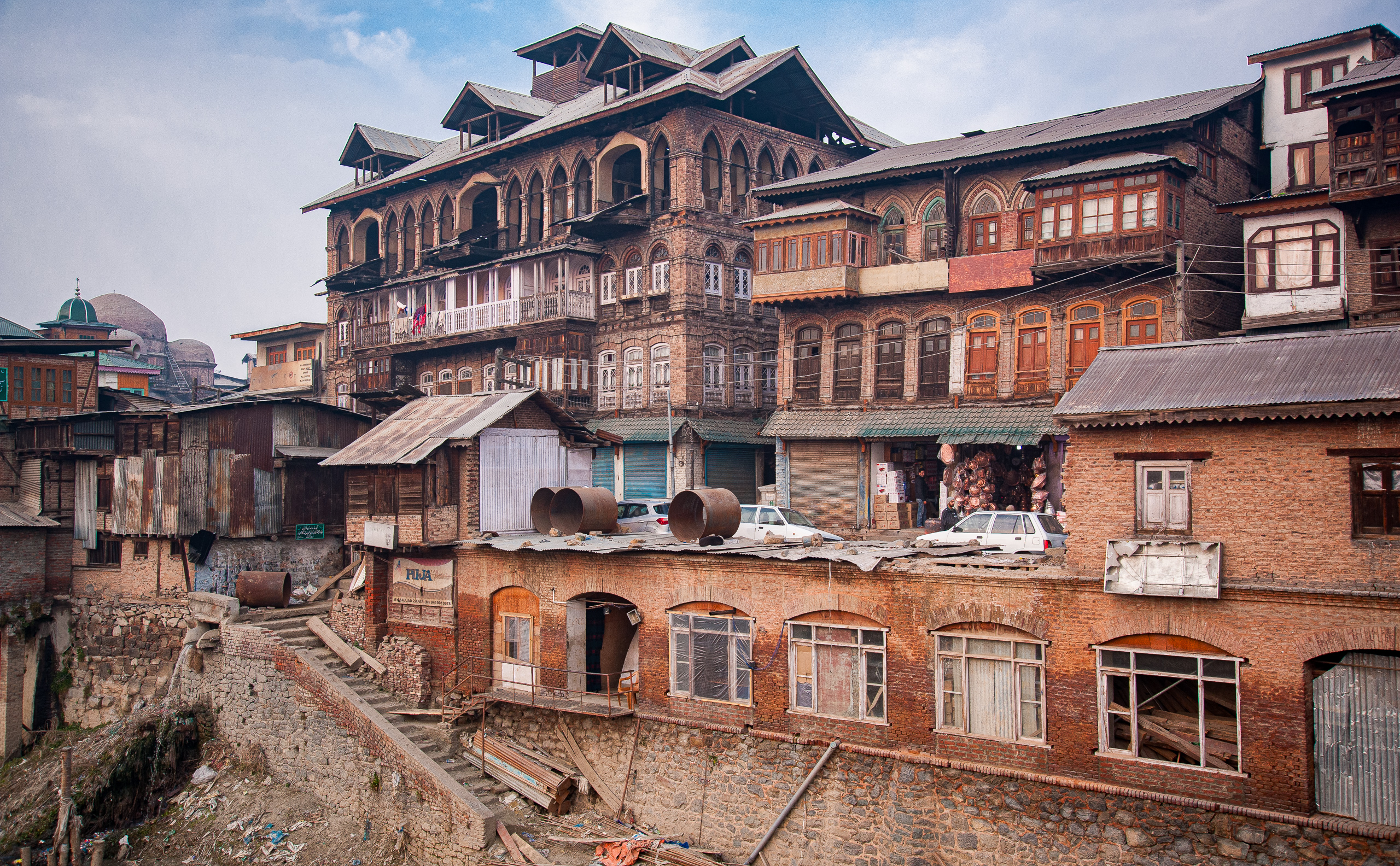
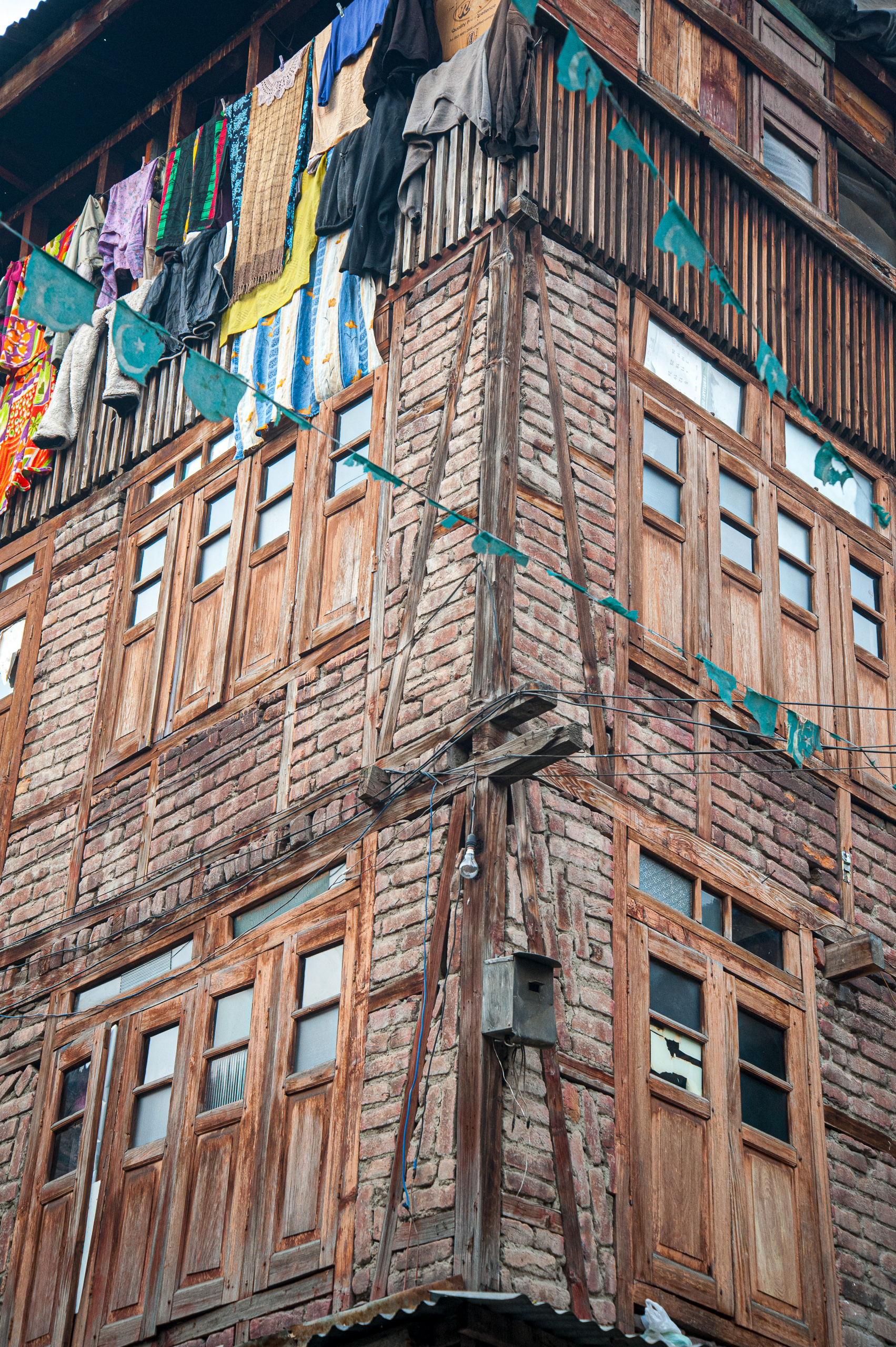
The old city of Srinagar very much resembles a mediaeval city. In fact Padma and I felt we could have been back in Syria as the city had more of a Middle East feel to it than an Indian feel. Here we find mosques rather than Hindu shrines and we picked up on a number of Arabic expressions, like ‘Inshallah’ or ‘if God wills’.
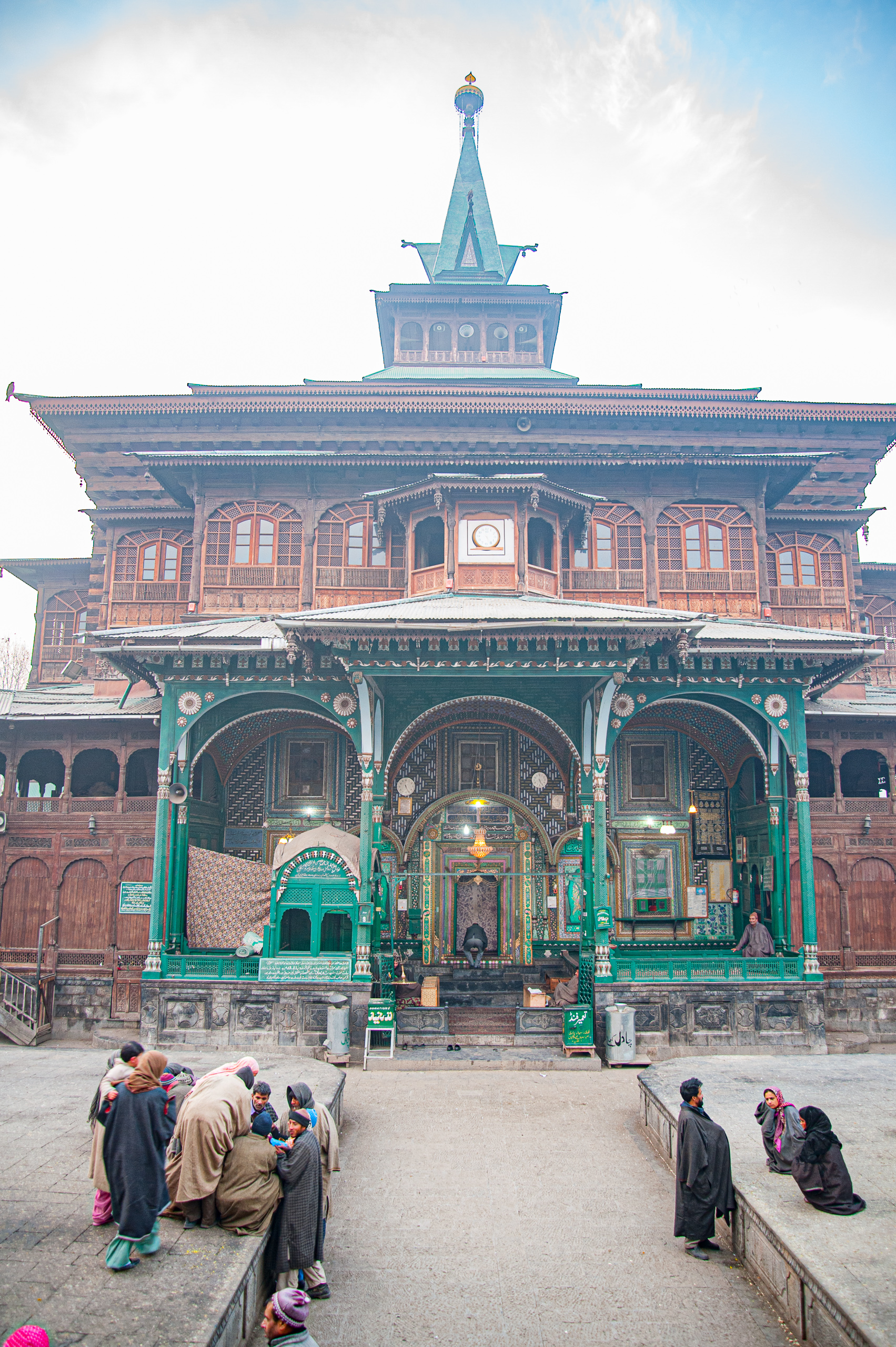
The Khanqah Mosque of Shah Hamdan doesn’t appear like the traditional domed Islamic mosques but takes on a more unique Kashmiri appearance. The original mosque was built on this site in 1395 but was destroyed by fire. The present mosque was completed in 1732.