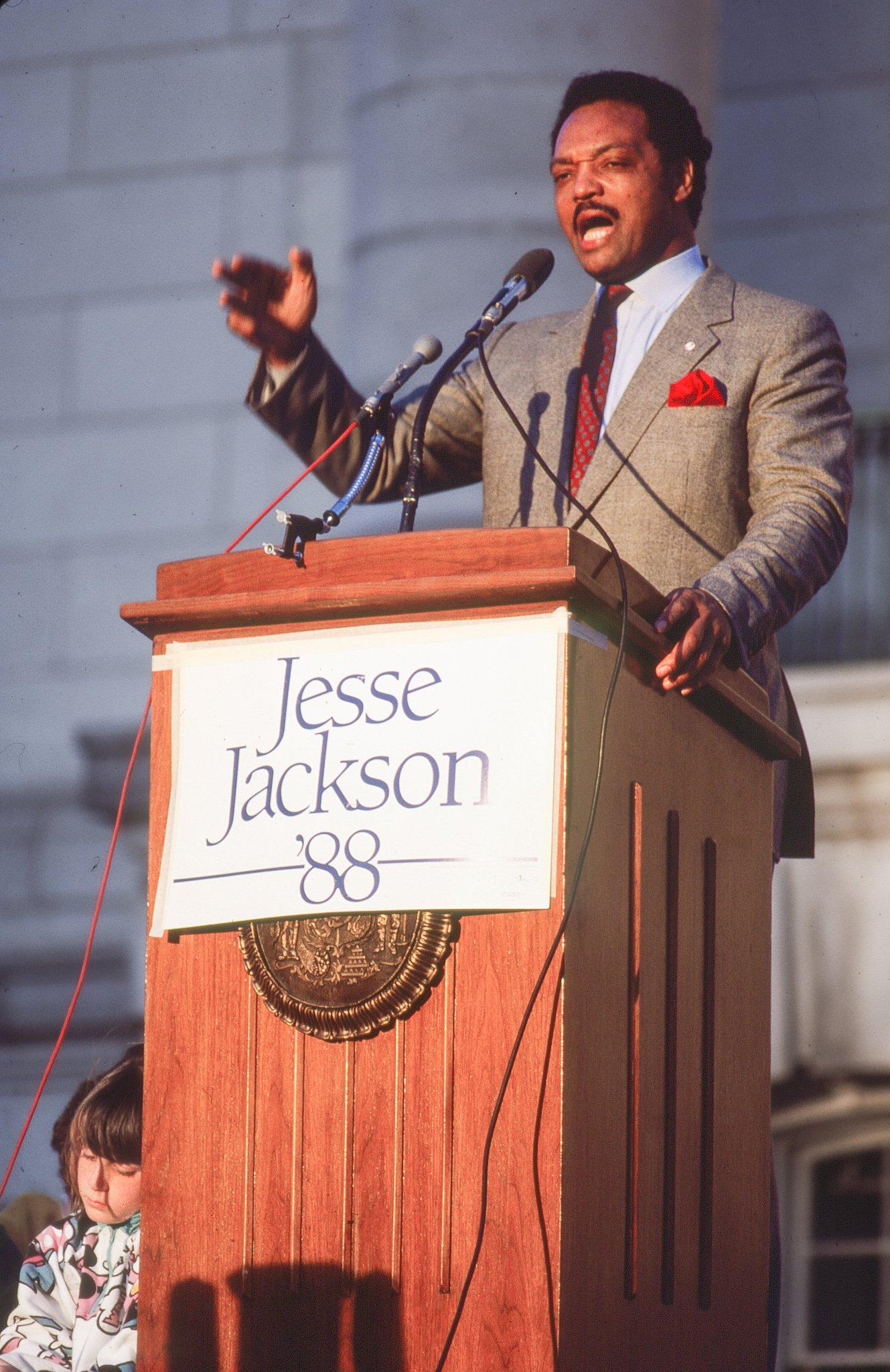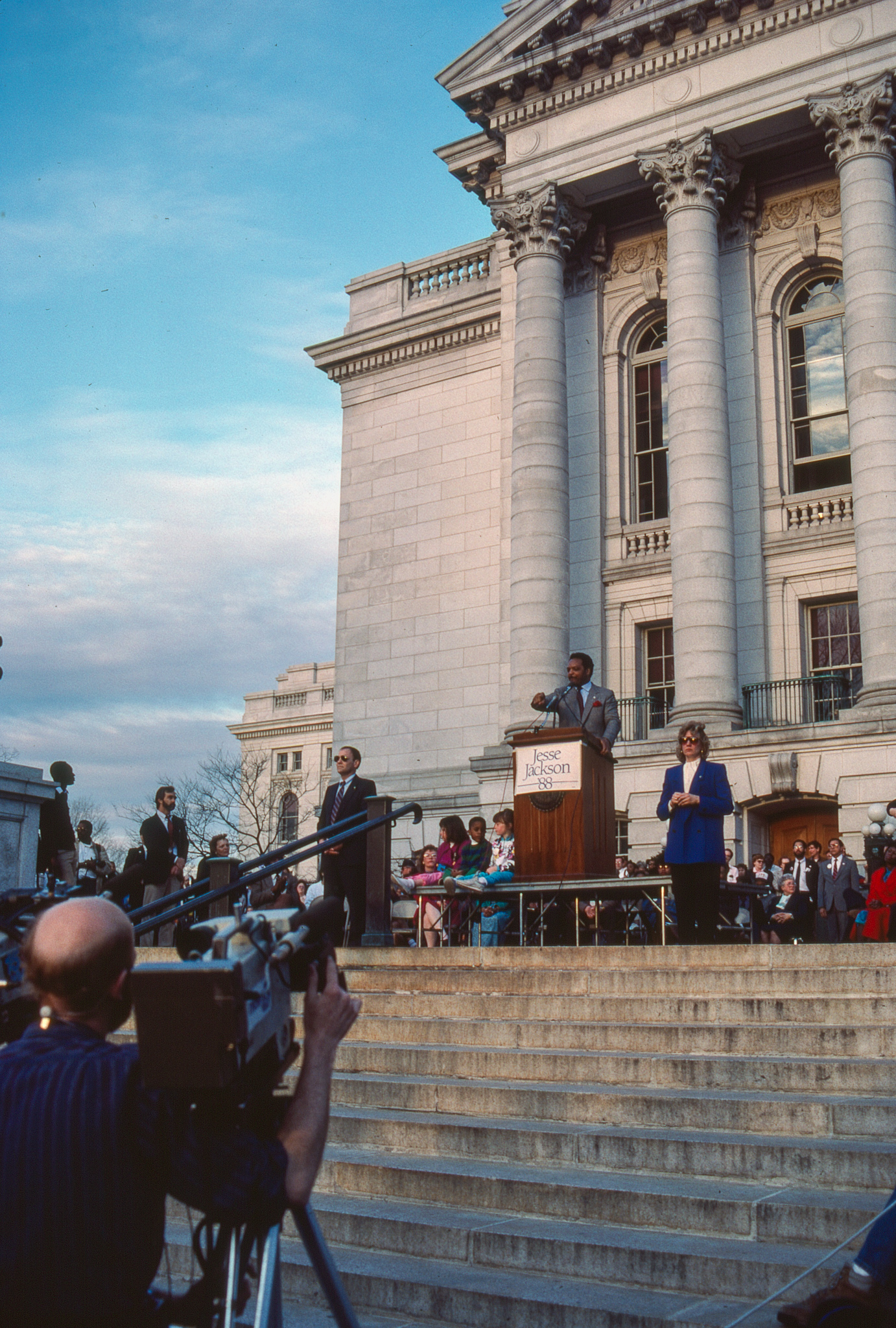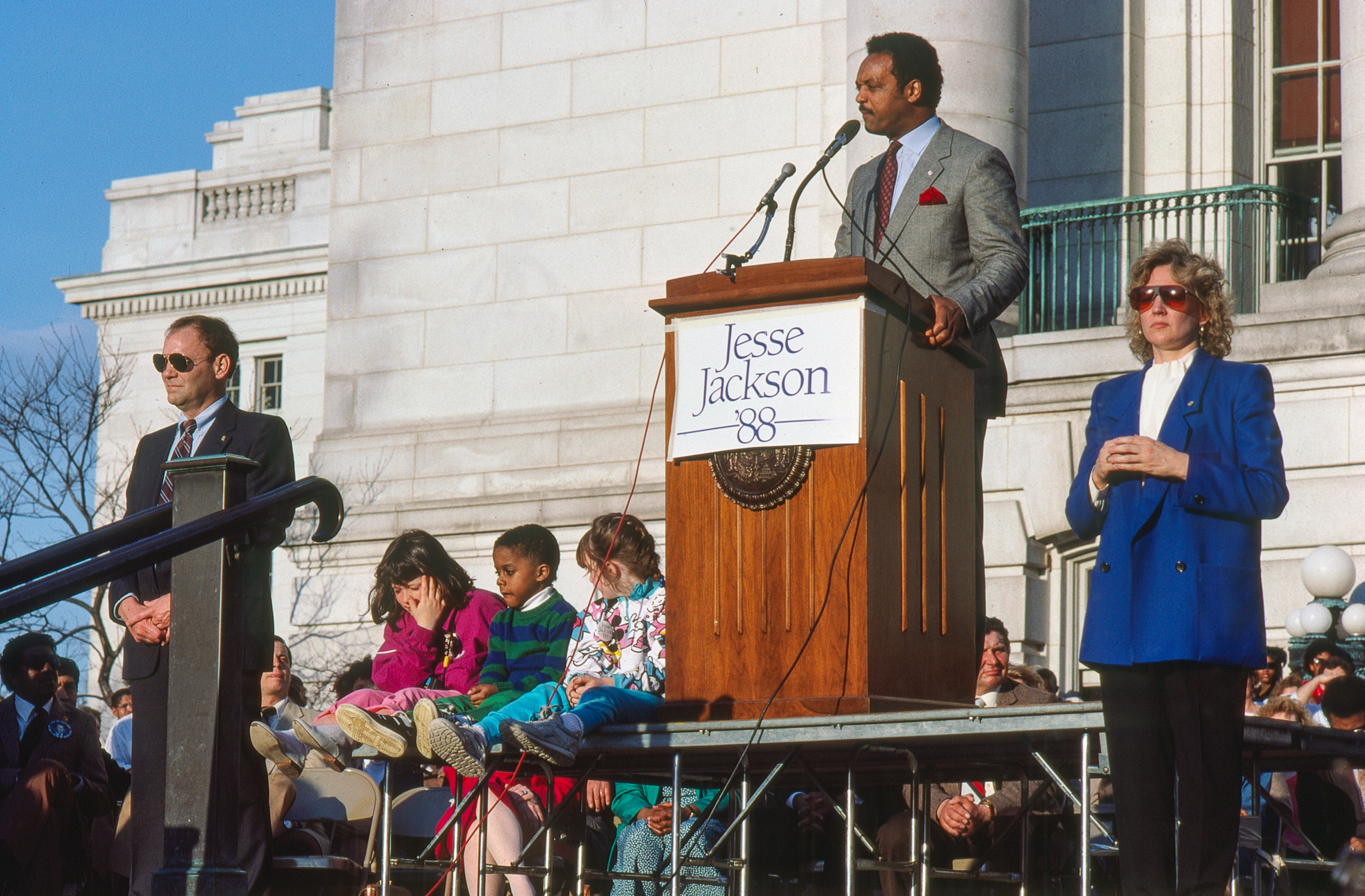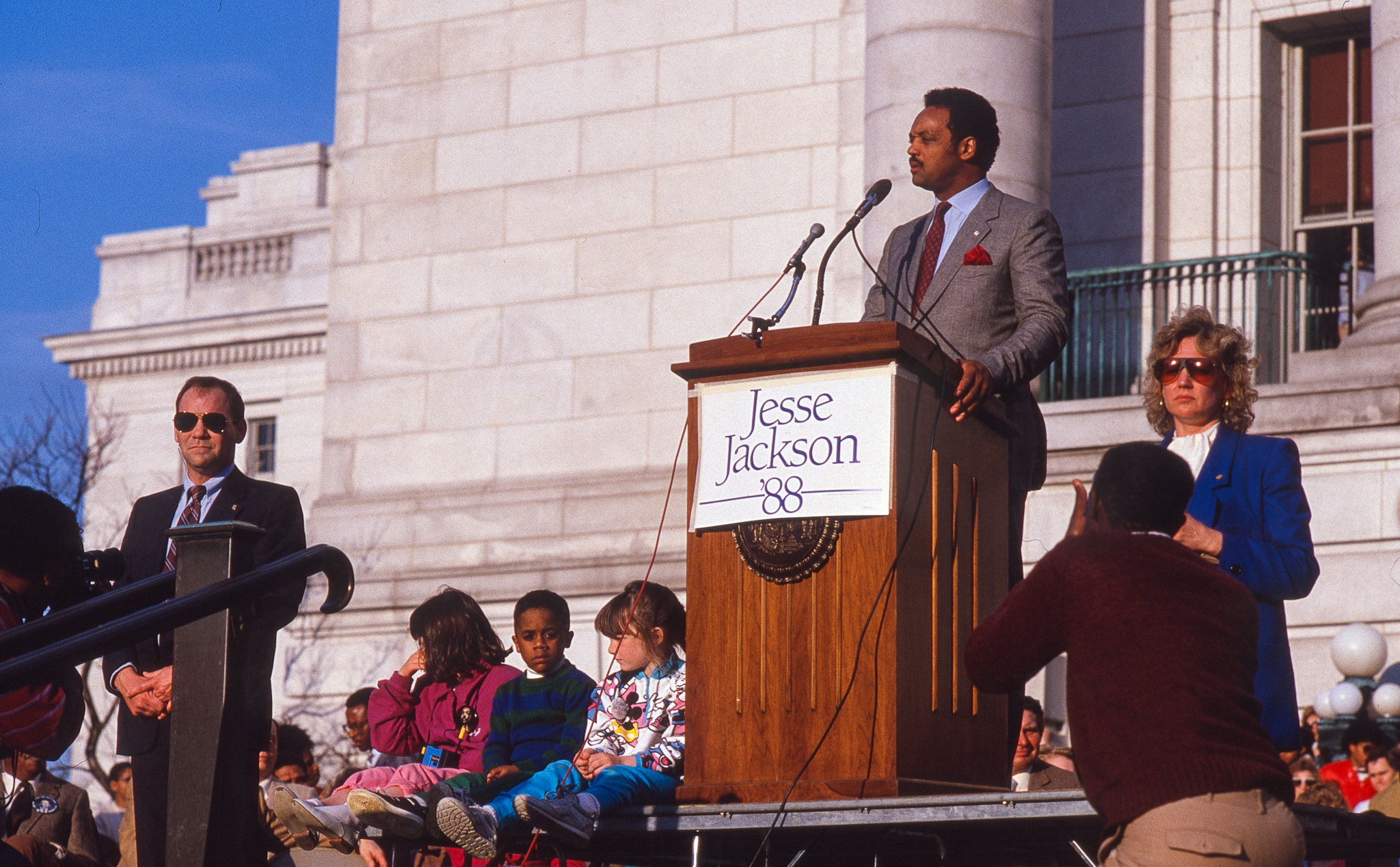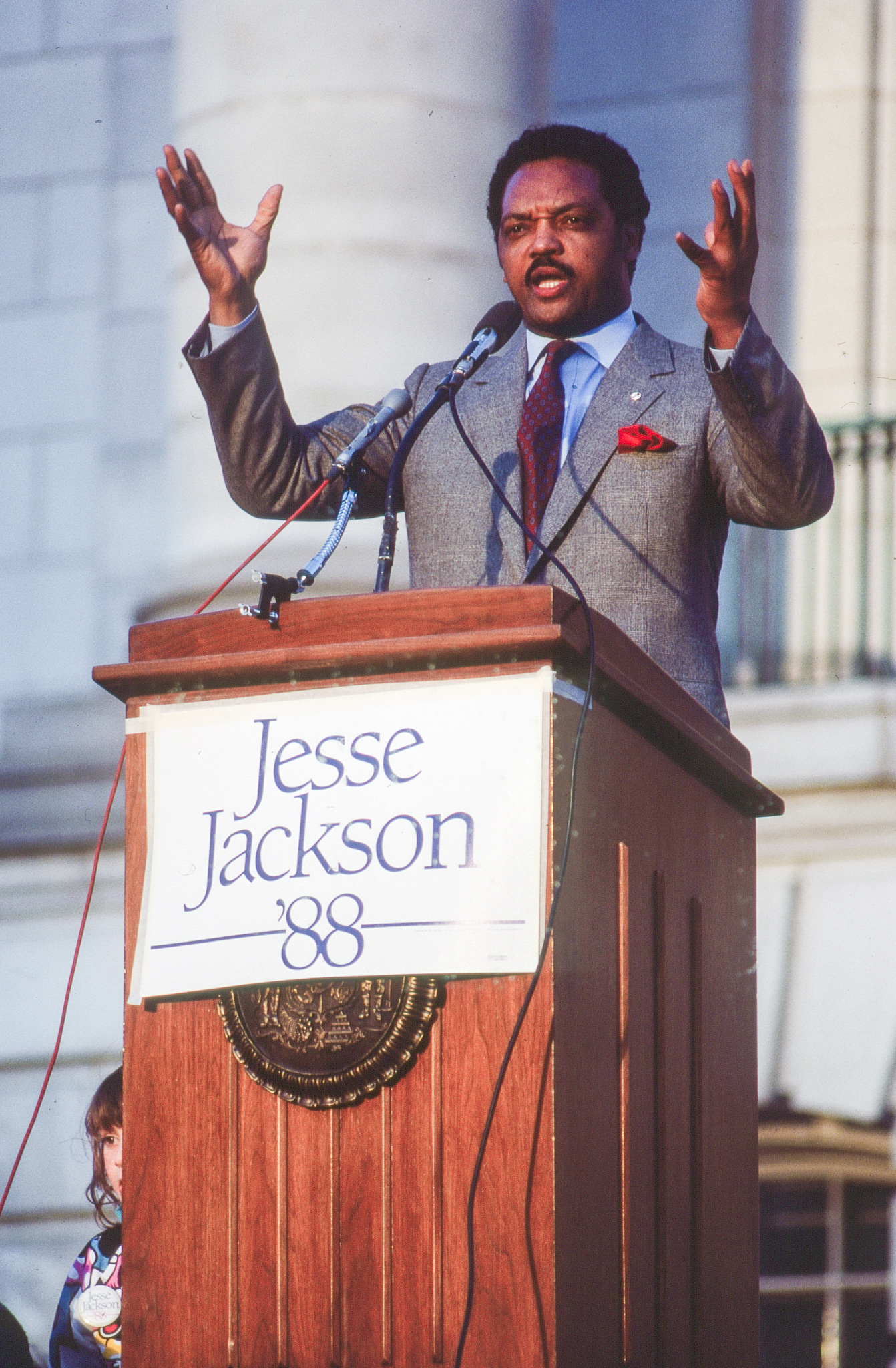
I had already made up my mind before I ventured to the steps of the Wisconsin State Capitol in Madison. I was going to vote for Jesse. No doubt about it. But I still wanted to hear him in person — to feel the cadence of his stump speech roll across the crowd — and to lift my camera and capture who I had hoped would be the next President of the United States.
It was early April 1988, a day before the Wisconsin Democratic primary. Jesse stood at the podium with a simple sign: Jesse Jackson ’88. No theatrics. Just conviction.
He was electrifying. He mixed humour with common sense, scripture with policy, outrage with hope. He spoke about a Rainbow Coalition not as a slogan but as a moral project – a multi-ethnic democracy where Black, white, Latino, Asian, union workers, farmers, students, the poor and the powerful could find common cause.
The Rainbow Coalition was a straightforward idea. The people getting squeezed – whether they were Black families in the inner city or white dairy farmers in Wisconsin – had more in common with each other than with the corporations and politicians playing them off against one another. He said we didn’t have to fight each other for scraps. We could widen the table.
He believed democracy could grow to include more voices, not fewer. That bringing people into the fold wasn’t a weakness. That you could pursue fairness and still build prosperity. That jobs, healthcare, education and dignity weren’t special interests – they were common ground.
As I listened to him speak I felt it didn’t seem all that complicated. It felt possible.
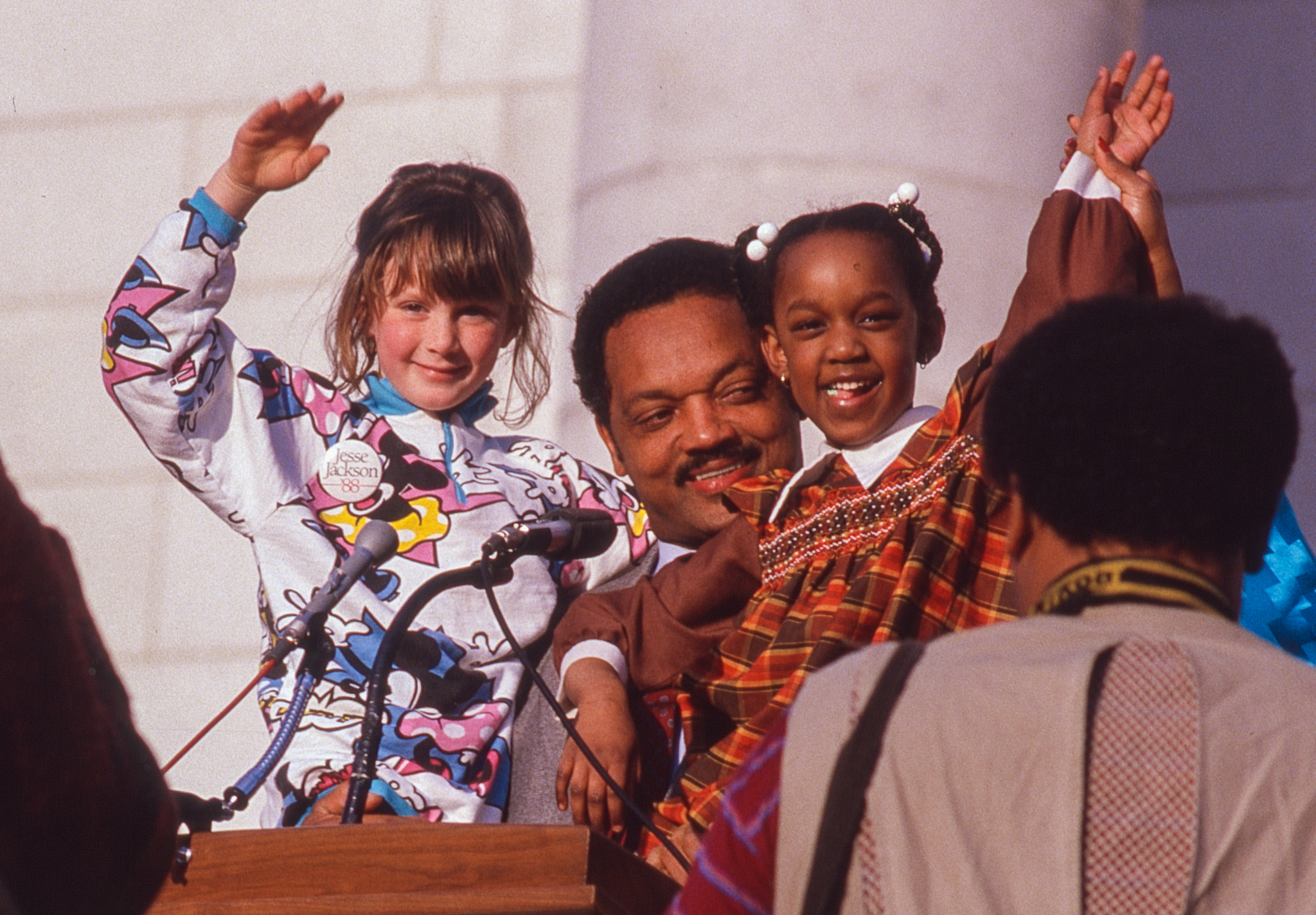
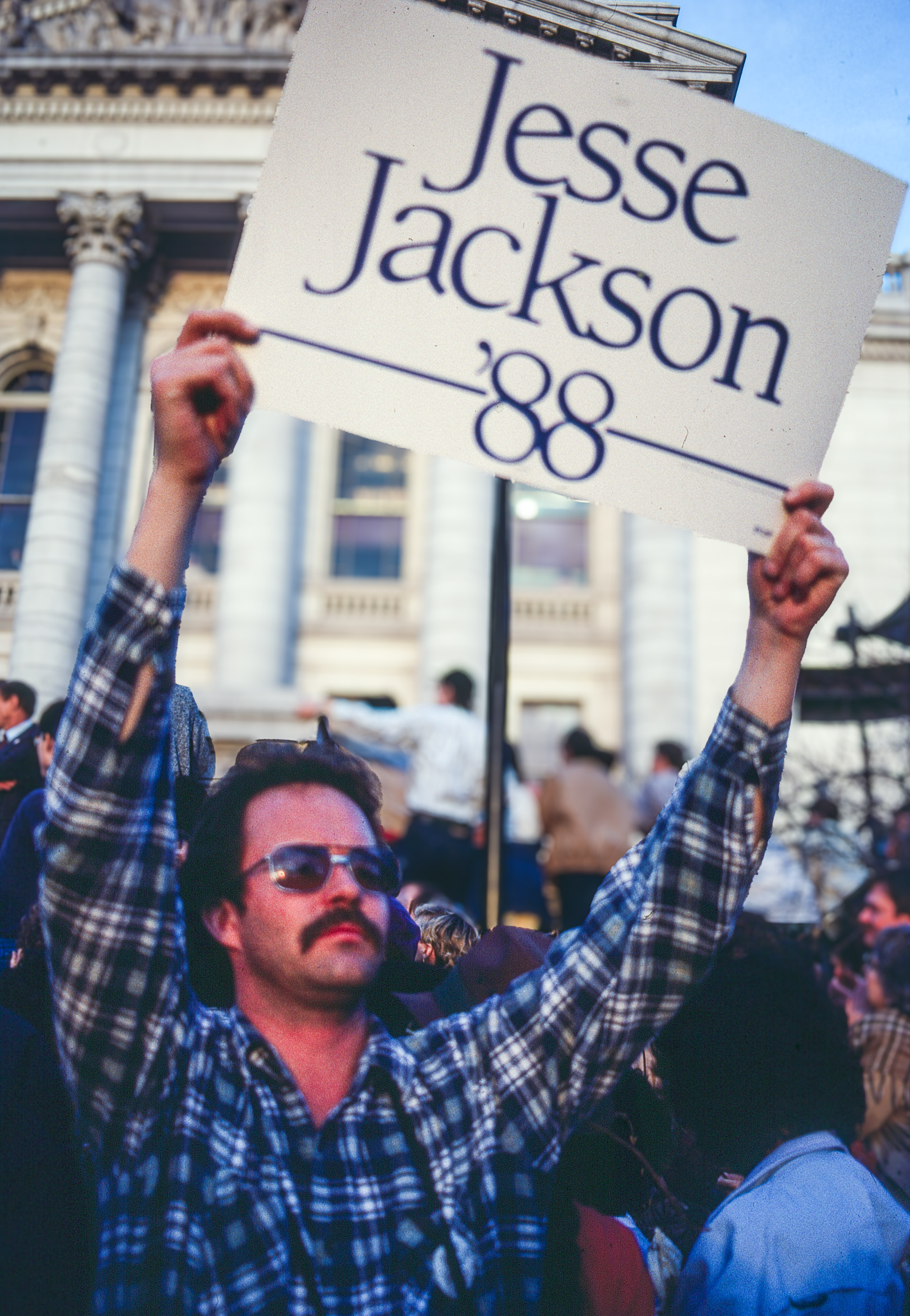
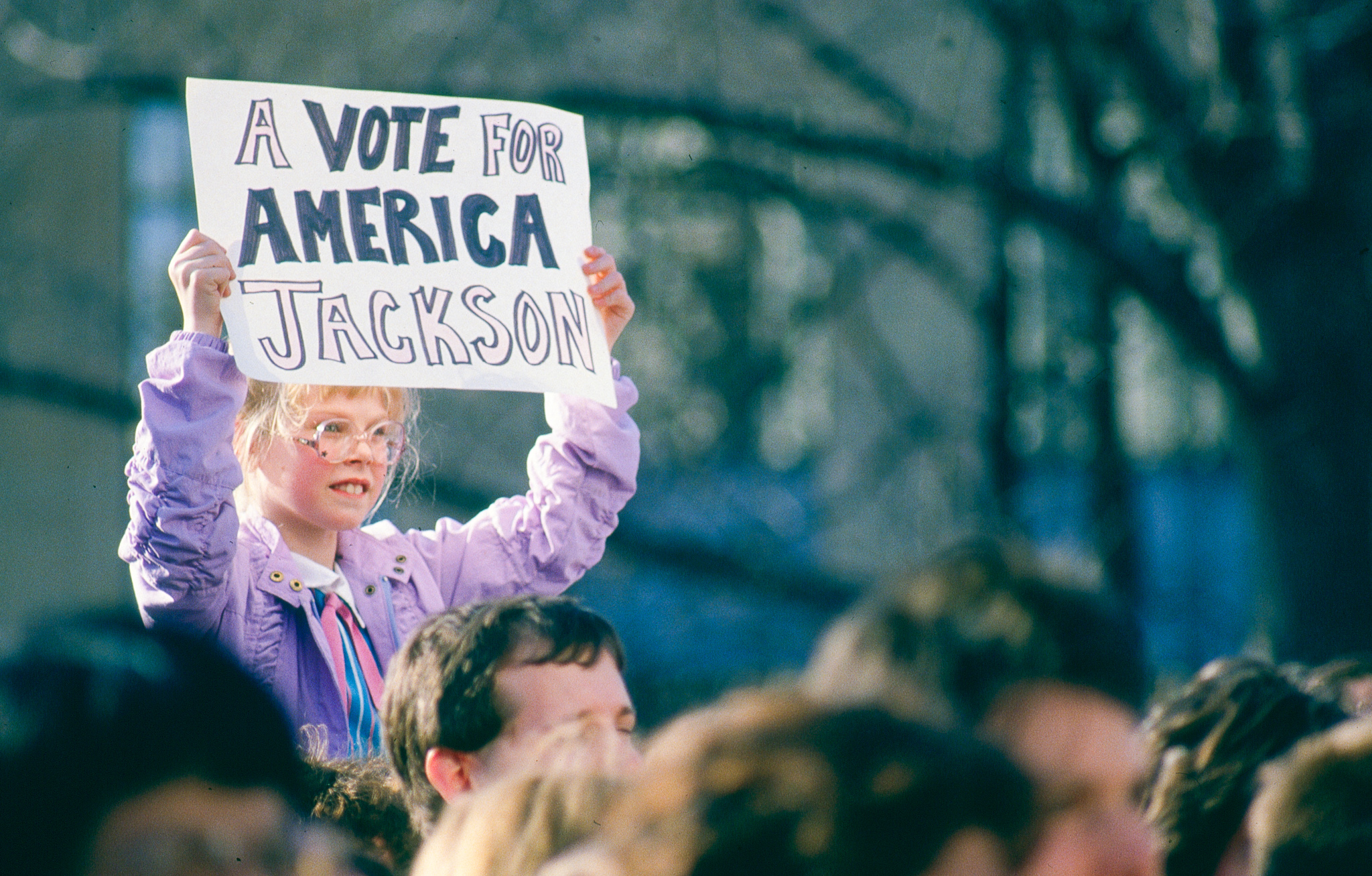
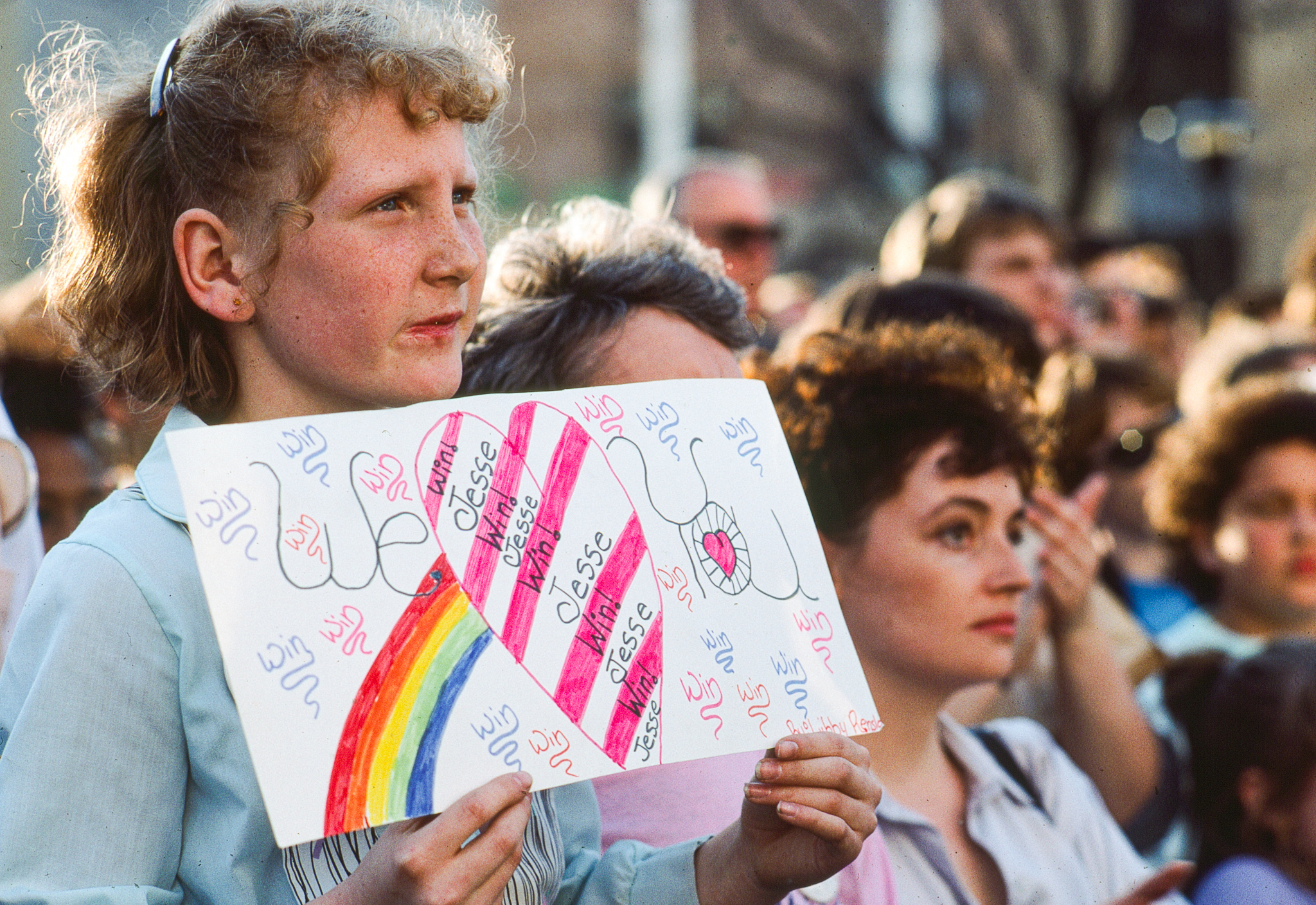
Looking through my lens, I saw faces intent and expectant. A young woman clutching a handmade rainbow sign. A girl perched on shoulders holding “A Vote for America – Jackson.” They weren’t there to witness history in the narrow sense of “the first African American president.” They were there because they believed in a bigger idea of America.
So did I.
Like many at the time, I was deeply moved by Jesse Jackson. But perhaps he was ahead of his time – perhaps way too far ahead. America wasn’t ready. He lost Wisconsin. Eventually Michael Dukakis secured the Democratic nomination.
But what I remember isn’t the delegate math. It’s the feeling. The feeling of hope. Standing there, camera in hand, I felt as if the country might actually bend toward that rainbow.
That was nearly forty years ago.
Today, hearing that Jesse has died at 84, I find myself looking back at those Kodachromes again. The colours are still bright. The hope feels both close and yet oh so distant. I’m still waiting for that coalition to fully take hold – for a country where everyone can live together in something more than uneasy coexistence.
Jesse Jackson moved me that day. I’m grateful I was there. And I’m grateful I pressed the shutter to record a hope that has eluded me ever since.