Padma and I have seen a lot of churches in Europe. Spectacular, yes – vaulted, gilded, hushed – but after a while they blur into one another. So when our Swiss host Hans suggested we visit a church, this one up a side valley in Ticino, we didn’t exactly leap for the car keys.
Then we came around the bend at Mogno.
At 7.15 on the morning of 25 April 1986, an avalanche came off the mountain above this alpine hamlet and took out a dozen houses and the parish church, which had stood on that spot since the 1630s. No one was hurt – Mogno is barely lived in these days – but nothing of the church survived except two bronze bells, cast in 1746, dug out of the rubble.
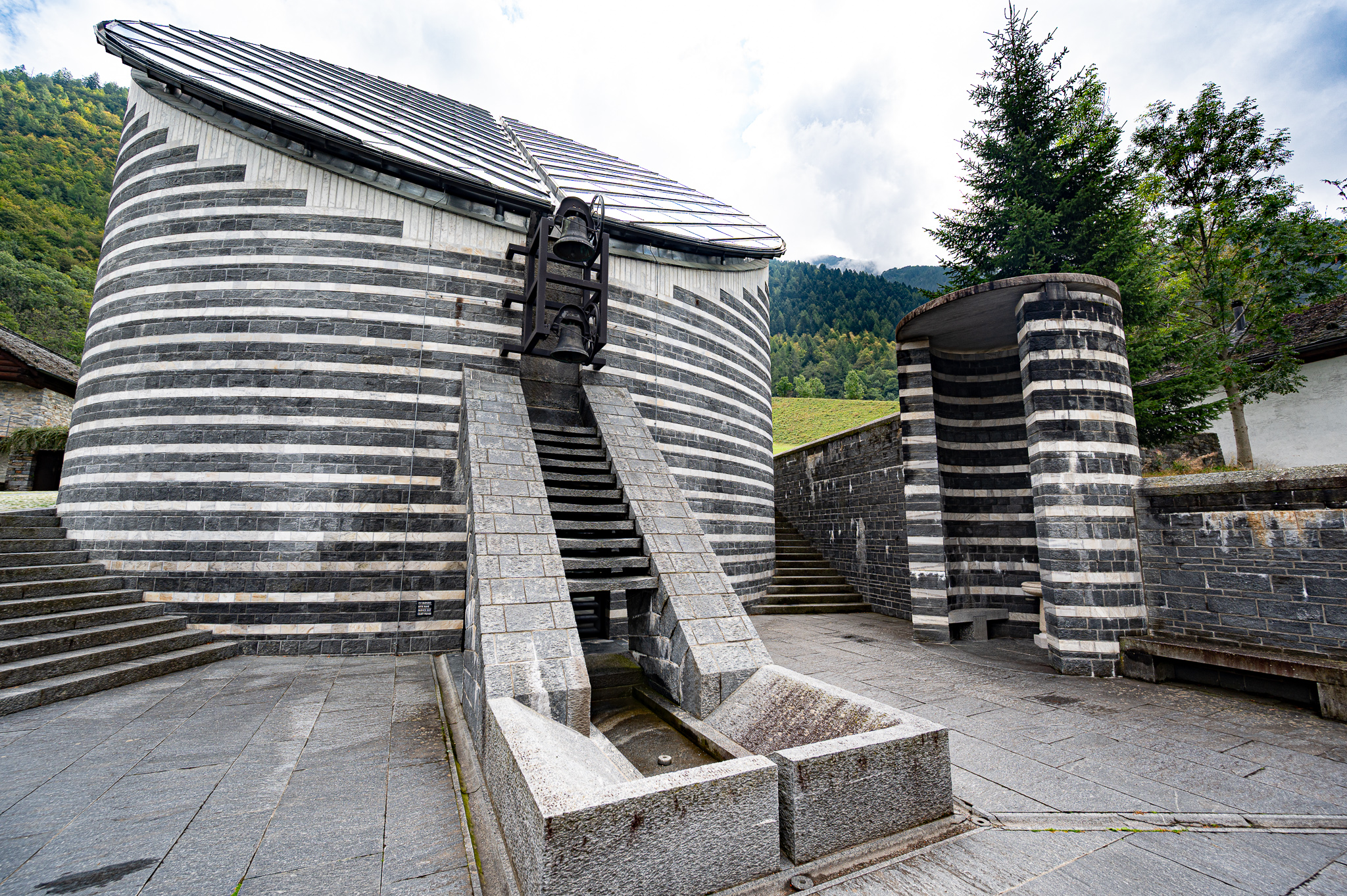
The commission for a replacement went to Mario Botta, the Ticinese architect, and it caused an uproar. Villagers had lost a small stone church with a bell tower; what Botta offered them was a cylinder sliced off at 45 degrees, banded in black and white like a humbug. It took ten years of argument and construction. The Chiesa di San Giovanni Battista was finally consecrated in 1996.
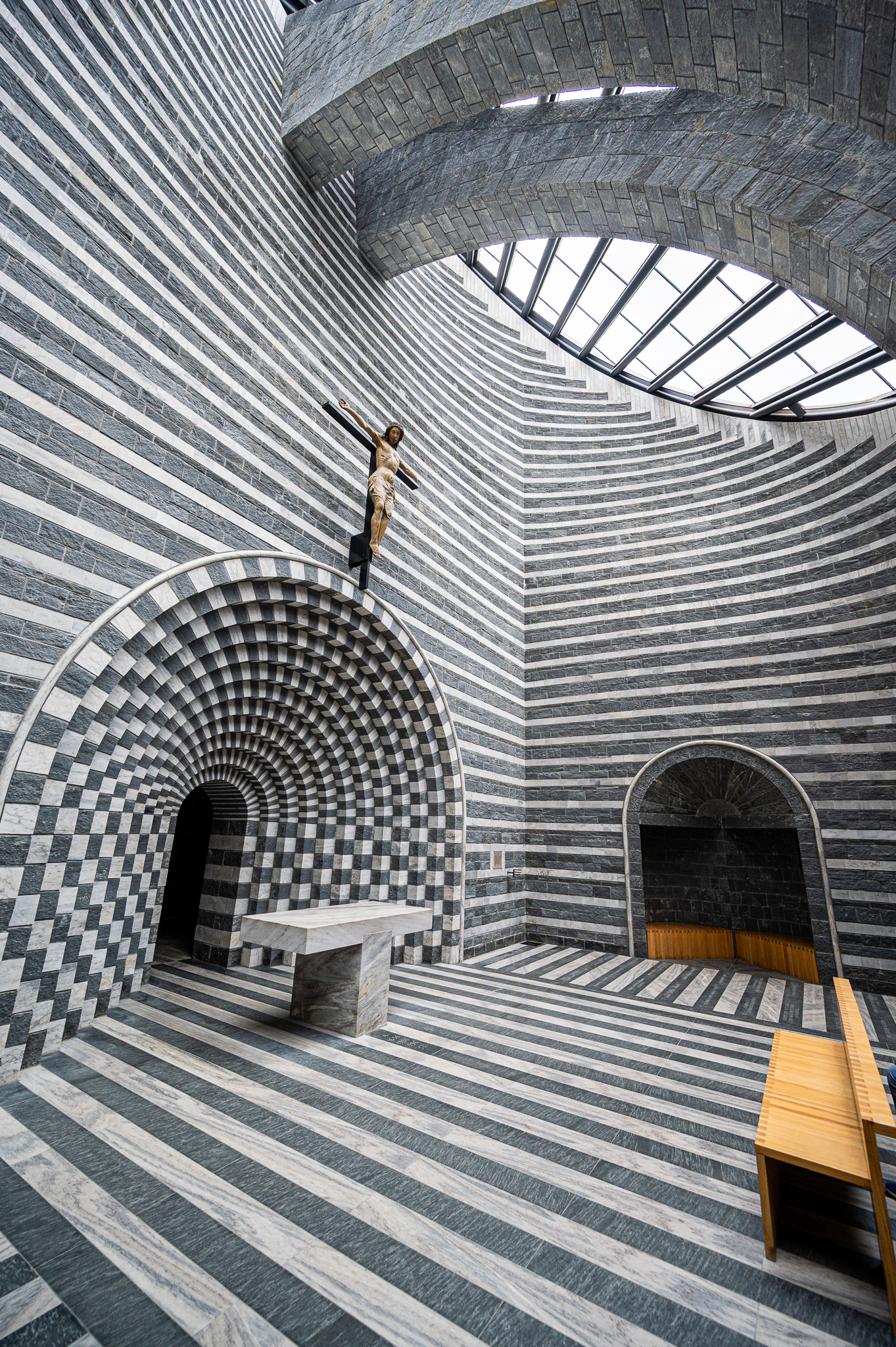
It’s tiny – it seats about fifteen. But it’s the most extraordinary building I have stood inside.
Botta built it on the old footprint, to the same orientation, and made it 17 metres tall to match the height of the bell tower the snow took. The walls are two metres thick at the base, tapering to 50 centimetres at the top, laid dry in the old way with cavities filled with concrete. This is not cladding. The stone is the building, and it is meant to stand there the next time the mountain lets go.
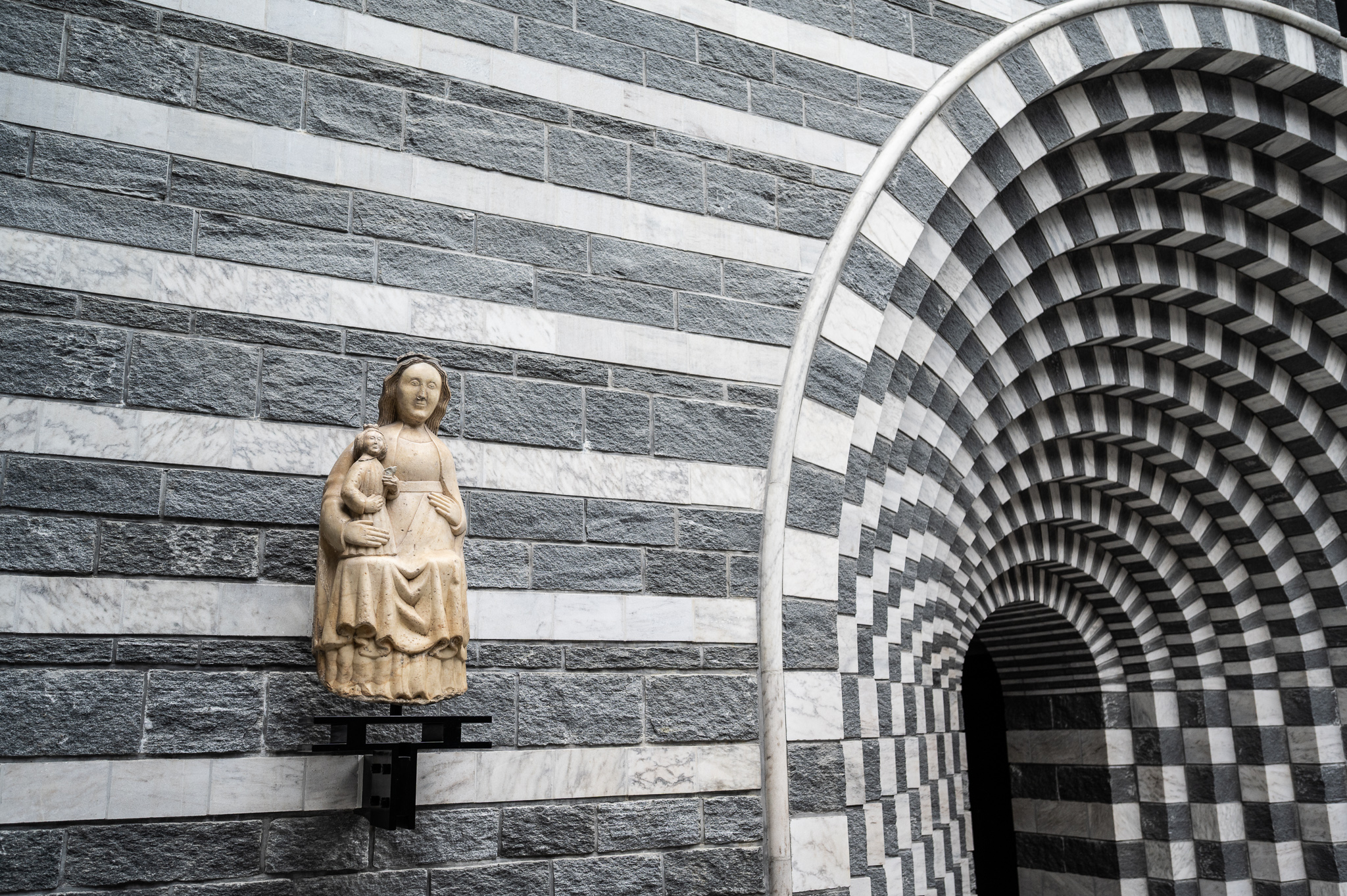
The stone is the local geology, quarried within a few kilometres. The dark grey is Maggia Valley gneiss from Riveo. The white is Cristallina marble from Val Peccia, just down the road – the only marble quarried anywhere in Switzerland, a strange pale seam in a country otherwise built of granite and gneiss. Alternating them, course by course, Botta got the striped Romanesque churches of Tuscany out of two rocks that came from the head of this valley.
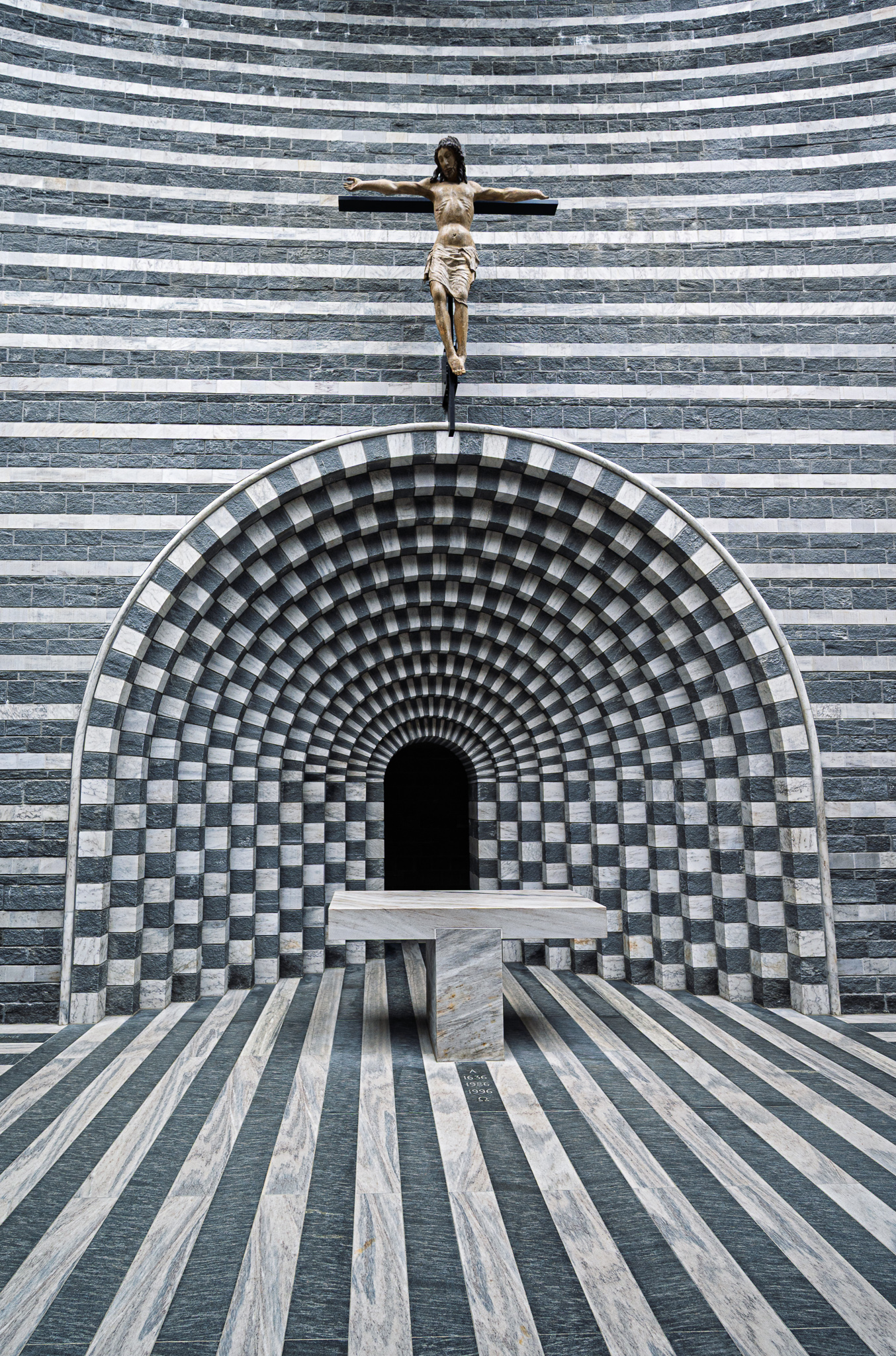
Inside there are no windows at all. The only light falls through the tilted glass roof, so the interior brightens and dims with the weather outside. In plan the church begins as a rectangle at your feet, becomes an ellipse in the walls, and finishes as a circle at the glass – the ascent, Botta has said, from the human to the divine. Stand at the altar and the stripes wrap and converge around you like the inside of a shell. A stepped arch behind the altar recedes in checkered rings towards the sacristy door.
The two salvaged bells hang outside on a black steel frame, above the stair – the only pieces of the old church in the new one, and the whole point of it.
Hans, we owe you.