The shutters were closed.
Not broken, not hanging off their hinges, not weathered to bare grey — closed, and lately painted, and latched from the inside by somebody who had gone away and meant to come back. Padma, Hans and I walked through three villages in one long cloudy day and I do not think we saw more than a dozen people. Wood was stacked under the eaves. Geraniums were still in the window boxes. Everything was in order and nobody was home.
I took it for abandonment. It isn’t, or at least it isn’t only that, and working out the difference turned out to be the most interesting thing about the day.
Hans had two valleys in mind. Fusio sits at the head of the Val Lavizzara, the upper reach of the Maggia — the same road that runs past Mogno and its extraordinary striped church. Sonlerto and Foroglio are in the Bavona proper, over the ridge to the west, up the side valley that turns off at Cavergno.
They look like the same kind of place. They are not, and the reason is architecture.
Fusio: a village that stayed
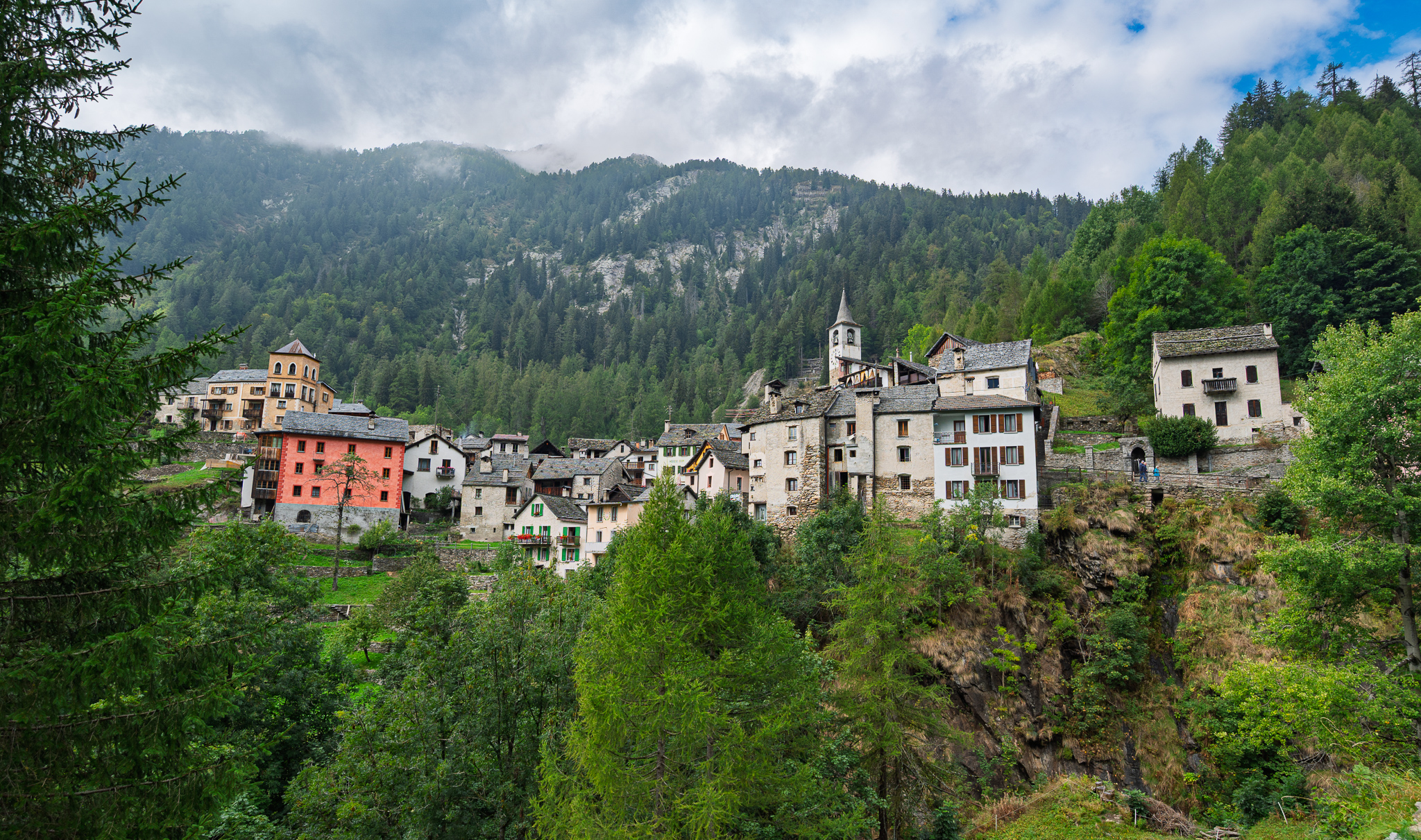
Fusio is a real village. It has a hotel, a road that continues past it, and houses of three and four storeys standing shoulder to shoulder on a south-facing slope at 1,289 metres — the highest settlement in the Lavizzara. It appears in the record in 1258, as Fuxio.
And it is plastered. This is the thing you notice coming up from the Bavona: colour. Salmon, ochre, terracotta, a hard Venetian red, with dressed stone quoins picked out at the corners and window surrounds moulded in relief. The Hotel Fusio carries a small iron balcony painted crimson, high up under the gable, with no obvious purpose beyond announcing that somebody could afford it.
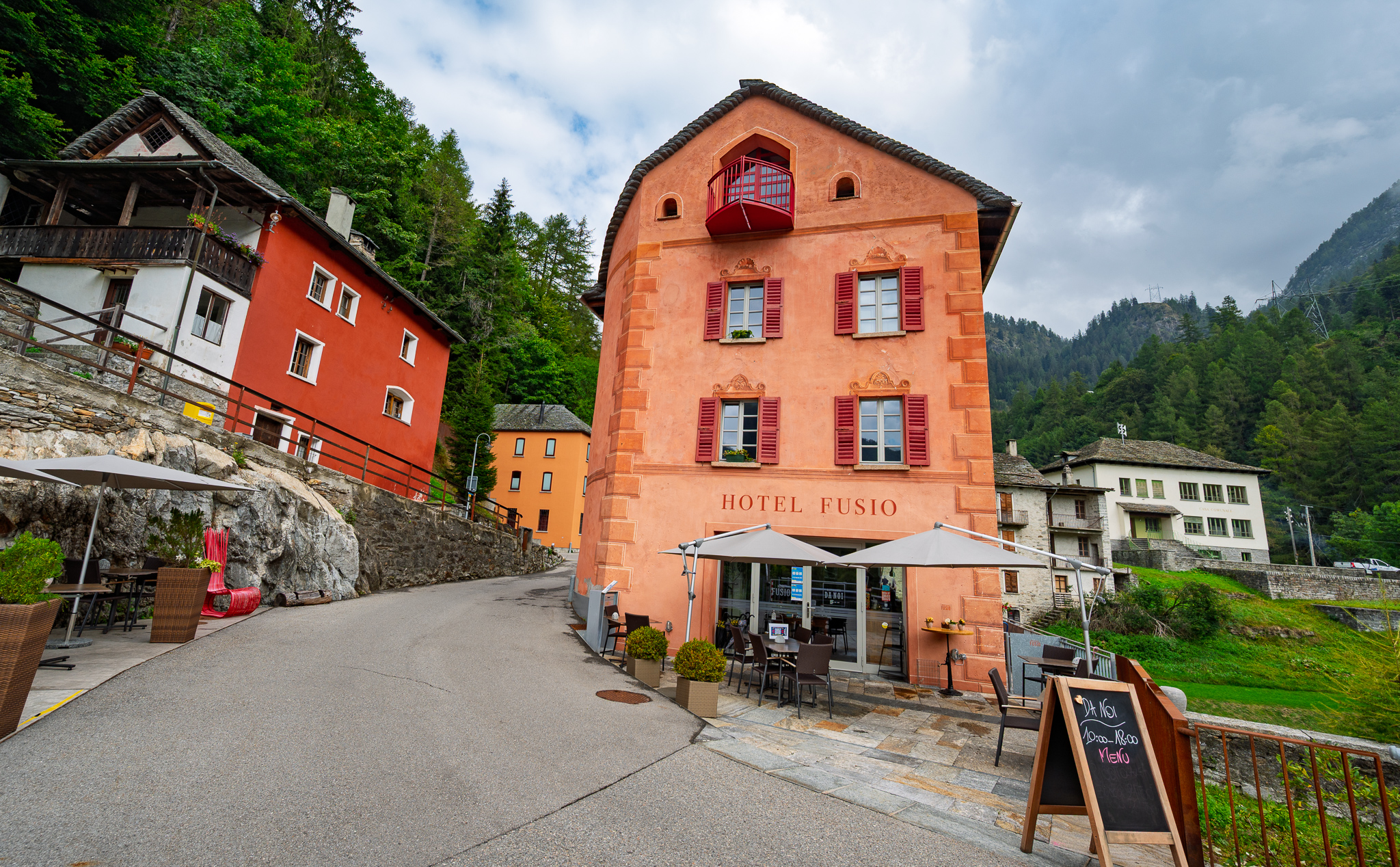
Plaster and paint are what you do when you are staying. Lime render has to be maintained; a coat of colour is a statement that this house will be lived in next winter, and the winter after that. Nobody plasters a building they occupy for eleven weeks a year.
The stone under it had a market once. Until the second half of the nineteenth century there were two mines at Fusio producing steatite – soapstone – the soft, talc-rich rock that turns easily on a lathe and holds heat beautifully. The whole valley is named for it. A laveggio is a soapstone cooking pot, the pot that every alpine household owned, and Lavizzara is the valley of the pots.
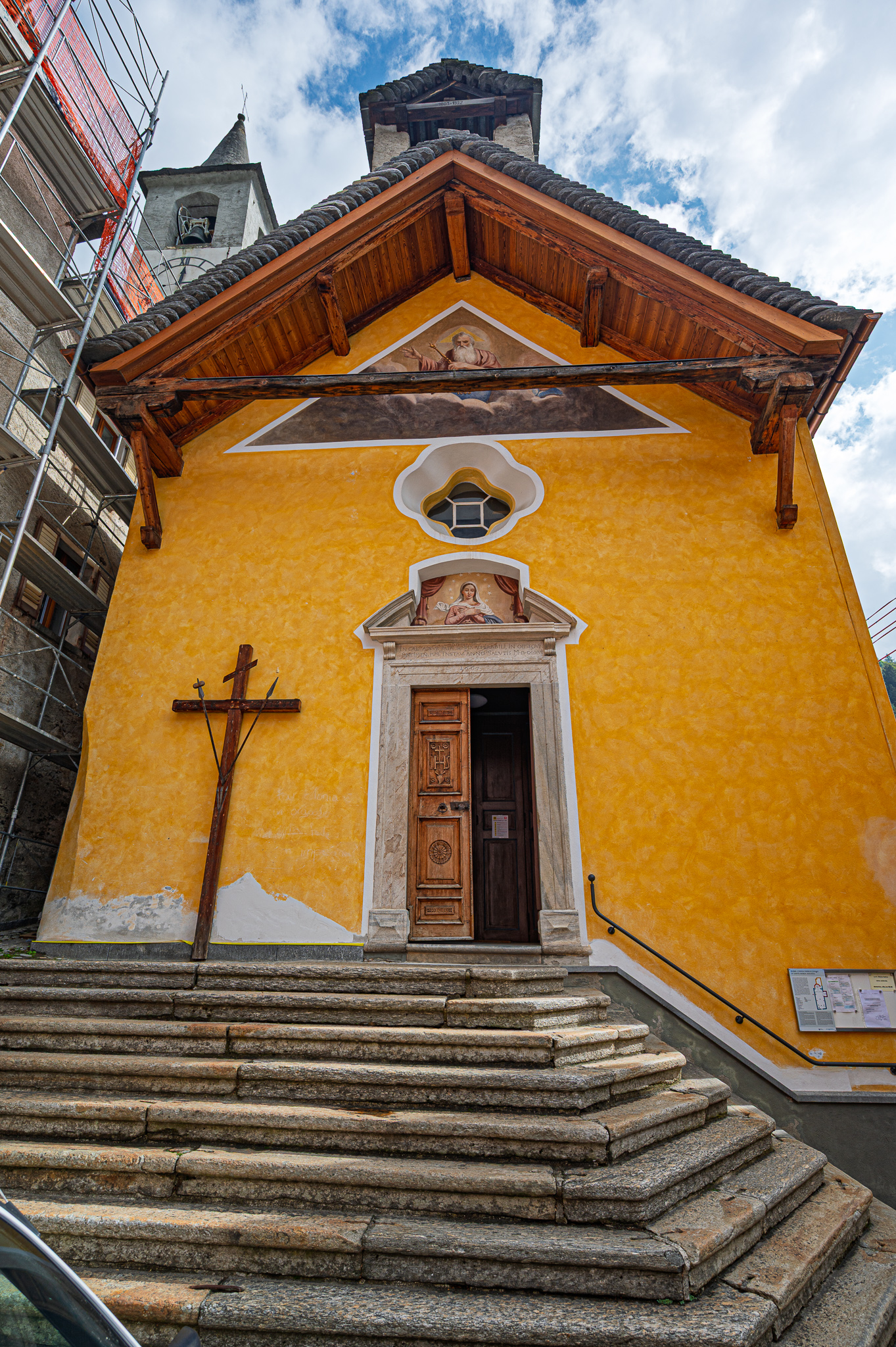
The parish church stands above a broad flight of stone steps, its façade a flat plane of deep yellow with a fresco of the Virgin over the door and God the Father, white-bearded and gesturing, in the pediment above. It was consecrated in 1455 to the Beata Vergine Assunta – the Virgin assumed into heaven – and the Latin over the doorway says as much, recording a restoration by the people of Fusio in the 1670s. For its first century it was only a chapel of ease, and the dead went down the valley to Sornico to be buried.
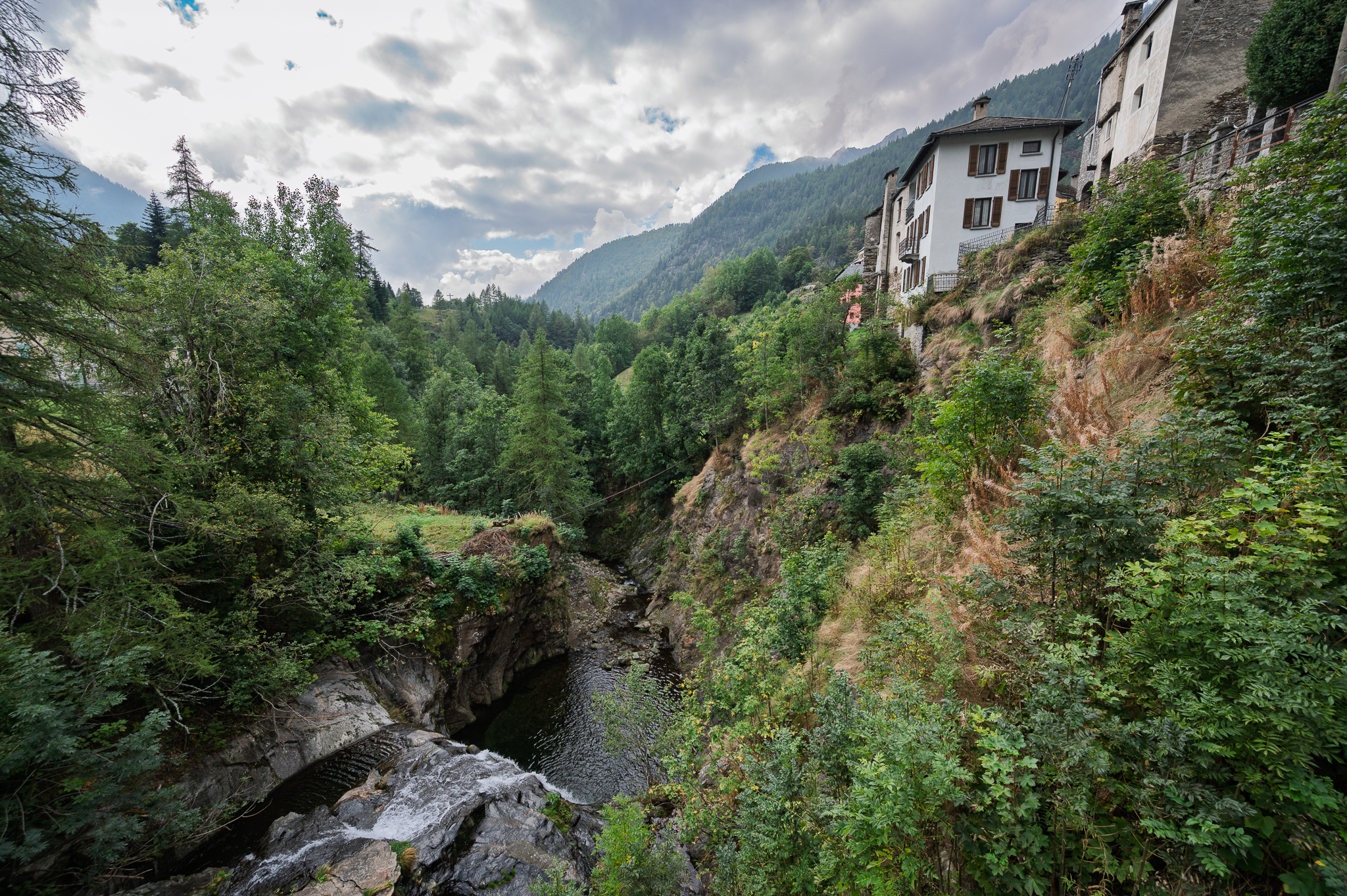
So Fusio’s emptiness is the ordinary Alpine kind: decline. Four to five hundred people lived here in the sixteenth and seventeenth centuries. By 1801 it was thinning; after 1950 it fell off a cliff, as everybody who could went to the cities. Forty-five people at the 2000 census, most of them elderly. Damming the Sambuco valley between 1950 and 1956 drowned a good share of what farmland was left.
The census recorded something else that day I keep turning over. Of Fusio’s 113 dwellings, twenty were permanently occupied. Ninety-three were seasonal.
Four houses in five, waiting.
The Bavona: architecture as arithmetic
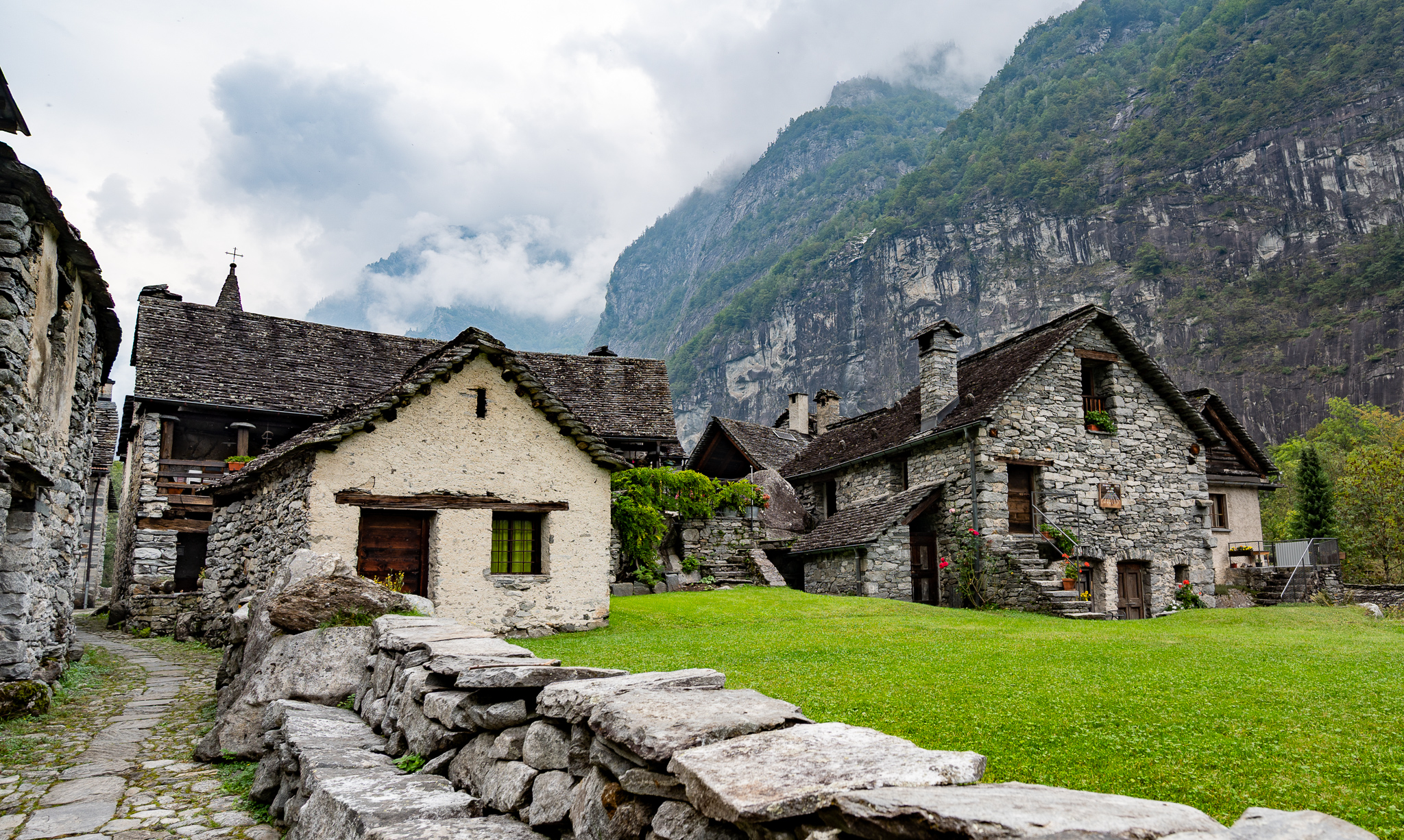
Over the ridge, the emptiness is a different animal entirely, and much older.
The Bavona’s twelve settlements are called terre — lands, not villages — and the word is honest. People settled the valley around AD 1000 and lived here year-round for six hundred years. Then the mountain began to collect. Deforestation loosened the slopes, landslides came down, the river broke out and waterlogged the little that could be ploughed, and by about 1600 the population gave up on winter and withdrew to Cavergno and Bignasco at the mouth of the valley. From then on the terre were summer quarters. Not failed villages — seasonal ones, by design, for four centuries.
Everything built here after that was built by people who knew they would not be sleeping in it in January, and you can read that off the walls.
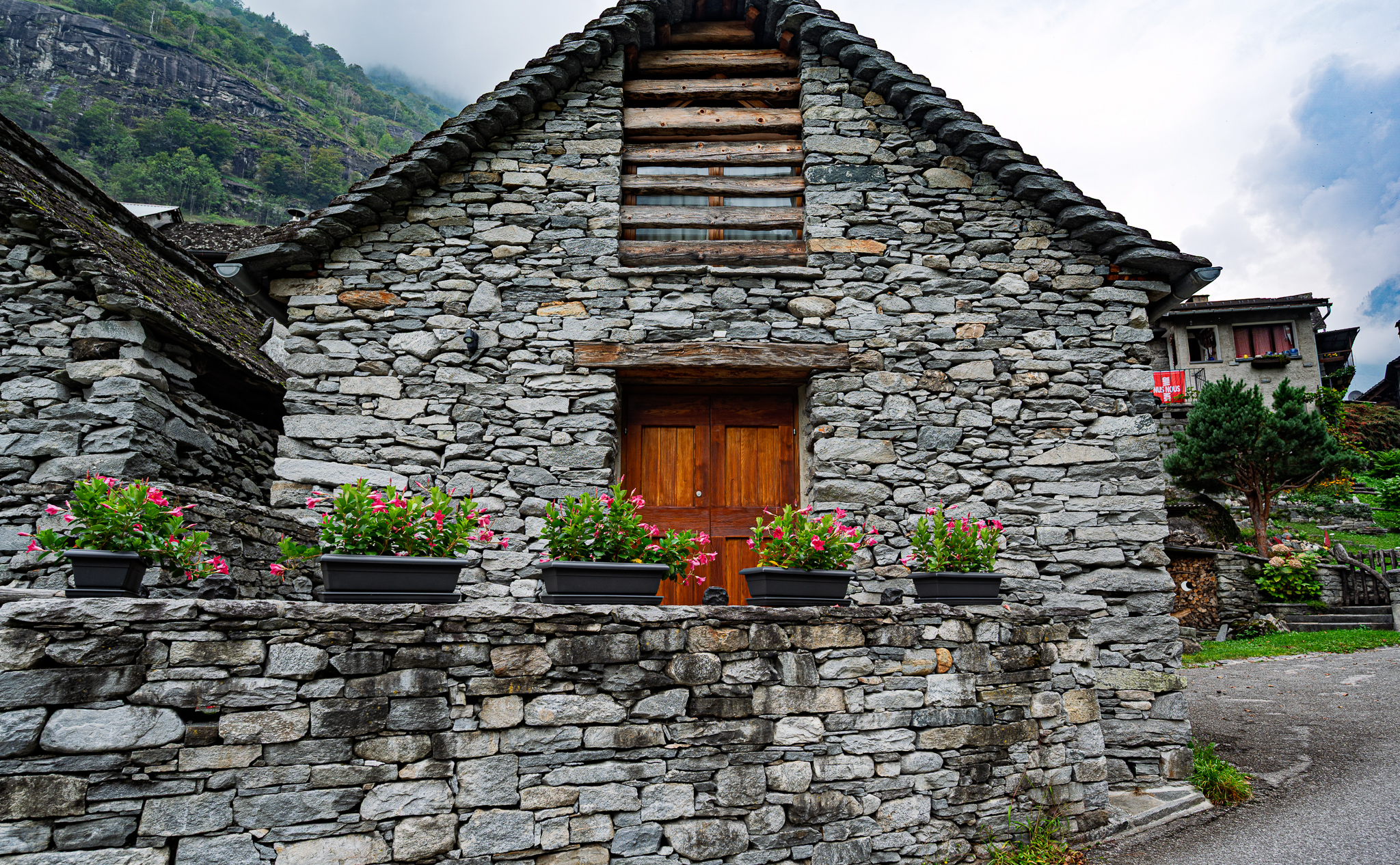
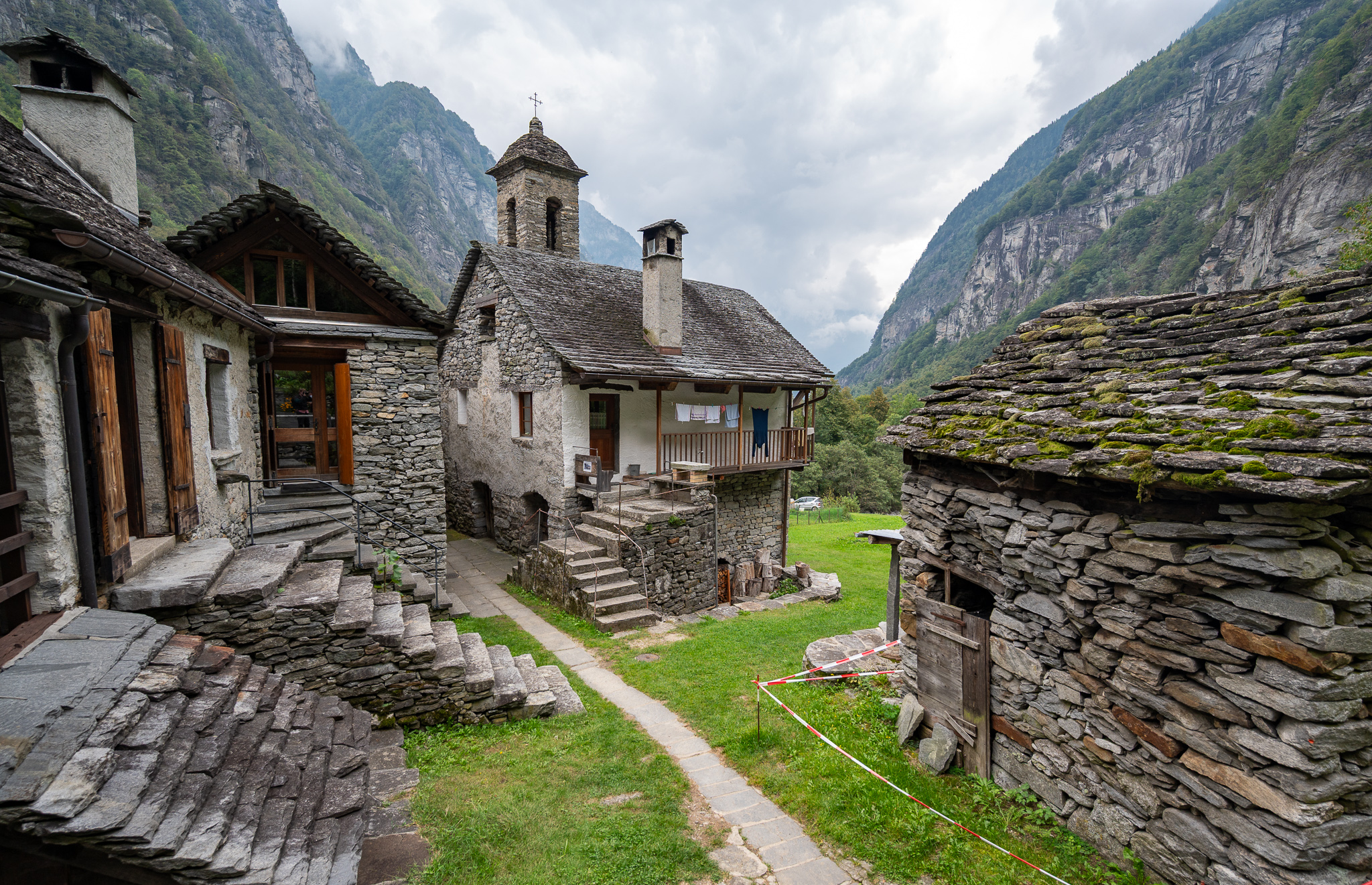
Start with the footprint. The houses are tall and narrow and packed tight, three storeys on a plan you could nearly cover with a bedsheet — not for warmth or defence but because every square metre under a building was a square metre not growing rye. The roofs are piode, split slabs of local gneiss, laid overlapping and heavy enough that a house half the size would need a different frame to hold them up. There is no plaster to speak of and very little paint. Mortar is used sparingly and often not at all. What holds most of these walls together is friction and gravity and somebody’s very good eye.
Then there are the rocks. The Bavona floor is littered with boulders the size of barns, and the valley’s builders treated every one as a free structural component. Some got walls built up under an overhang and a door fitted, making a splüi — a rock shelter turned into a cellar, a goat pen, a dairy, sometimes a dwelling. More than four hundred have been documented in this valley. Others were used the other way up: soil hauled onto the flat top of a boulder and walled in, making a hanging garden a couple of metres above the ground, out of reach of the goats.
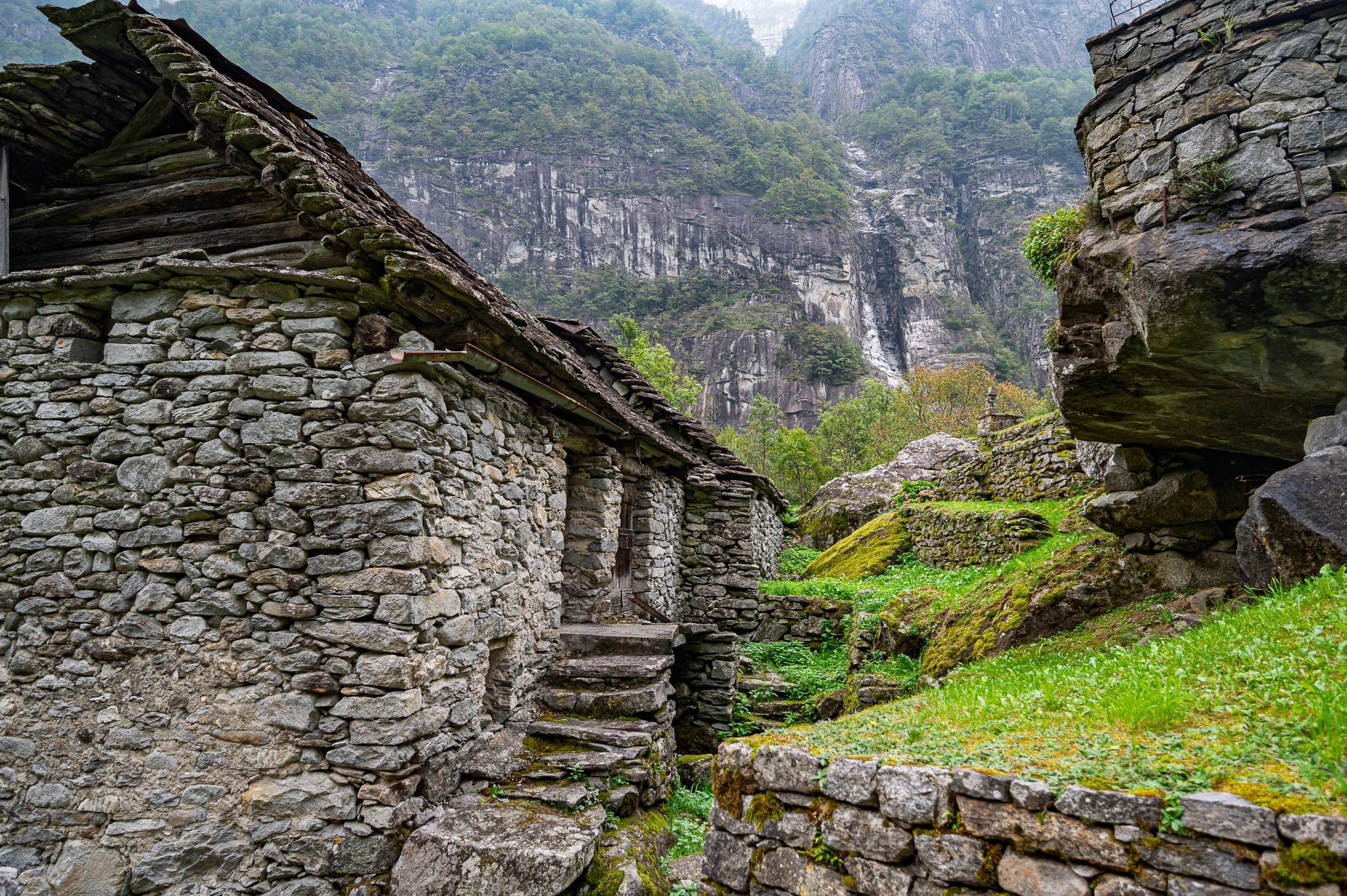
Sonlerto is the purest expression of it. The centre of the village was built inside a prehistoric rockfall, houses wedged between and against the fallen blocks — partly for the shelter, mostly so as not to steal ground from the pasture. Sonlerto also has a torba, a rye granary raised on stone mushroom piers to keep the mice out, put up in 1591. Dendrochronology found some of its timbers were cut in 1497, meaning the builders were already recycling wood from something a century older. Nothing here was wasted, including the past.
Foroglio
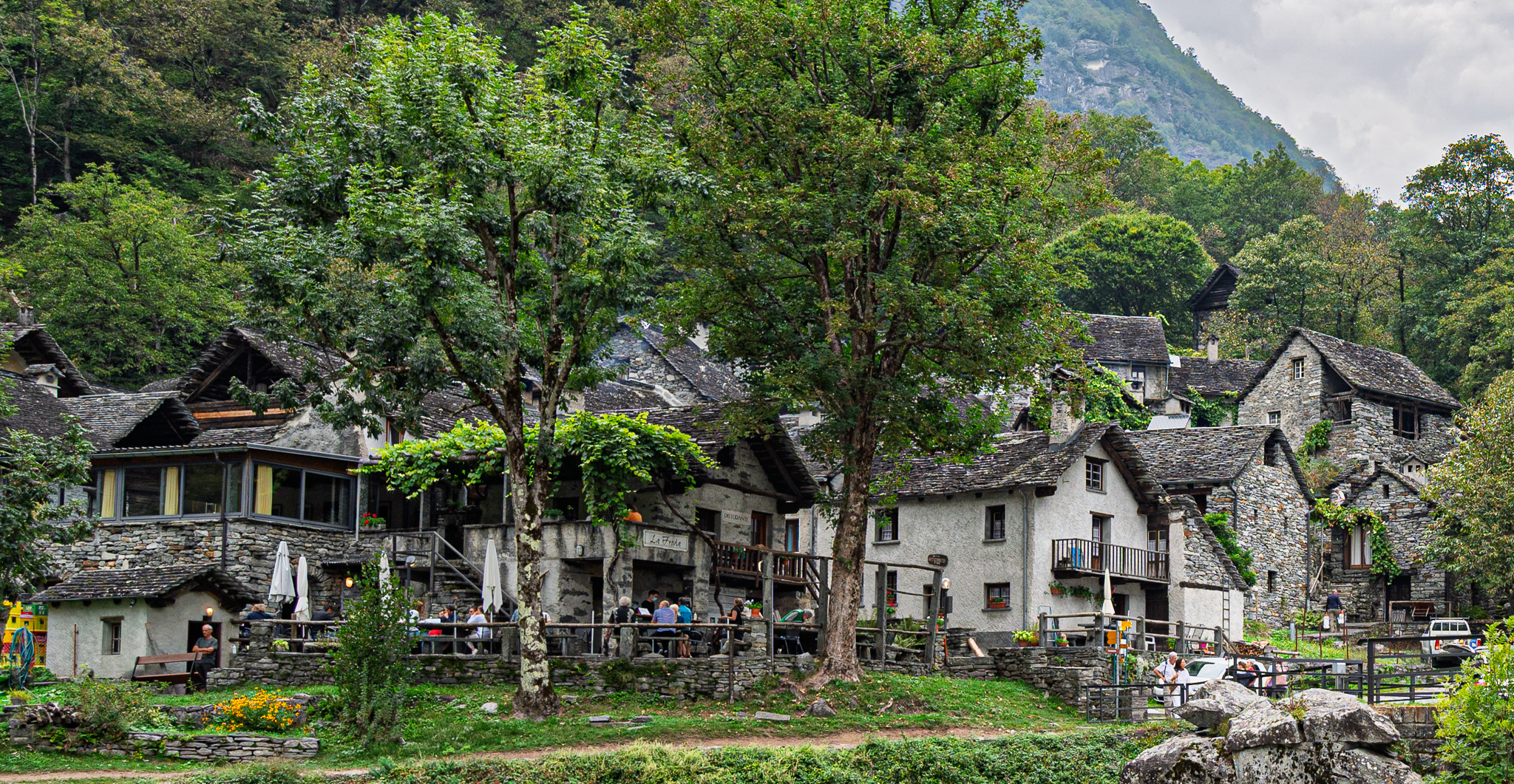
I described Foroglio in an earlier post as sound before sight, which is true from the road, and unfair to the village. Turn your back on the waterfall and there is a small masterpiece of settlement planning in front of you.
The houses form a single compact knot that curls around a tiny oratory, close enough that the buildings seem to be holding it. Several carry a wide loggiato – an open arcaded gallery on the upper floor, facing whatever sun the cliffs allow – and there are torbe tucked among them. The oratory is the oldest in the Val Bavona: late medieval at its core, then enlarged and remade so many times that the archaeology is a palimpsest. Rectangular nave, square choir under a cross vault, a small bell tower on the flank.
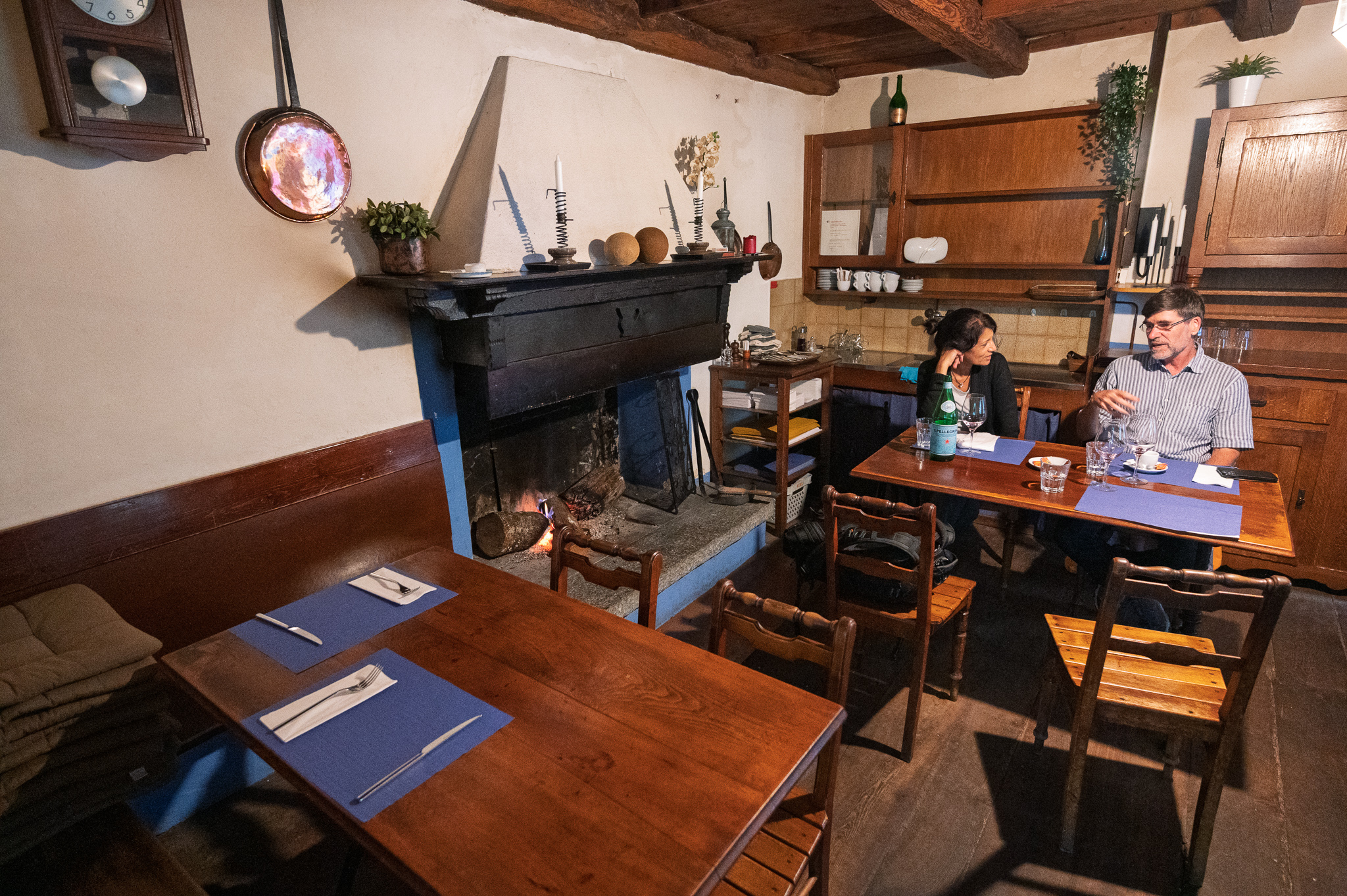
There is one restaurant, La Froda, opened in 1928. It runs from just before Easter to the beginning of November and then it shuts. New construction in the valley is forbidden outright. Most of the stone houses are now holiday homes, restored under rules that will not let them become anything other than what they were.
Gannariente
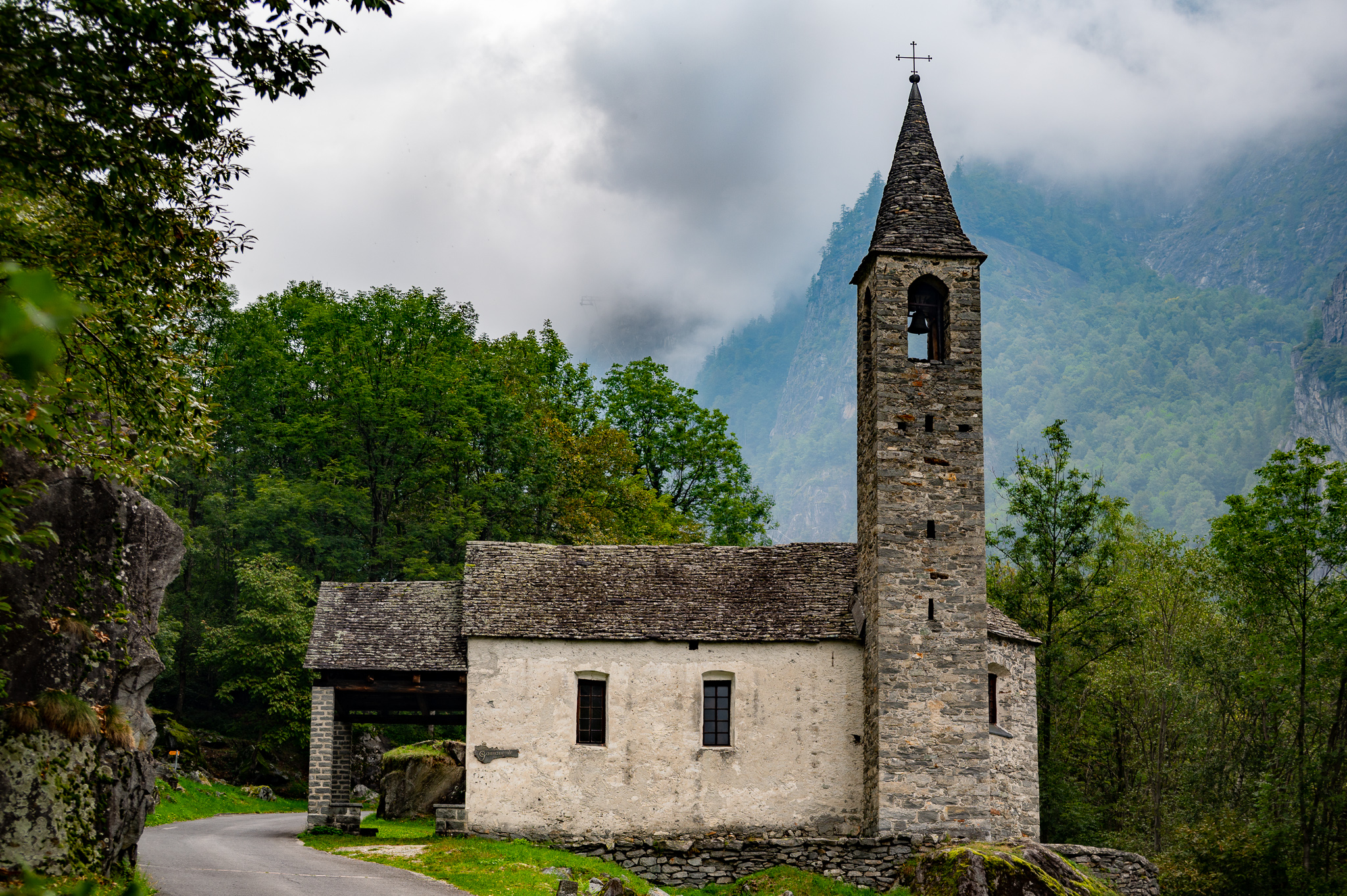
Between Sonlerto and San Carlo the road bends past a small white church standing alone on the grass, with a stone-shingled spire, a covered porch on timber posts, and a slate plaque by the door reading Gannariente. Nothing else. No village.
The date 1595 is cut into the lintel over the door and there are frescoes inside from the same century. I photographed it because it was beautiful and standing in the wrong place, and only afterwards found out what it is for.
On the first Sunday in May, a procession leaves the parish church at Cavergno at six in the morning and walks up the Bavona. It calls at the oratory of every one of the terre on the way — Mondada, Fontana, Sabbione, Ritorto, Foroglio, Roseto, Fontanellata, Faedo, the lot — about ten kilometres of climbing, and reaches Gannariente in time for Mass at half past ten. Then the fields are blessed. It has been done for at least four hundred years, in all weathers.
The route is the transhumance route. It is the same walk the families made when they moved up in spring with the animals and the tools and the year’s hopes, done at walking pace with prayers attached, asking for the two things this valley could never take for granted: protection from what the mountain might send down, and a decent summer.
That is what the closed shutters are. Not a place that failed, but the far end of a cycle that has been turning for four hundred years — up in May, down before the snow, the piode left to hold the weather off an empty room until somebody comes back to light the fire.
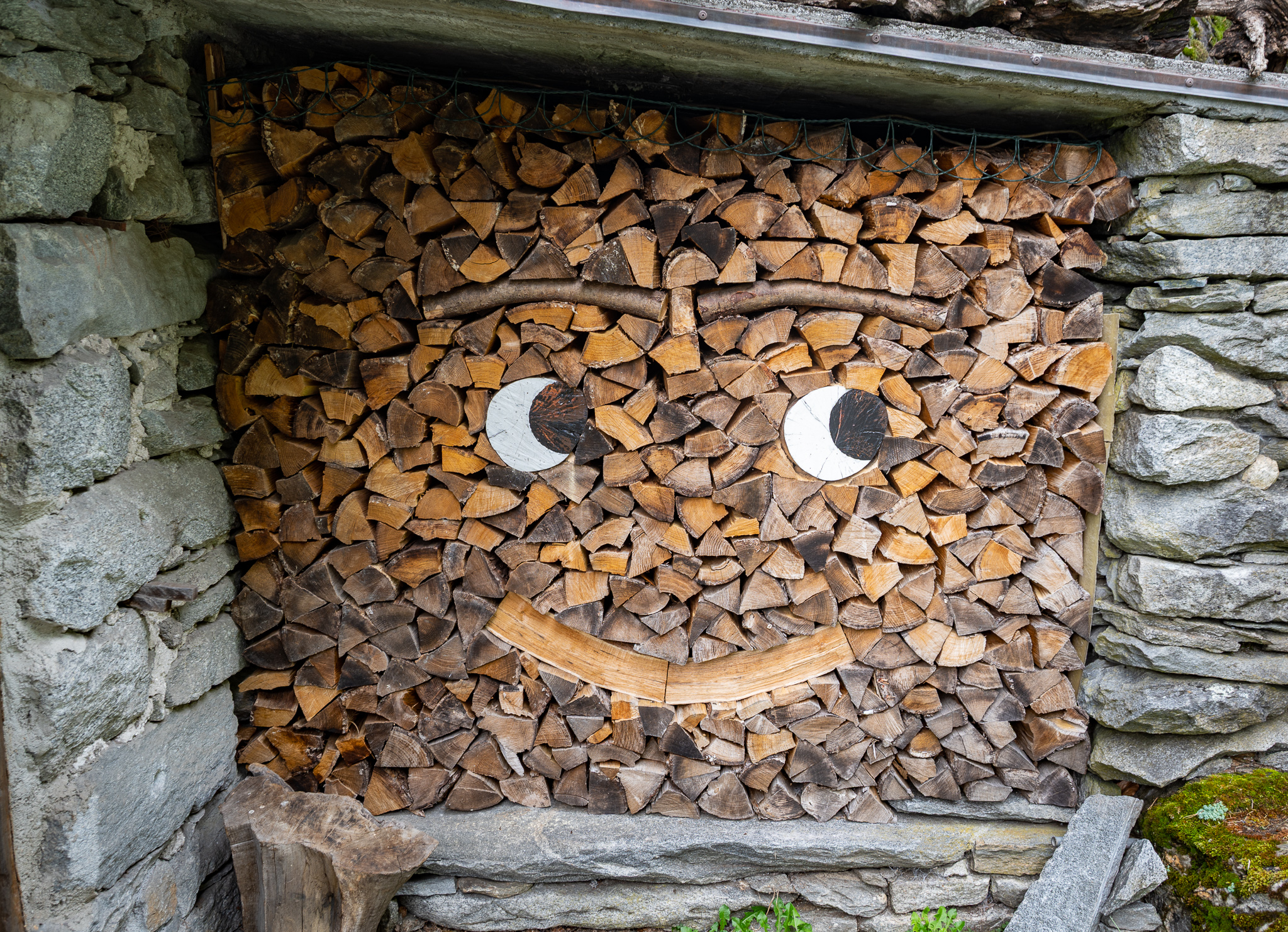
Somebody had already stacked the wood for it, in a neat wall under a stone eave, and cut the top logs so the whole face of the pile grinned back at us like an idiot.
They will be back.