Ticino is a canton of valleys. They come down out of the Lepontine Alps towards Lake Maggiore like the fingers of a spread hand – Bavona, Maggia, Verzasca, Leventina – each one within an hour of the next, and each one, somehow, its own small country.
The day before, our friend Hans had driven us up the Bavona: a valley of stone, of hamlets wedged in behind boulders the size of houses, and a hundred metres of white water falling at Foroglio. On our second day in the Italian-speaking Swiss canton of Ticino, Padma and I explored the Verzasca Valley, which is only a ridge away, and which turned out to be made of something else entirely.
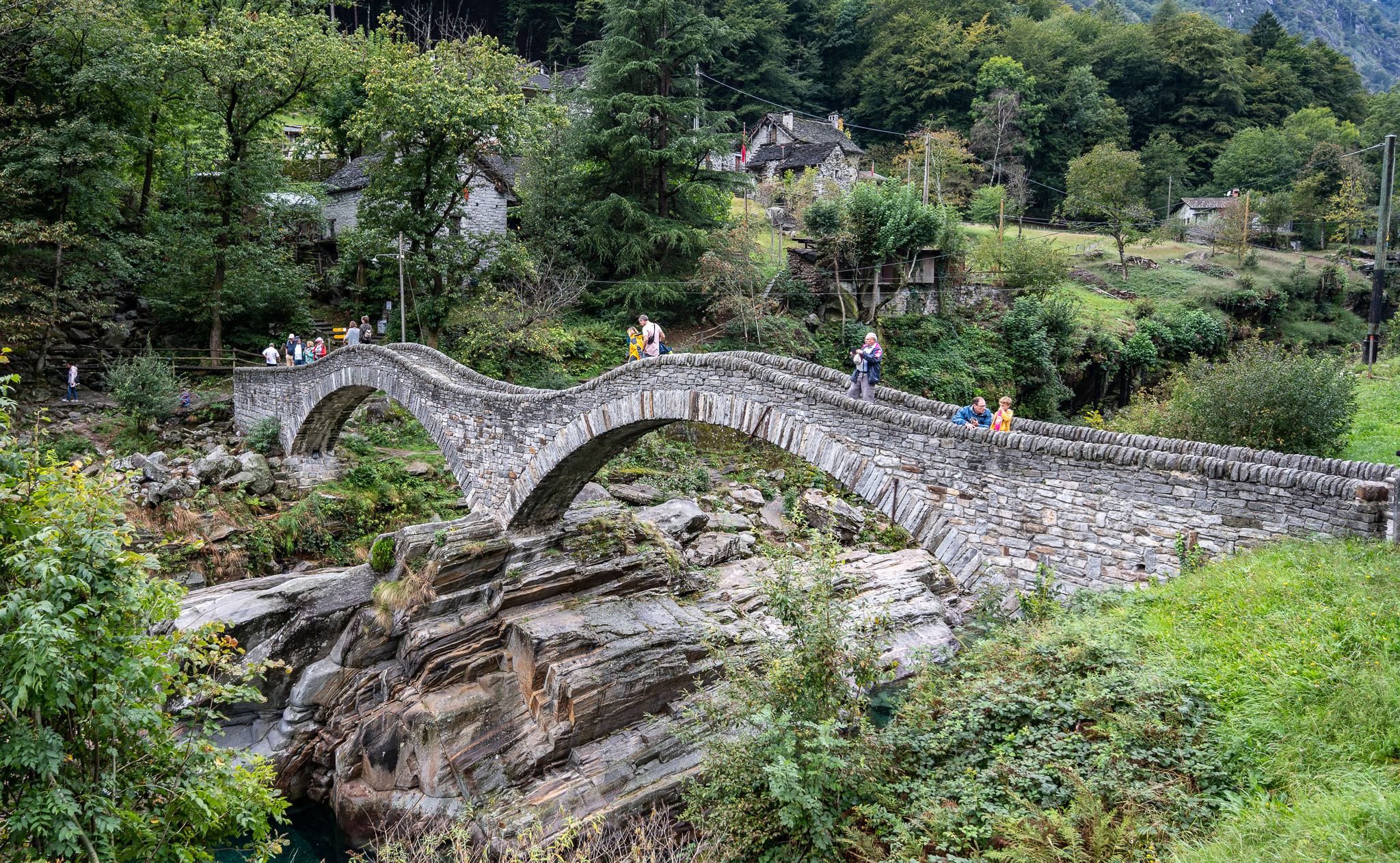
We followed the emerald waters of the Verzasca to the Ponte dei Salti, a 17th century double arch bridge in the village of Lavertezzo.
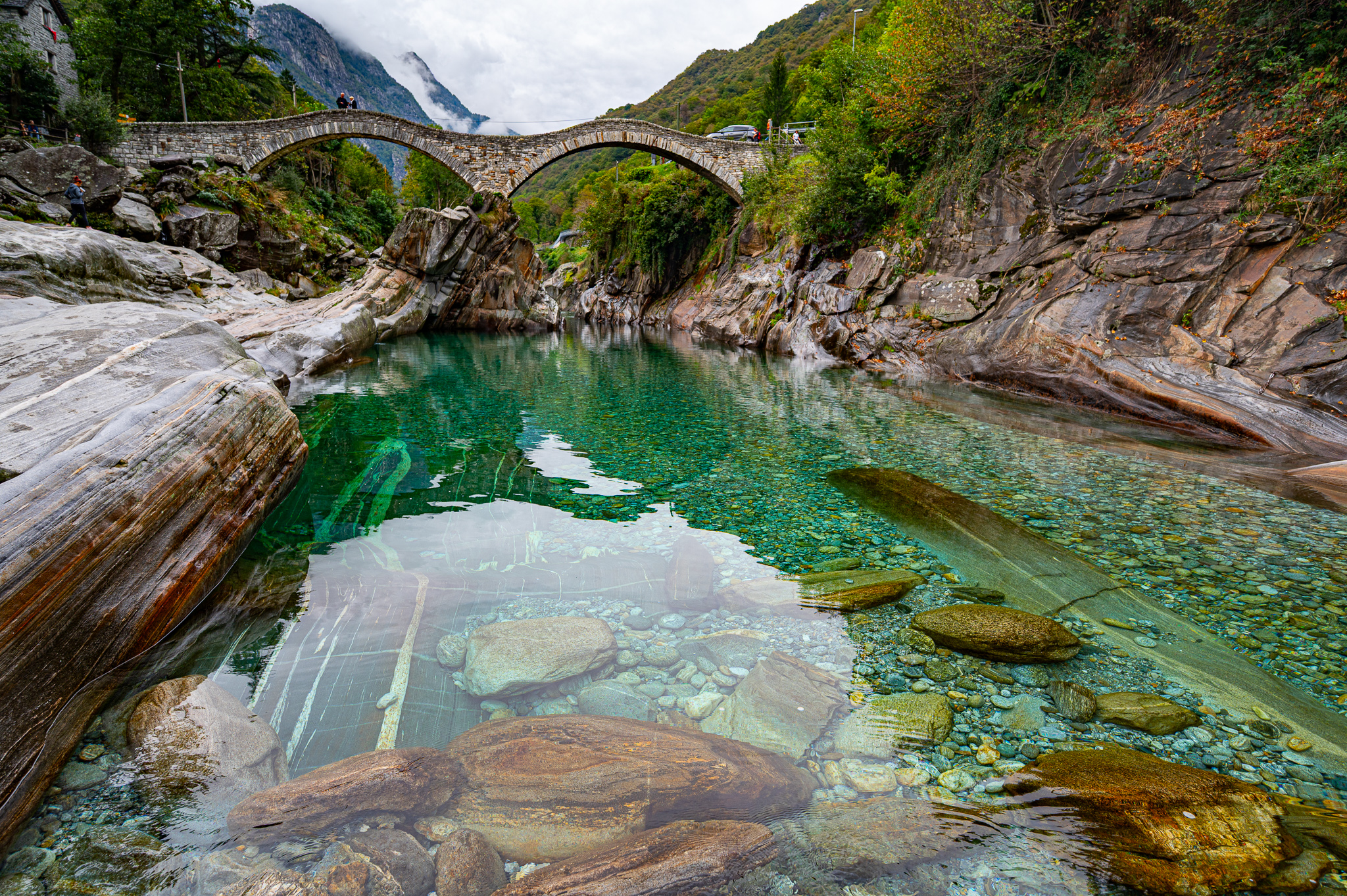
The bridge doesn’t disappoint. Two stone arches spring from a knuckle of bedrock in the middle of the river, each spanning about fourteen metres, the deck rising and falling between them in a shape that from downstream looks unmistakably like a heart. It is often called the Ponte Romano, which is a lovely name and almost certainly a wrong one. Whatever the Romans may have left in the foundations, what stands today was built some four hundred years ago by people who needed to get from one side of the Verzasca to the other without swimming.
That purpose is legible in the width of it. Two people can pass on the deck if they are polite about it. It was never meant for carts — it was a mule bridge, and the traffic across it was donkeys carrying sacks, and the men and women of the valley walking to Mass.
Salti means jumps. On a hot day people fling themselves off the parapet into the pool below, which runs something like a hundred and twenty metres and drops to nine metres deep. On the morning Padma and I were there, in low cloud with the smell of wet leaves coming off the slope, nobody was jumping.
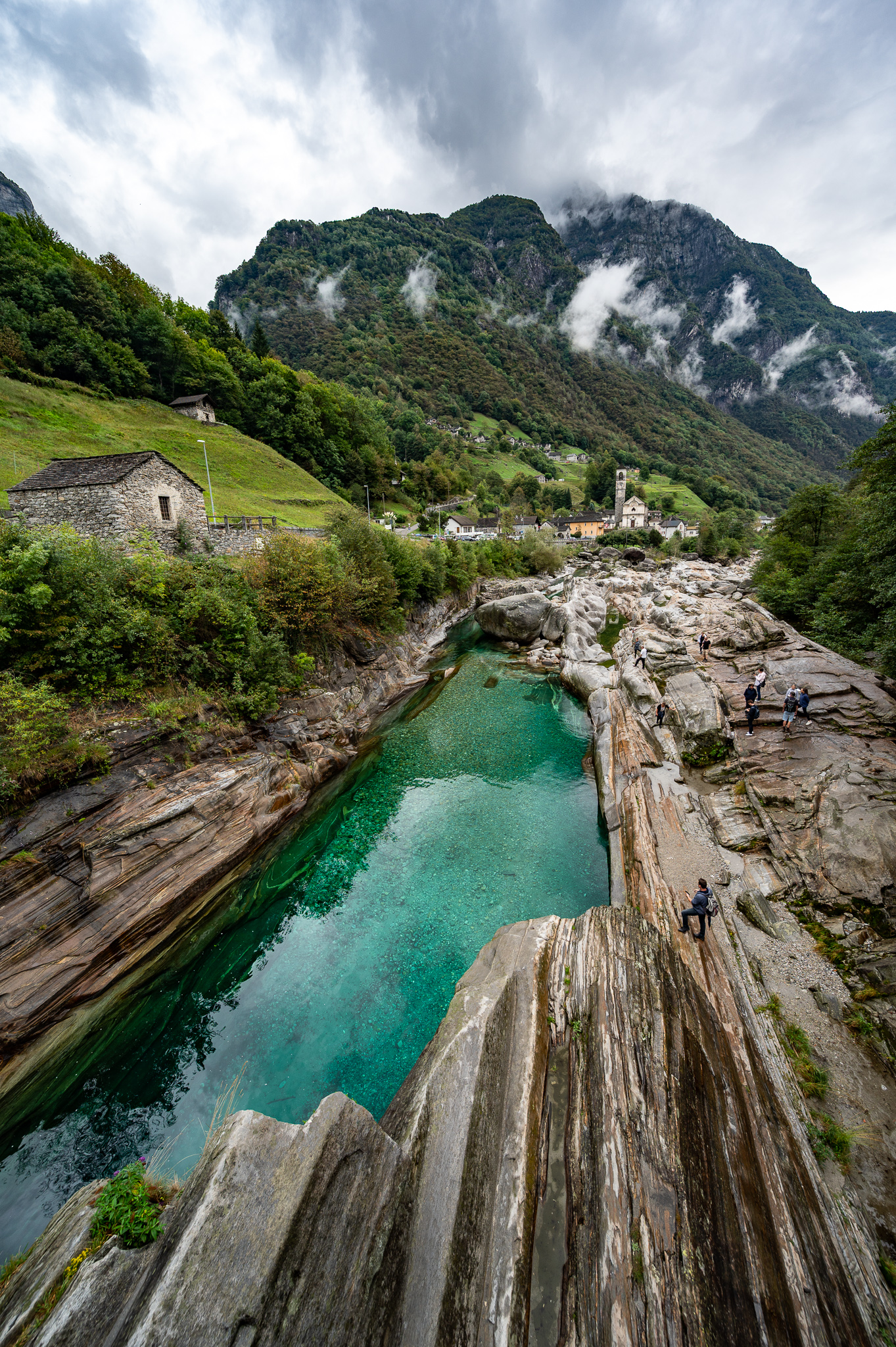
I really can’t recall ever seeing such crystal clear water before – and I say that having stood in the Calnegia the previous afternoon, thinking exactly the same thing.
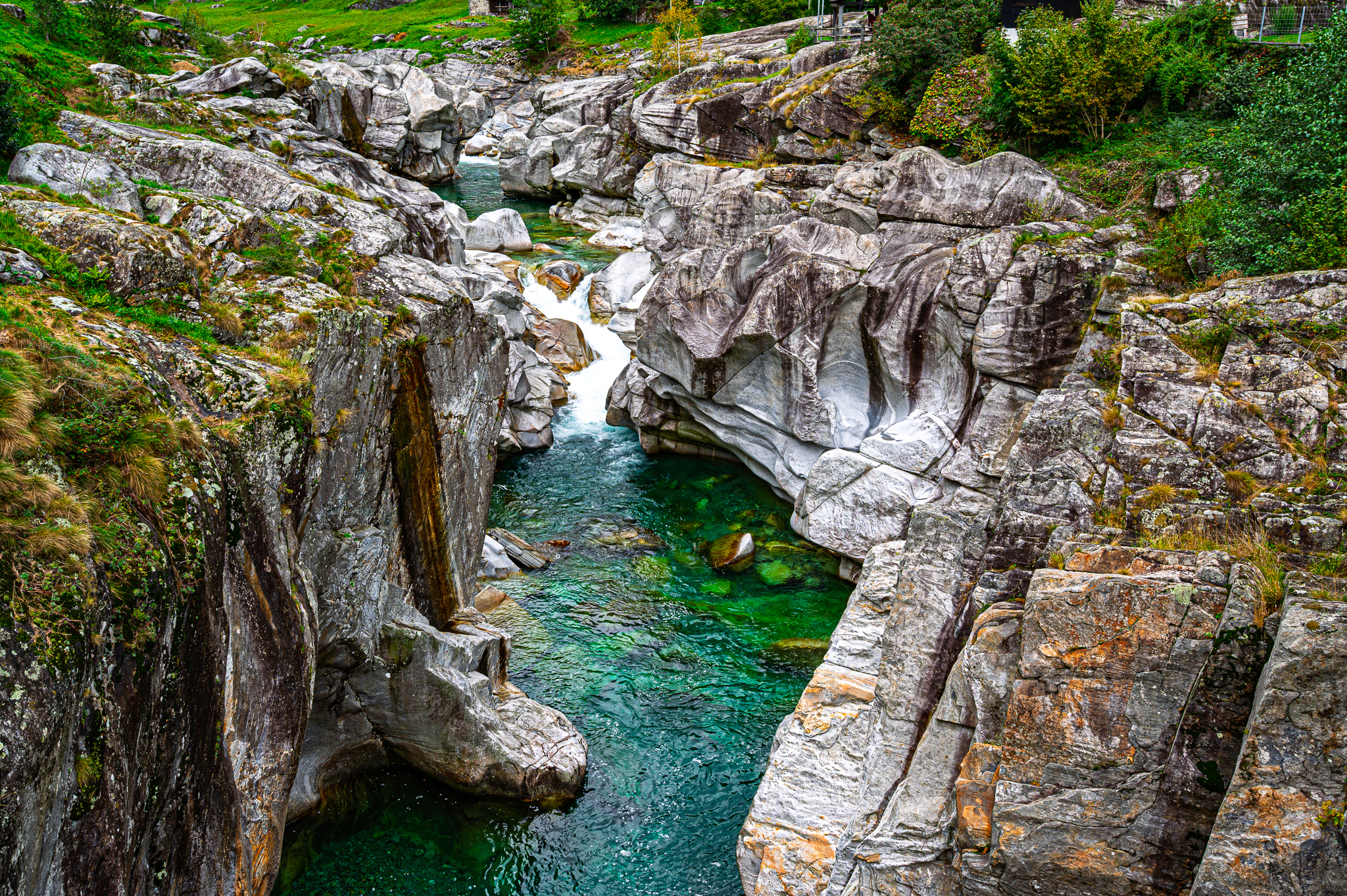
There is a reason the Verzasca is like this. Most Alpine rivers of this colour are turbid with rock flour, the fine grey dust a glacier grinds off its bed, which is what gives so many of them their milky, opaque jade. The Verzasca has no glacier. It rises on Pizzo Barone at 2,864 metres, high but not high enough, and it runs on gneiss – a hard, base-poor crystalline rock that weathers slowly and gives up very little fine sediment and very few nutrients. Nothing much clouds it and nothing much grows in it. What you get is water that behaves like clean glass: the green is the water itself absorbing the red end of the spectrum over depth, and the light coming back up off pale rock. Stand on the bridge and you can count stones on the bottom nine metres down.
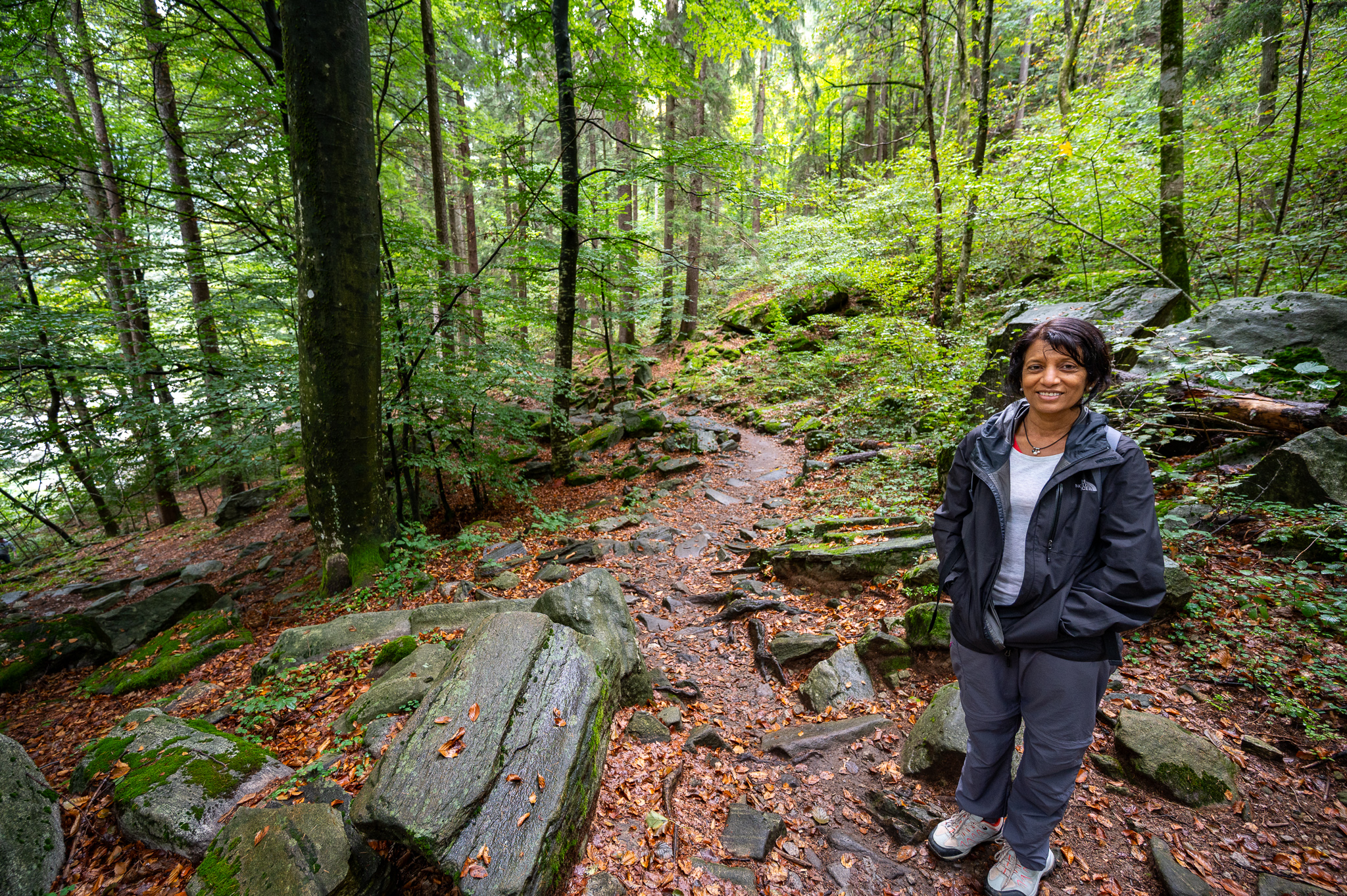
It is also cold, seldom much above ten degrees. The pools were indeed inviting but Padma and I decided it was a bit chilly to do any skinny dipping, so we took a walk in the forest instead.
The rock deserves as much attention as the water and gets less.
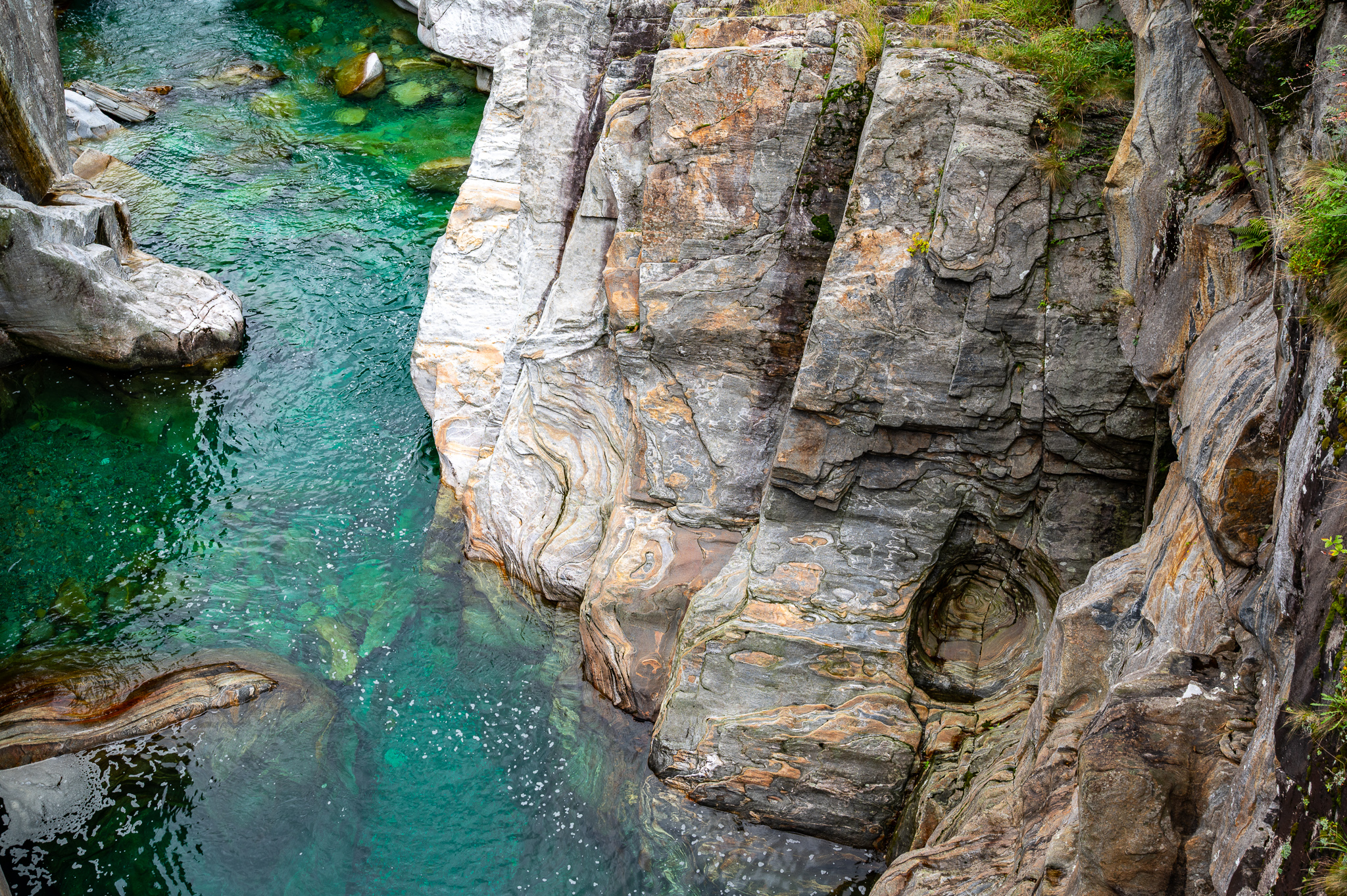
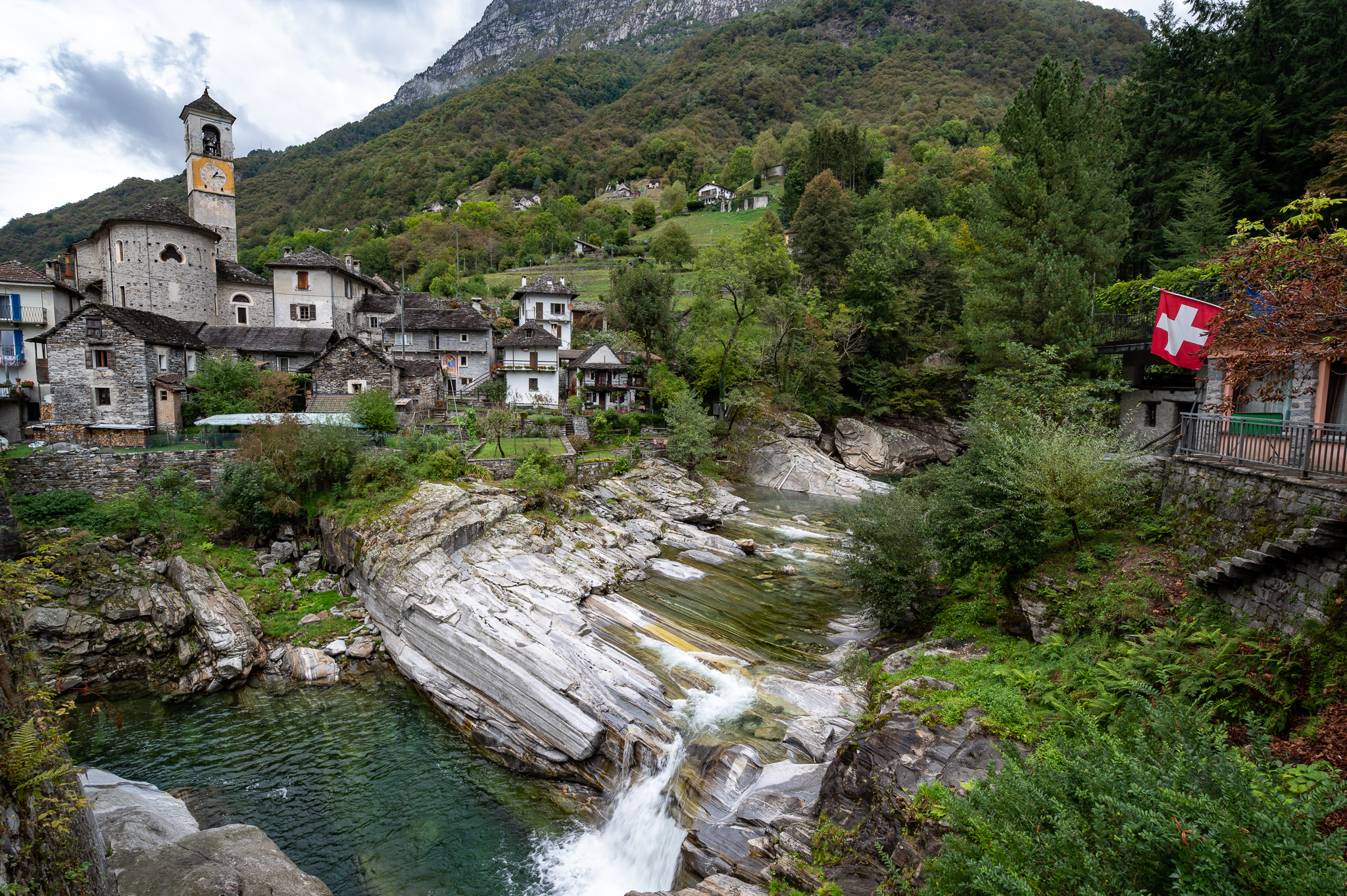
The Verzasca has cut down through the Lepontine dome, a window into the deepest exposed levels of the Alps, where rock buried under the collision of Africa and Europe was cooked at several hundred degrees and squeezed until it flowed. You can read the whole history in the riverbed. The pale and dark bands are the mineral layering of gneiss, sorted out under pressure at depth. Where those bands swirl and close on themselves in tight ovals and hooks, you are looking at folds — solid rock that behaved like slow toffee, kilometres down, tens of millions of years ago, now lying at your feet on a Tuesday morning.
Then the river got at it, and has been polishing the stuff for a very long time: planing the folds smooth, scooping potholes with trapped pebbles turning in the current, cutting clean vertical walls where the fractures ran. The result is unlike anything I have photographed – slabs the colour of wet bone and rust and iron, striped like end-grain timber, sculpted into forms that look designed.
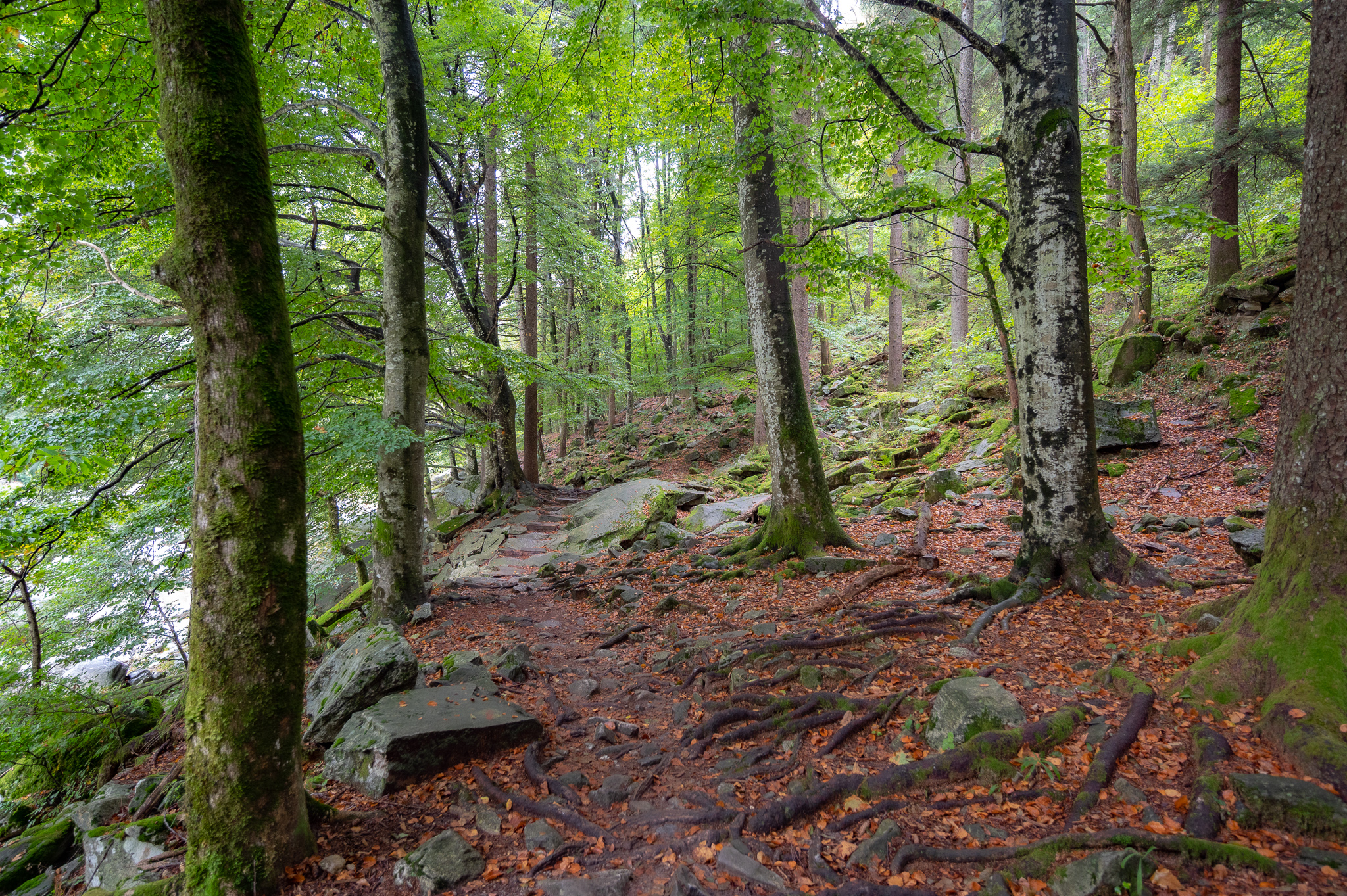
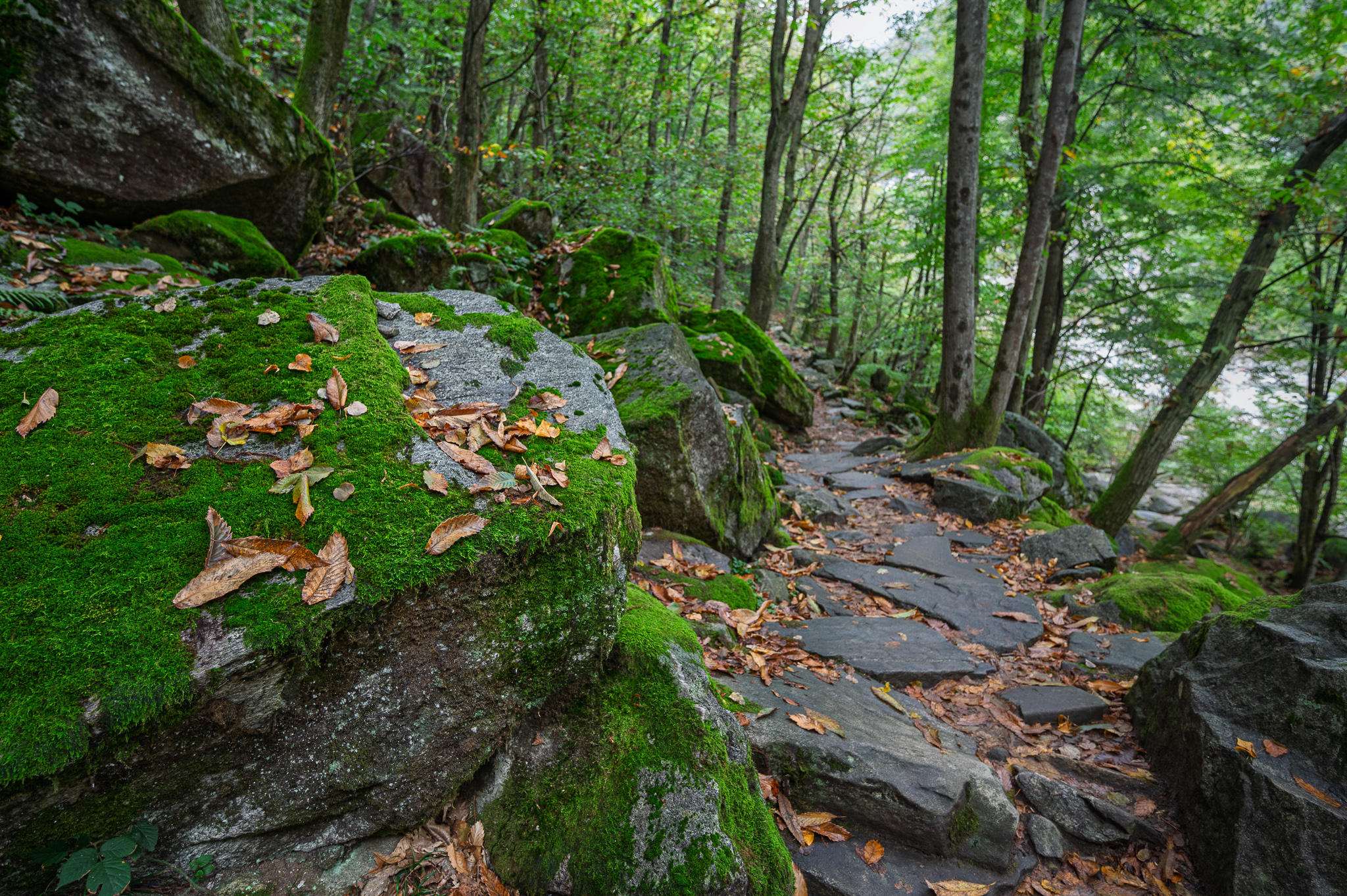
The forest above the river is a different world again, soft where the gorge is hard. Beech, mostly, smooth grey trunks going straight up out of a floor of copper leaf litter and mossed boulders, with the roots running over the path like cables. It was raining lightly and everything was green and dripping and completely silent apart from the river somewhere below and to the left.
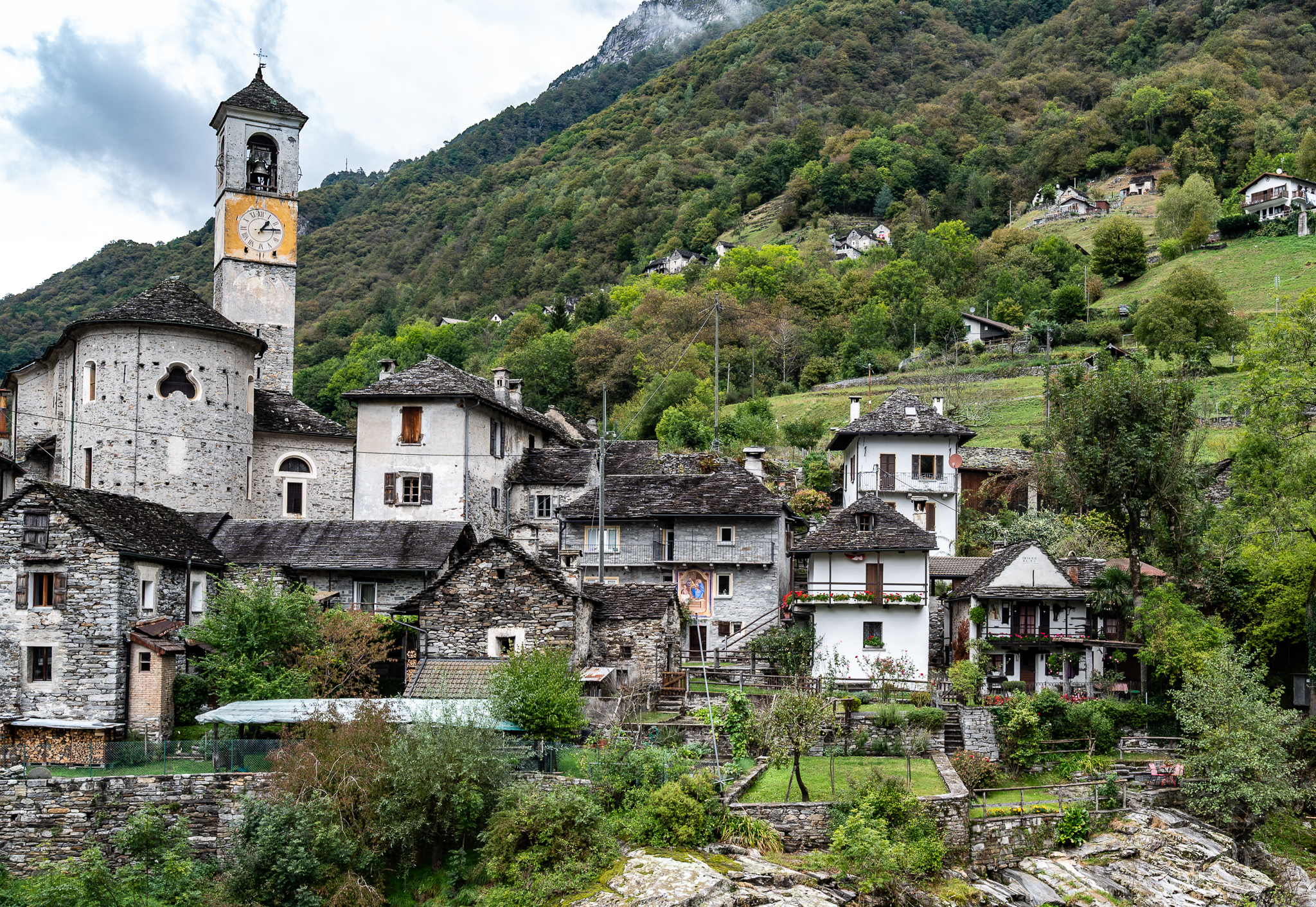
We crossed back on the footbridge at Posso and came down the far bank into Lavertezzo: the rustici stacked up the slope in grey stone under roofs of split granite slab, a fresco of the Holy Family on a gable end, vegetable gardens terraced into whatever flat ground could be found, a Swiss flag hanging over the gorge, and the campanile with its yellow clock face standing above the lot of it. Below the houses the Verzasca folded over a lip of polished rock and dropped into another green pool.
It’s a postcard, and it’s also a place where people made a living out of chestnuts and goats and stone for eight hundred years, which is a harder and more interesting thing.
Driving back down towards Locarno that evening, I kept thinking about how close together these places are. A ridge to the west, the Bavona was doing something entirely different with the same rain, the same rock and the same light. Ticino keeps its valleys separate. It keeps them well.