Castello di Mesocco
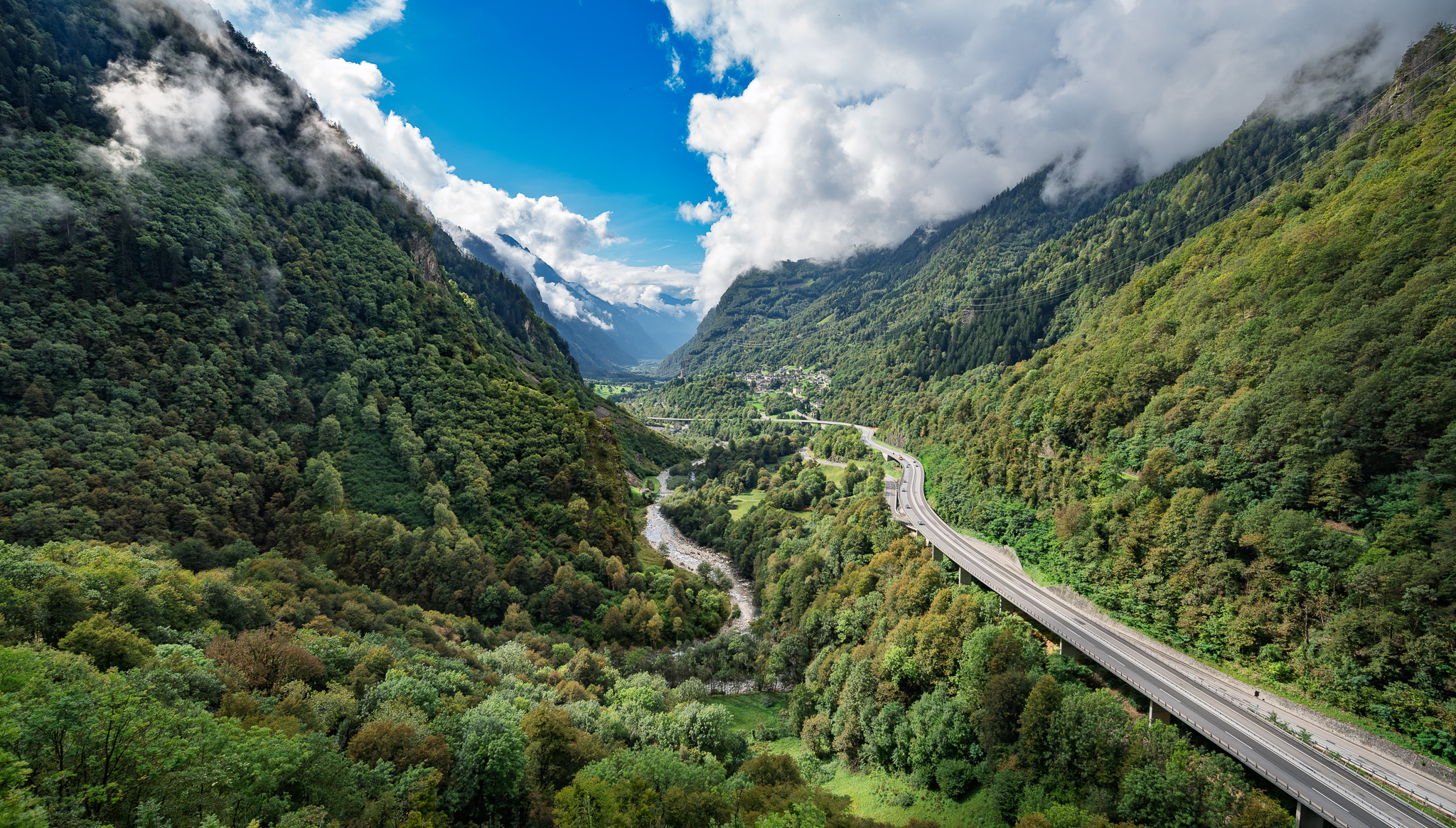
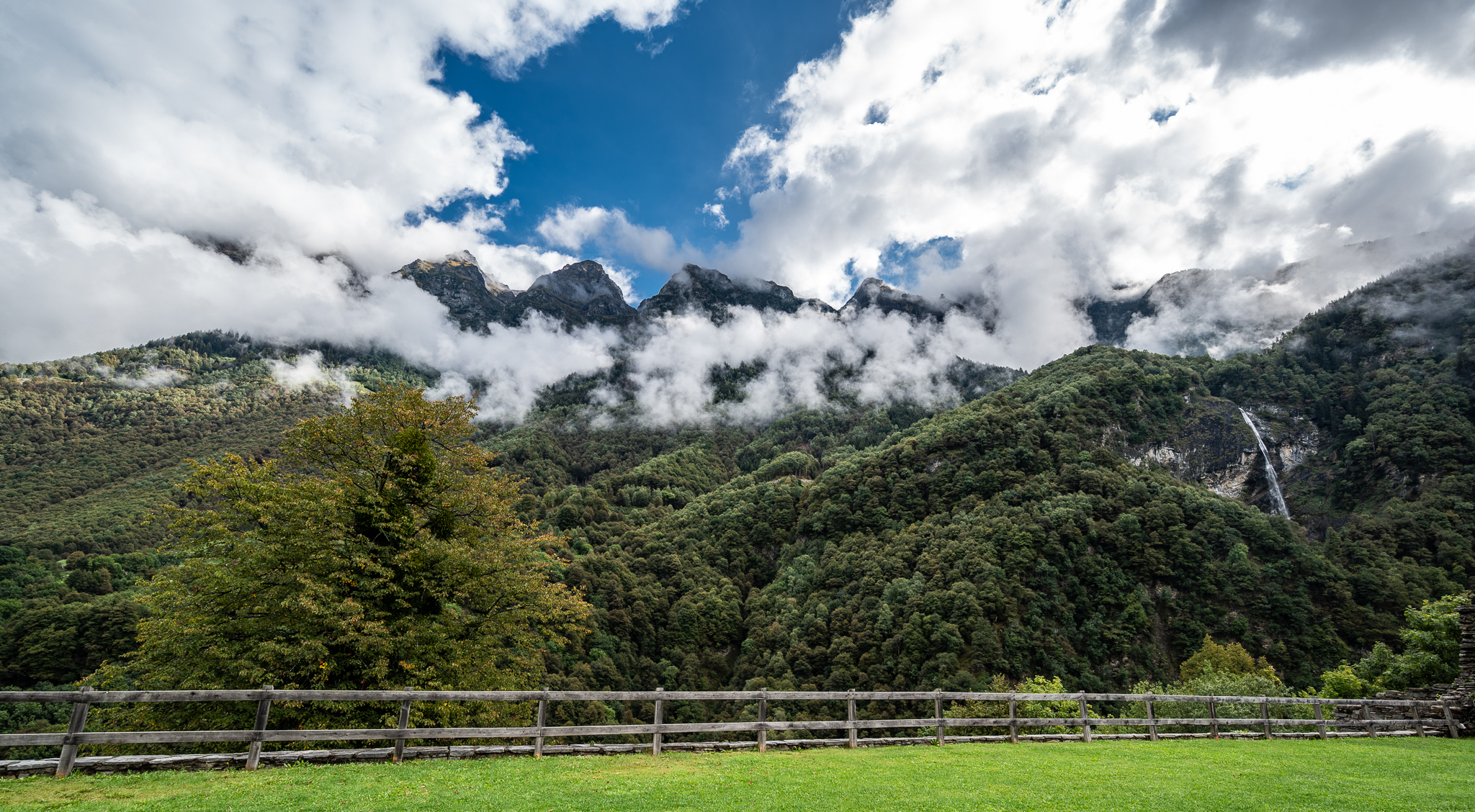
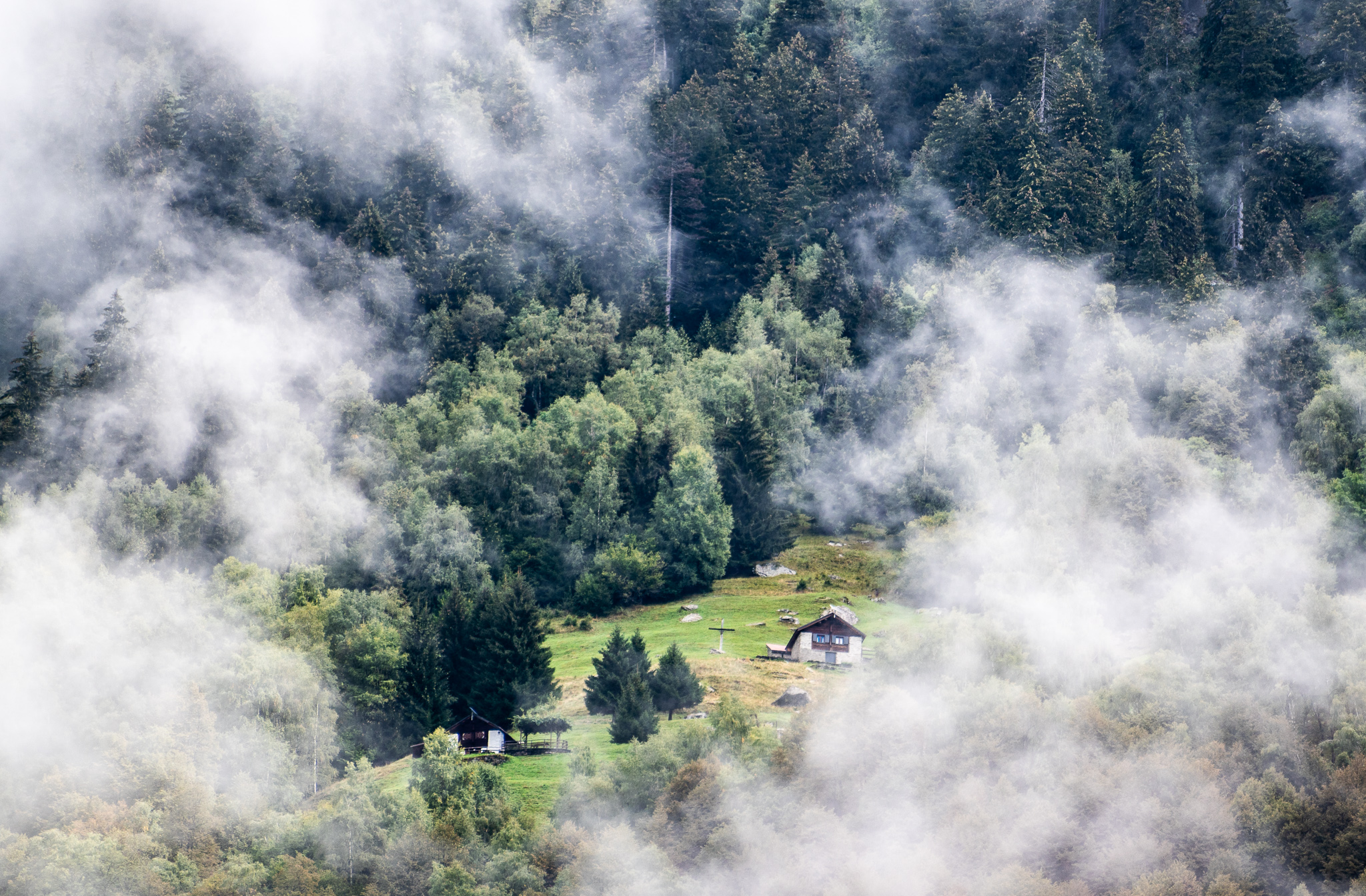
Padma and I were heading north on the A13, minding our own business and in no particular hurry to get anywhere. It was one of those unreliable Alpine mornings — the cloud that had filled the valley overnight was lifting off the forest in slow white ropes, thinning as it climbed, so that the mountains kept revealing themselves and then thinking better of it.
We rounded a bend and got a Wow! moment.
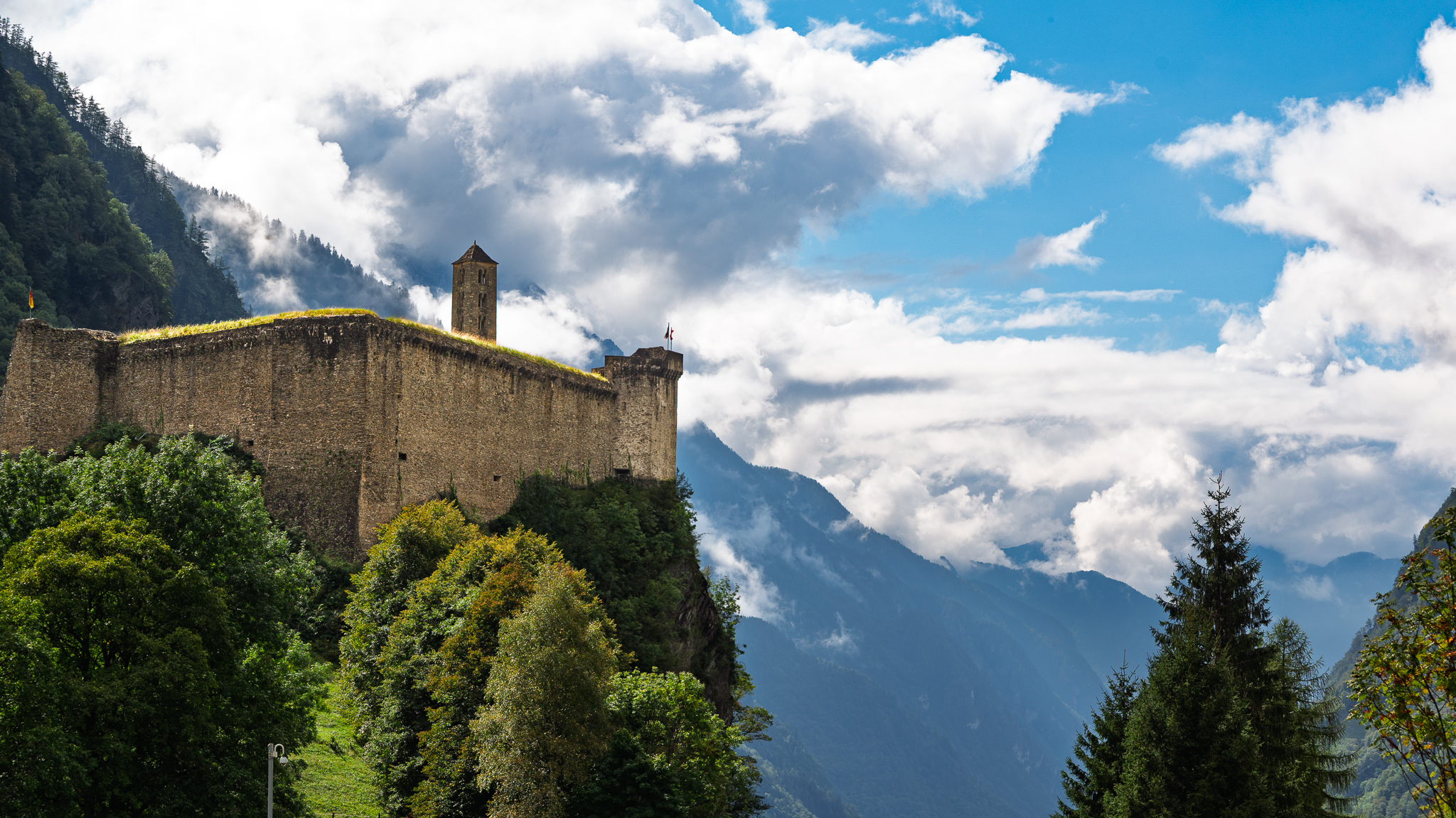
There, on a wooded hilltop hard against the motorway, was a castle. Not a picture-postcard castle with pennants and a gift shop, but a long grey rampart with grass growing along its top and a square church tower standing behind it, half in cloud. It was gone again in a few seconds, the way things are at 100 km/h.
We took the next exit.
No guidebook, no plan
I want to be clear about how little we knew. No guidebook had mentioned this place. Nobody had recommended it. It was not on any list, and until the clouds shifted neither of us had heard of it. We stopped because something enormous and old appeared on a hillside for about two seconds, and we wanted to know what it was.
There was a Parkplatz just off the roundabout, so we left the car there and walked across the bridge, then up a track through chestnut and beech.
At the top: no ticket booth. No tourist information, no welcoming committee, no arrows, no audio guide in our hands. And no tourists. Just a signed advising us to enter at our own risk. We found an entry portal, opened the gate, and had the entire place to ourselves.
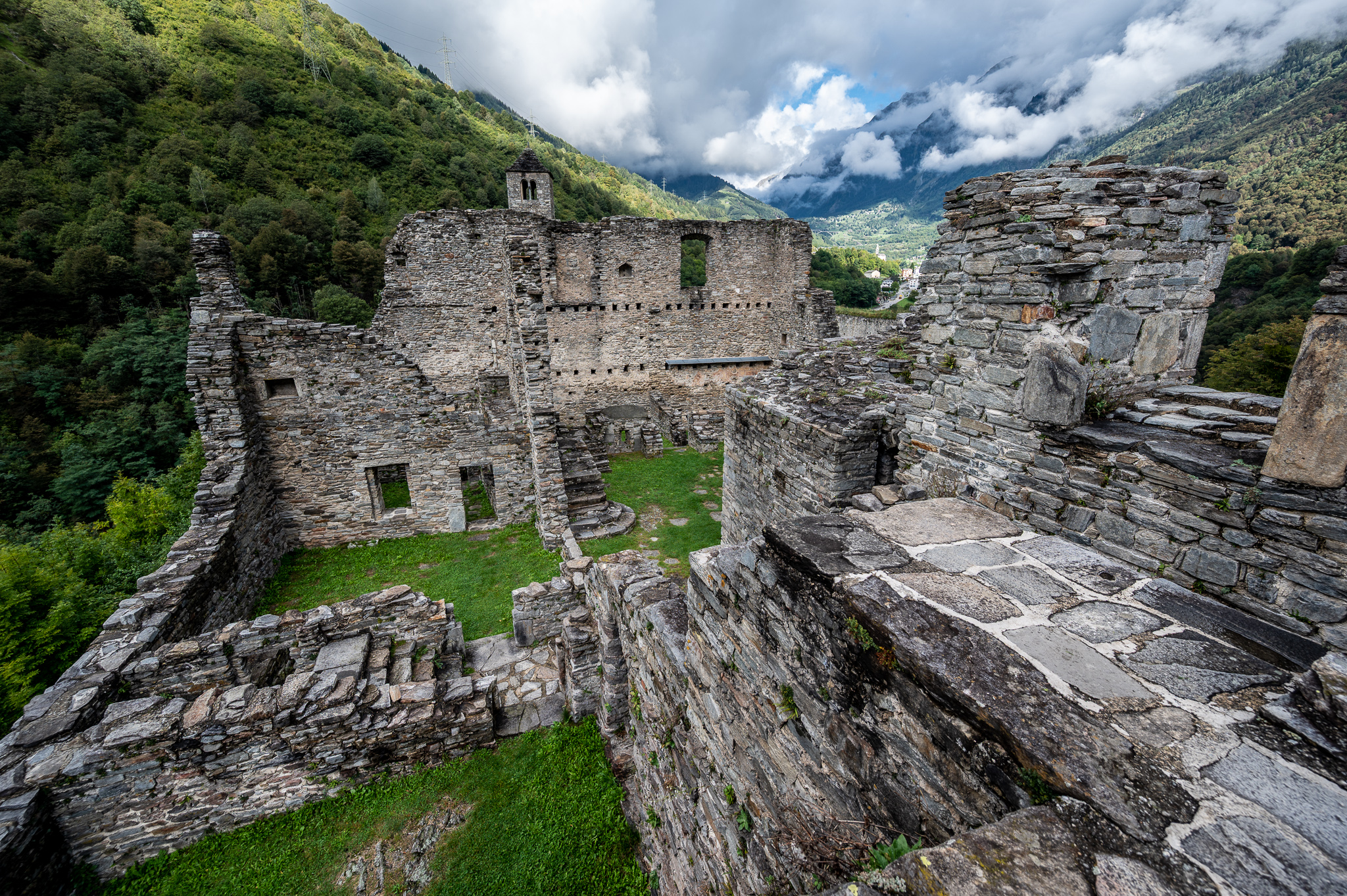
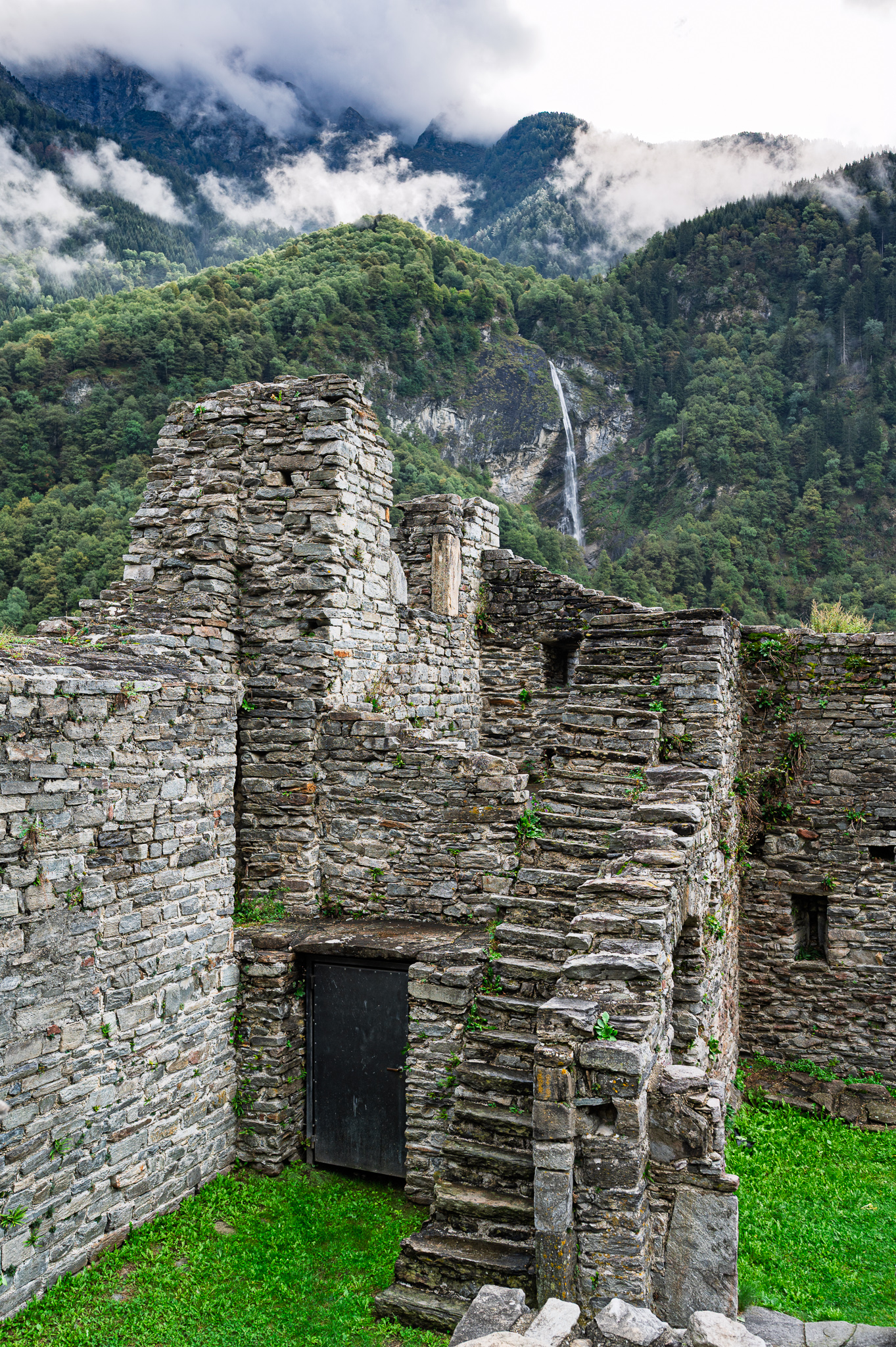
There was no interpretation telling us what to think, no rope lines, no queue shuffling us past the good bits. We had no idea what the place was. Just wet grass, a great deal of stacked stone, and a wind coming up the valley. And our imagination.
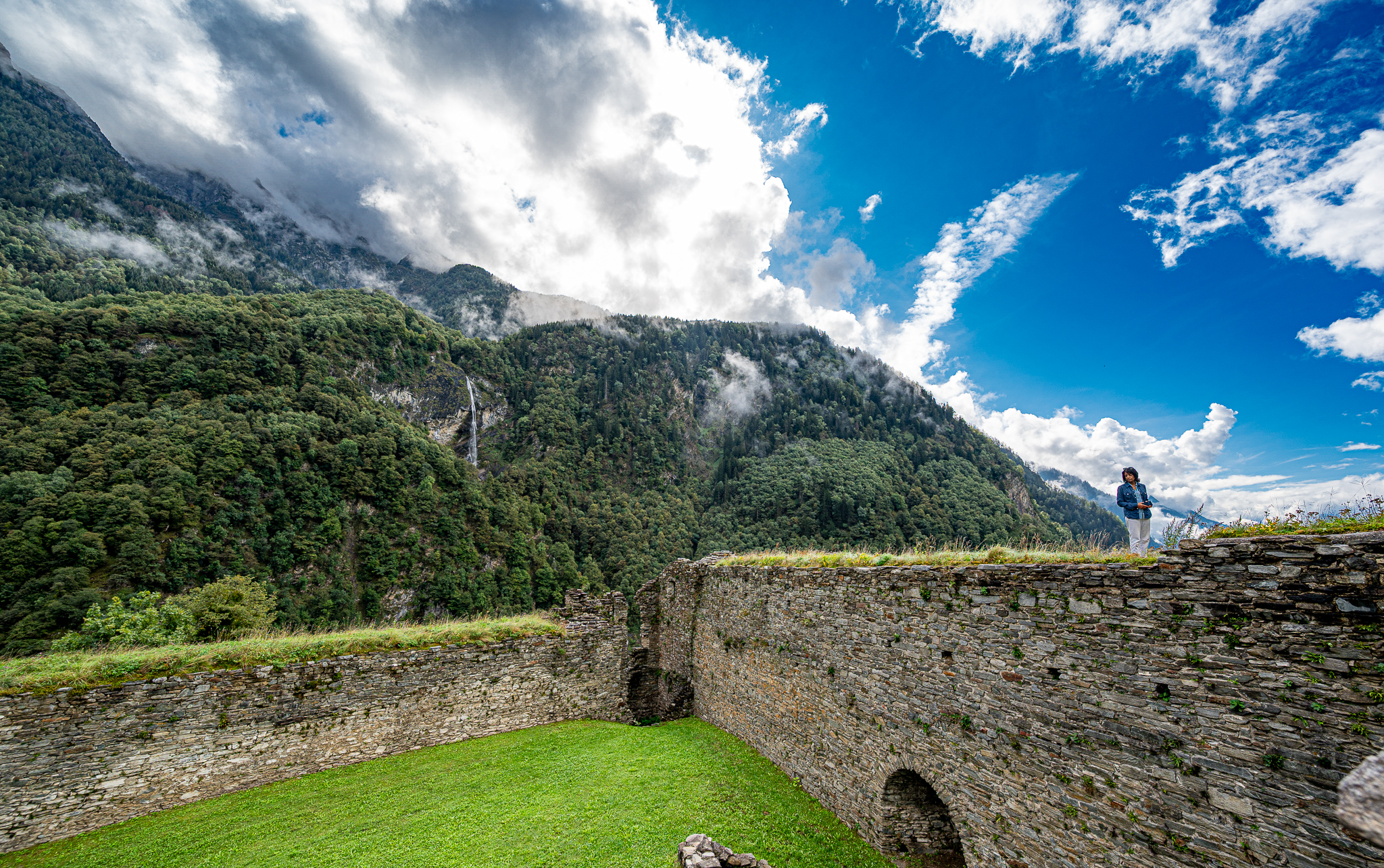
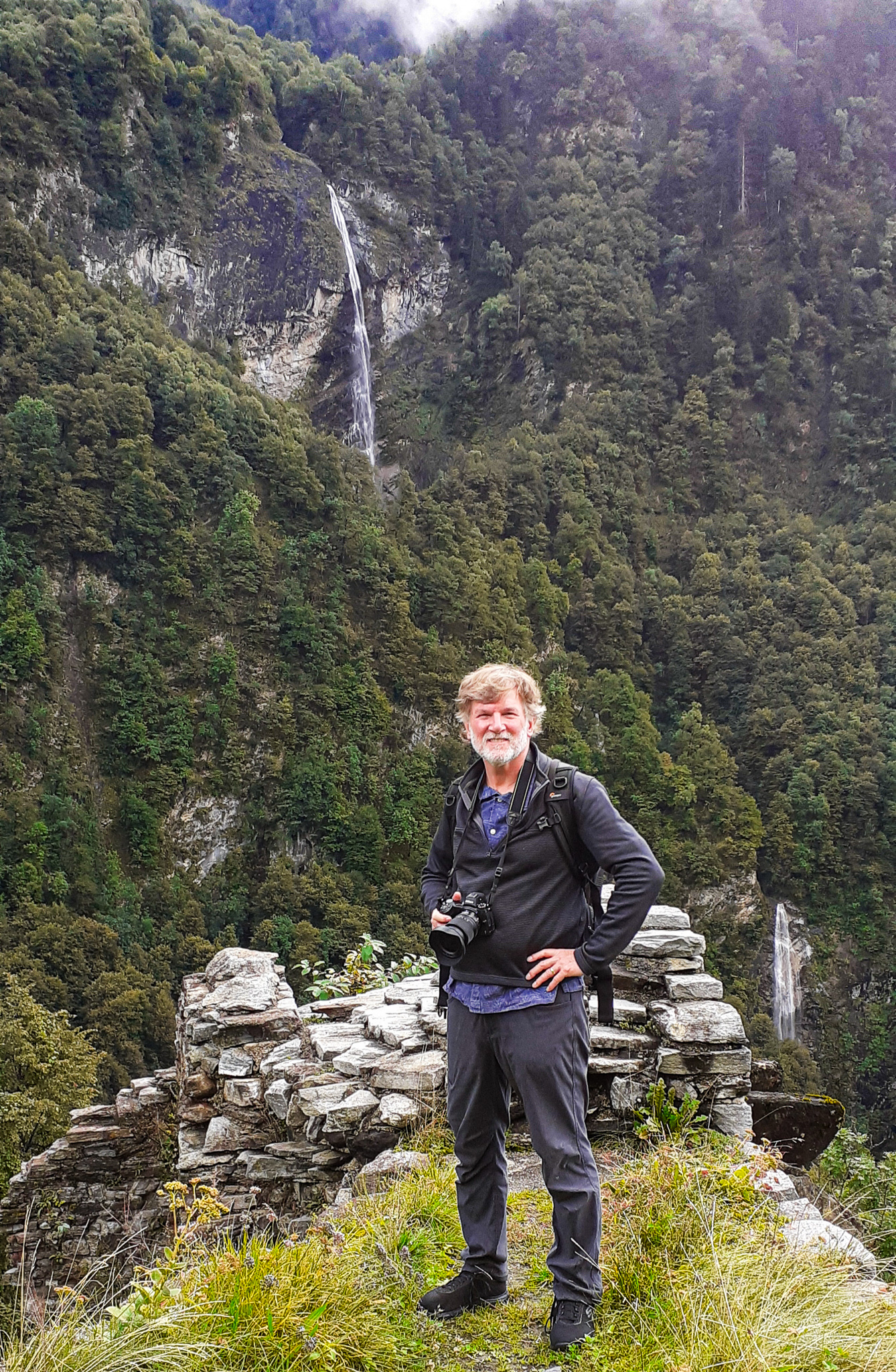
We could hear a waterfall on the far slope before you could see it. Padma stood out near the edge of the ring wall for a while, small against the mountain, and I remember thinking that somebody has been standing on this rock, looking down this valley, for about fourteen hundred years.
The hill was always the point
Here is what we learned later, and what I wish I’d known while I was standing on it.
The castle did not begin as a castle. Around the 7th century, the people of this valley built a small fortified church on the summit — S. Carpoforo — as a refuge. Not a residence, not a garrison. Somewhere to run to. When trouble came up the valley, you took your family and your livestock and you climbed.
For three hundred years or so that was all it was. Then, around the year 1000, the walls around the church began to creep outward. A bell tower went up. Between 1150 and 1200 someone built a bergfried — a tall free-standing keep — and the whole footprint had to be redrawn around it. That is the moment the hill quietly changed hands: what had been a shared bolthole for the valley became the property of a man who lived there permanently and expected the valley to answer to him.
By the 12th century that transformation was complete. In 1219 the place appears in the written record for the first time under the name we still use.
Through the 13th century it kept growing. A ring wall was thrown right around the crown of the hill, and a large residential wing was added onto the keep. Around 1400 that wing was extended again into a proper inner castle. In its final form the walls make an irregular pentagon with five towers, sprawled across the entire summit — the largest fortified complex in the Grisons.
What gets me is not the military architecture but the domestic inventory. Inside those walls lived the count’s family and his soldiers, and alongside them were armouries, a foundry, a bakery, a dairy, a cistern and a charnel house. A dairy. Someone carried milk up this hill, or kept animals on it. Someone lit an oven up here every morning. And when the bread and the milk had done their work, the bones went into a room set aside for bones.
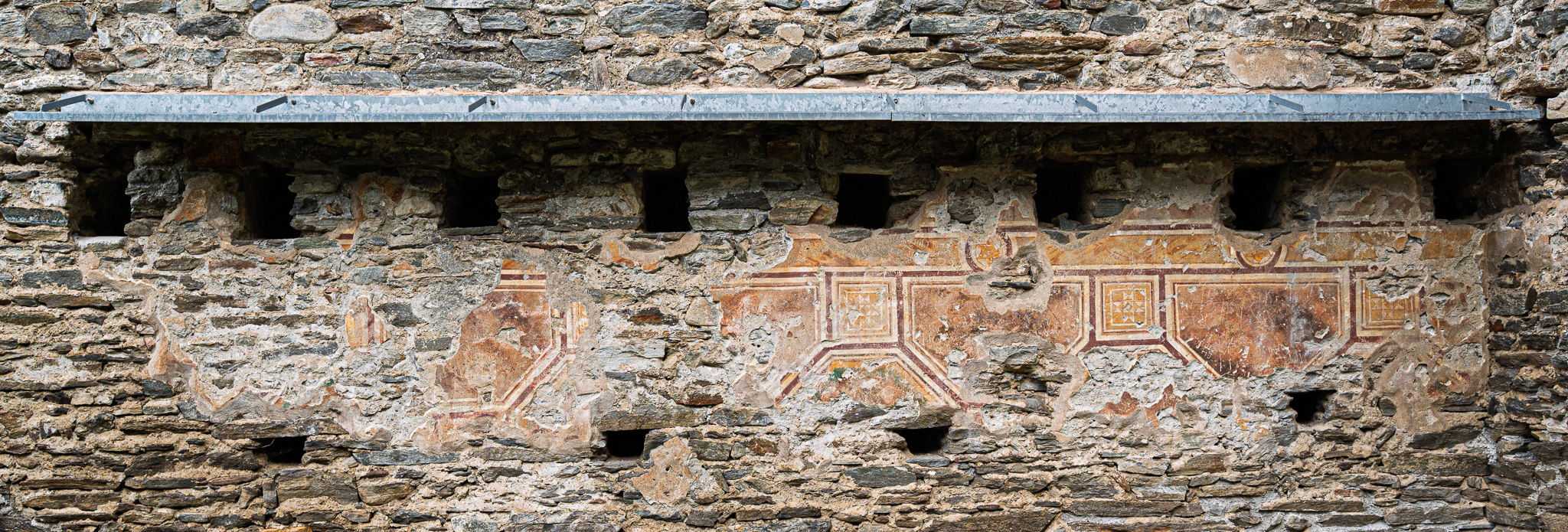
You can read some of that off the walls without any signage at all. There is a stretch of interior wall where the plaster still carries painted panelling — ochre and dull red, geometric, the kind of decoration you commission when you have stopped thinking of a place as a fort and started thinking of it as a home. Above it runs a row of dark square sockets where the floor beams once sat. Someone stood on a floor at that height, in a decorated room, and looked out at this same valley.
Bought, besieged, demolished
None of it was ever about the view. It was about the road.
The Mesolcina is the southern approach to the San Bernardino Pass, and whoever held the valley held one of the routes between the Italian plain and the north. The A13 we’d been driving is simply the latest version of it. Every load of salt, wine, wool and iron going over that pass came past this hill, and the family on top of it — the barons of Sax-Misox — grew rich accordingly. By the 14th century their reach had crossed the pass entirely, and Albert von Sax-Misox was a founding member of the Grey League, one of the alliances that would become the canton of Graubünden. Then, in 1406, Albert was murdered, and the family began a long slide.
In 1480 they sold the castle and its estates to General Giacomo Trivulzio, a condottiere acting for Milan. Trivulzio paid a deposit, moved in — and declined to pay the rest. In 1483 the Baron of Sax laid siege to the place trying to extract the balance, and failed. Trivulzio kept it, and years later, having fallen out with Milan and needing local goodwill, quietly paid up. He then spent heavily, remodelling the medieval castle into a Renaissance fortress with cannon mounted on the walls.
It bought nothing. In 1526 the Three Leagues had the fortress dismantled and destroyed, and moved the administration of the valley down to a palace in Roveredo. No heroic last stand. A political decision, and then men with tools, pulling down what had taken eight hundred years to accumulate.
It lay in ruin for four hundred years. Excavation and consolidation began in 1925, more work followed at the end of the 20th century, and a final restoration campaign ran from 2006 to 2010. Which, on the evidence of our visit, means somebody keeps the grass mown and nobody charges you a franc.
The traveller’s saint
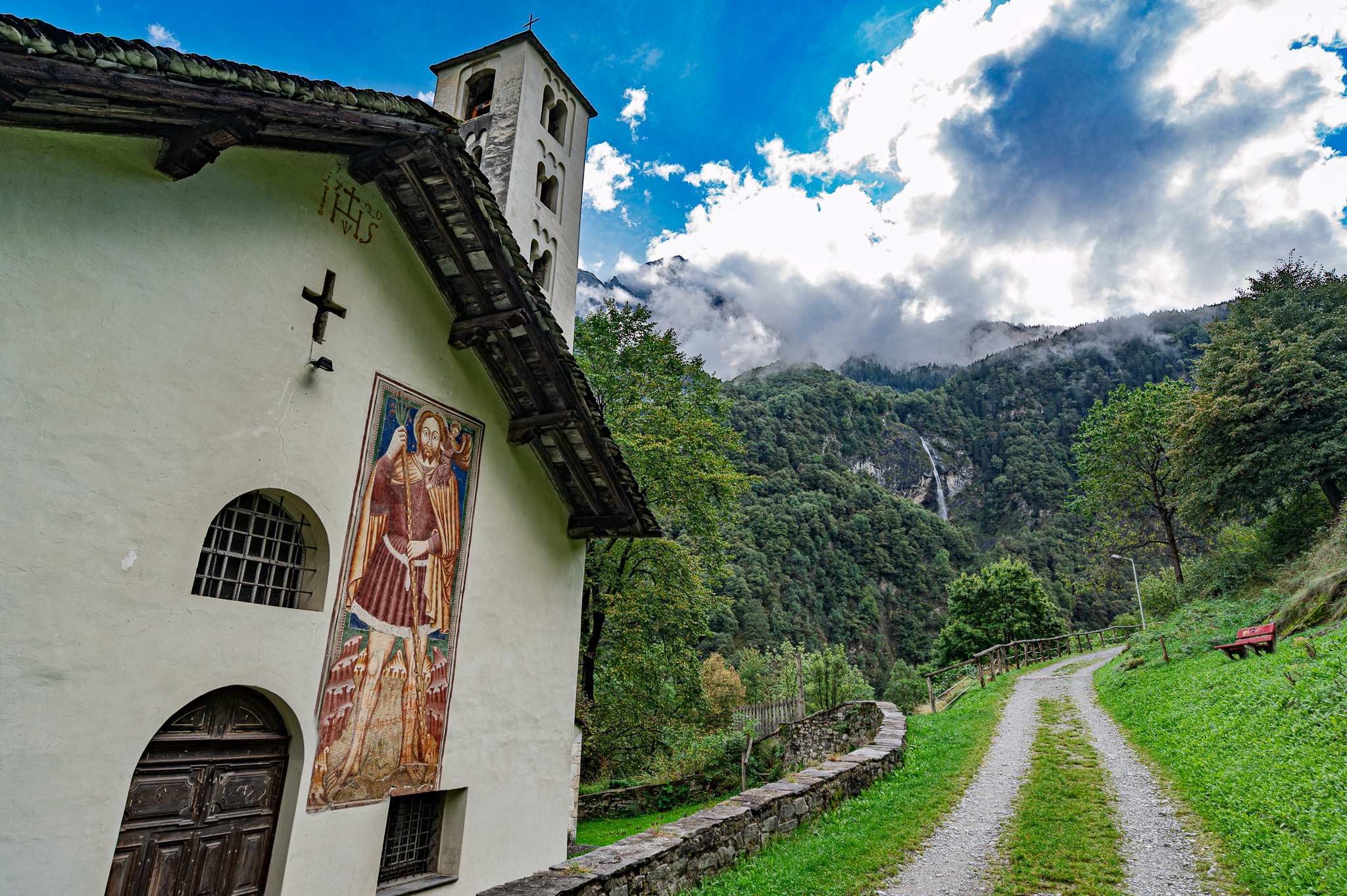
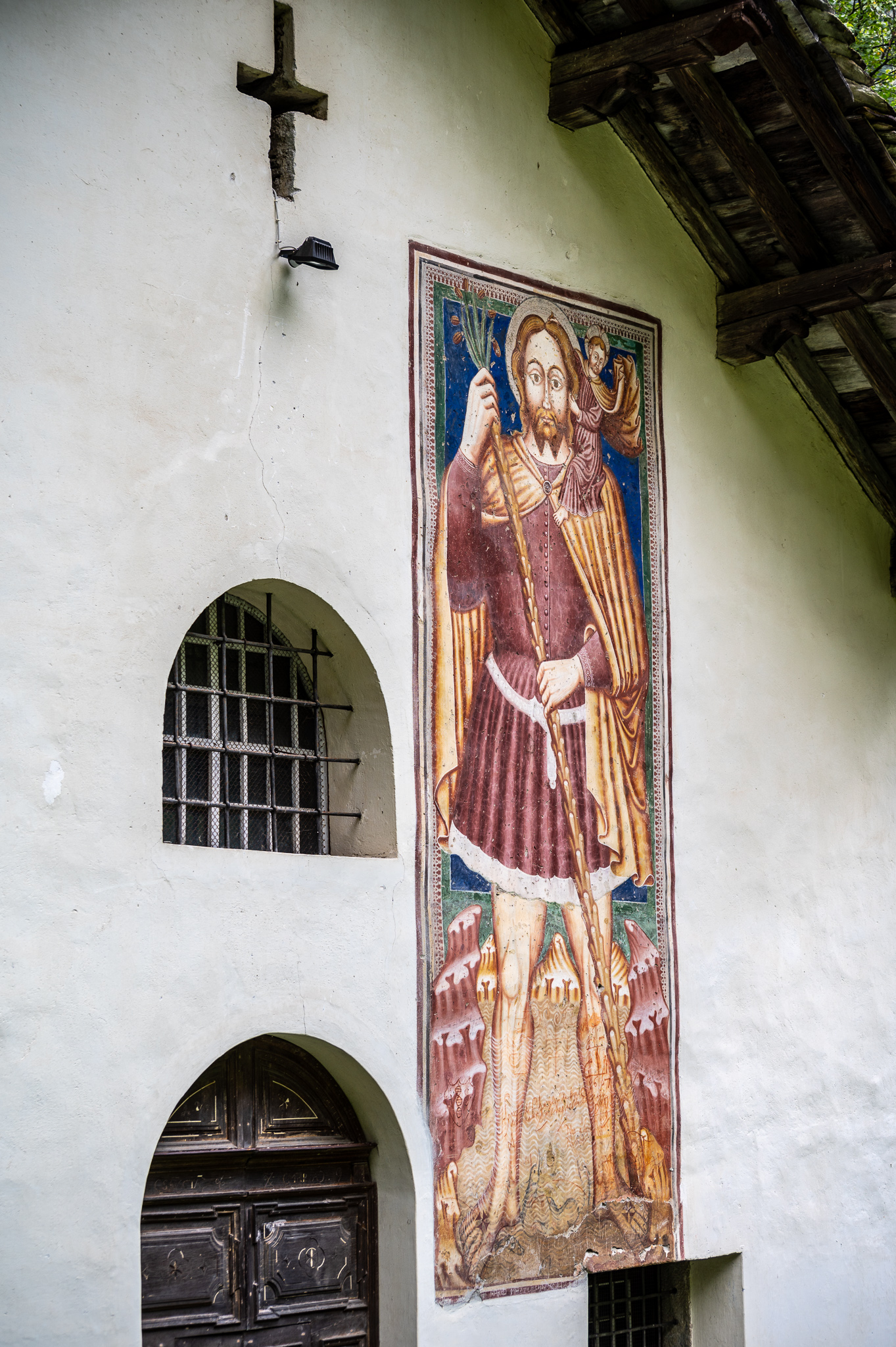
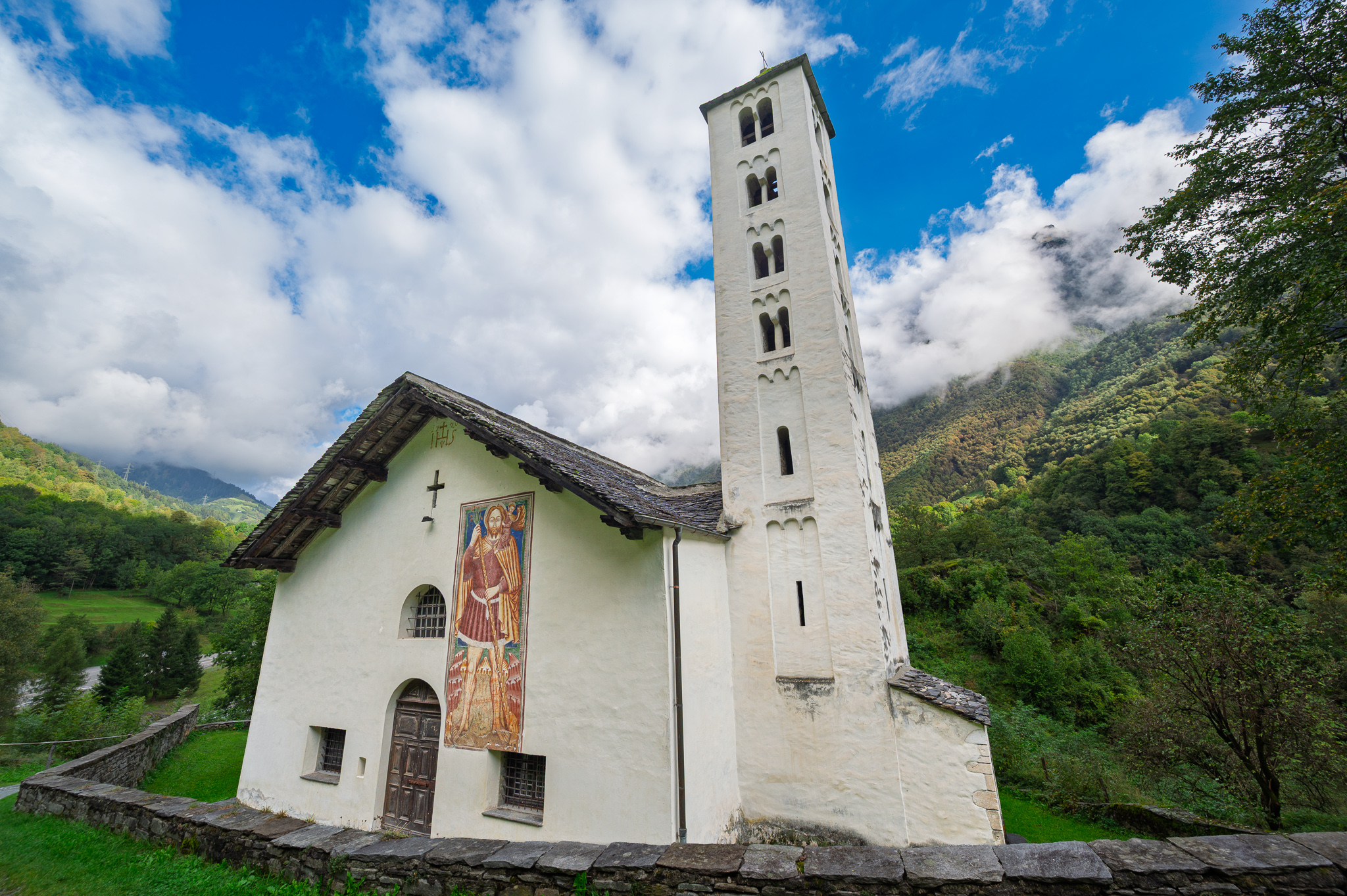
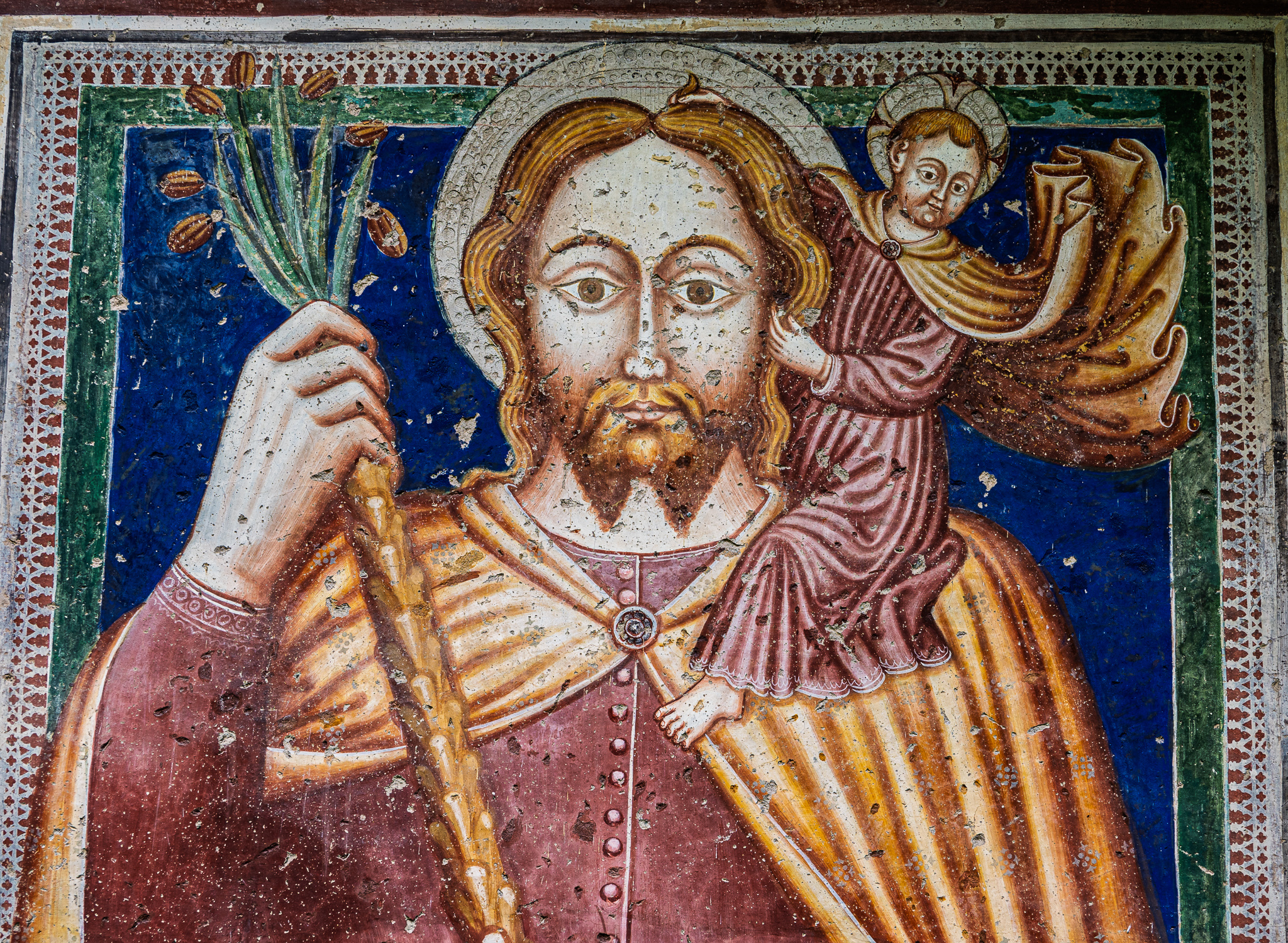
On the way back down we stopped at the little church we’d passed on the climb: Santa Maria del Castello, first mentioned in the same year as the castle, 1219, and holding frescoes from the workshop of the Seregnesi painted around the middle of the 15th century.
The figure on the outside wall is a giant St Christopher — the Christ child on his shoulder, a sprouting staff in his hand, fish swimming around his ankles as he fords the river. Medieval travellers believed a single glimpse of Christopher protected you from sudden death that day. Which is why he is so often painted enormous, on the outside of buildings, facing the road.
He is, in other words, a piece of roadside signage, five centuries old, designed to be read at speed by people who had no intention of stopping.
I liked that very much, given how we’d arrived.
We walked back across the bridge, rejoined the A13, and were doing 100 again within minutes, heading for the tunnel under the pass that the barons of Sax once taxed men to cross. The cloud had come back down over the hilltop. From the motorway you’d never have known the castle was there.